Importing coin and button batteries from China: how to meet EU and US compliance requirements

  • DocShipper Team 15 Min
  • Published on June 20, 2022 Updated on December 23, 2025
img

In short ⚡

Import coin batteries China requires aligning product safety, transport, and customs compliance before shipping. Based on common enforcement points in the EU and US, importers should secure the following elements early to avoid delays, refusals, or seizures. Key requirements include:

  • Correct HS code classification confirmed with battery chemistry (lithium vs non‑lithium)
  • Valid UN38.3 test reports and MSDS for lithium coin batteries
  • Compliance with IATA DGR or IMO IMDG packaging and labeling rules
  • Child‑resistant battery compartments and packaging where required
  • Market‑specific labeling, including CE marking (EU) or Reese’s Law warnings (US)
  • Documented safety and performance testing for battery access and misuse

We hope you’ll find this article genuinely useful, but remember, if you ever feel lost at any step, whether it’s finding a supplier, validating quality, managing international shipping or customs,  DocShipper can handle it all for you!

Free shipping quote 24h      I want to talk to a sourcing expert

What are coin and button batteries and how they are classified

If you plan an import coin batteries China shipment, here’s the thing, classification is where most delays begin. You’ll notice fast that customs, airlines, and regulators care less about size and more about chemistry.

From experience, we’ve seen a CR2032 blocked at customs simply because it was declared as a generic cell battery. That small wording mistake triggered a full dangerous goods classification review.

Coin cell batteries are typically lithium coin batteries, often primary lithium batteries like CR2032, CR2025, or CR2450. Button coin cell products without lithium usually rely on alkaline or silver oxide chemistry.

This distinction matters because lithium coin batteries fall under hazardous materials and dangerous goods classification. Non‑lithium button cells usually face lighter transport constraints.

To make this concrete, here’s a simple comparison we use with suppliers before factory audits.

Battery type Chemistry Typical example Regulatory impact
Coin cell battery Lithium metal CR2032 UN38.3 testing, MSDS, air cargo restrictions
Button cell battery Alkaline or silver oxide LR44 Product safety standards, labeling focus
Cell battery (generic) Varies Watch or toy cells Compliance depends on chemistry

When you’re wondering how to import battery from china, start by locking the HS code classification with your supplier. We usually confirm it alongside the commercial invoice and technical documentation before booking freight.

DocShipper Info

Battery classification errors cause most shipment delays.
DocShipper verifies chemistry, HS codes, and documents directly with suppliers,
so your coin or button batteries clear customs without reclassification issues.

Why coin and button batteries face strict safety controls
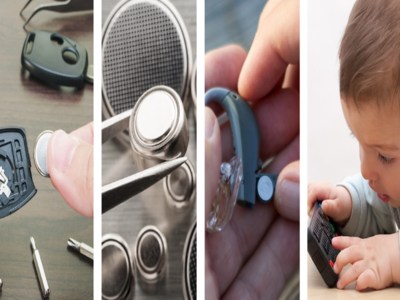
Import coin batteries China rules are strict because risk is real, not theoretical. Lithium coin batteries combine high energy density with a size that creates an ingestion hazard.

You’ve probably dealt with this if a buyer asked for extra warnings at the last minute. That usually traces back to child safety incidents reported to regulators.

We still remember a shipment of smart toys held at origin. The factory skipped child‑resistant packaging, and the airline refused uplift under IATA DGR rules.

That delay cost the importer two weeks and a rework of the product packaging at their own expense.

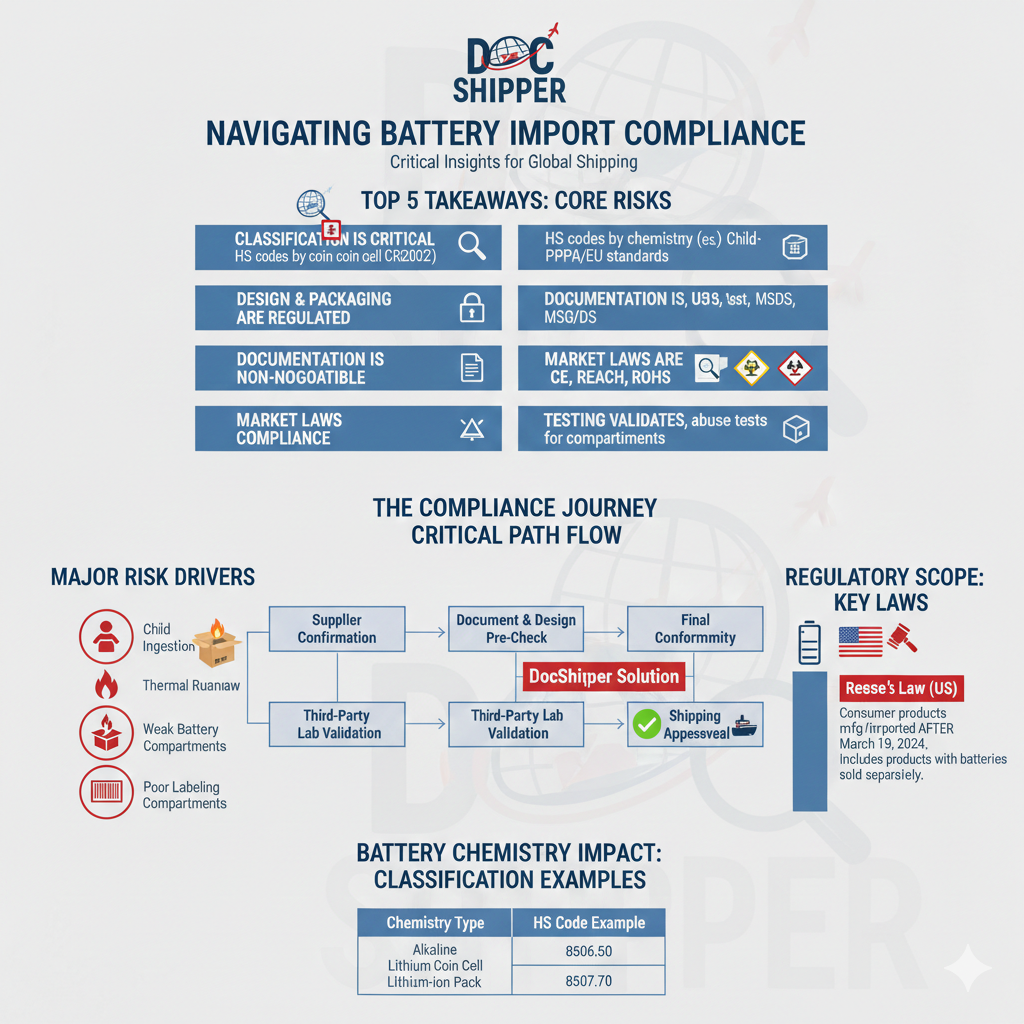
Key risk drivers regulators focus on are easy to summarize once you see patterns across cases published by ISO working groups and transport authorities like IATA.

  • Ingestion hazard for children due to size and shine.
  • Thermal runaway risk during air transport.
  • Battery compartment standards not resisting drops or misuse.
  • Poor labeling causing misuse or unsafe replacement.

This is why compliance is layered, transport rules, product safety standards, and consumer protection laws all apply at once. Miss one layer and your customs clearance stops cold.

When you import lithium coin batteries inside products, you inherit responsibility for factory design choices. We usually flag this early during supplier qualification to avoid redesigns later.

DocShipper Alert

Lithium coin batteries face strict safety scrutiny.
A missing warning or weak compartment can block transport or sales.
DocShipper audits packaging and safety design early, preventing costly redesigns.

Import rules in the EU you must follow for compliance

If your target market is Europe, import coin batteries China projects must align with the EU Battery Regulation and general product safety law. This applies whether you ship loose cells or finished products.

This is the moment most importers get stuck, because obligations go beyond transport into lifecycle responsibility.

We once worked with an importer of LED keychains. The batteries were compliant, but the product failed CE marking due to missing ingestion warnings under EU product safety standards.

The fix was simple but late, updated Labelling and reissued the conformity assessment.

At EU level, you must align with several frameworks that interact with each other.

  • EU Battery Regulation covering sustainability, safety, and information.
  • REACH compliance for chemical substances.
  • RoHS compliance restricting hazardous substances.
  • Extended producer responsibility including WEEE directive obligations.

Before shipping, we suggest running through a short compliance checklist.

  • CE marking or UKCA marking applied correctly.
  • Technical documentation ready for authorities.
  • UN38.3 testing reports and safety data sheet available.
  • Child‑resistant packaging validated for coin cells.

Don’t overlook logistics details, air cargo restrictions under IATA DGR or sea rules under the IMO IMDG code often drive packaging and labeling requirements. That’s why we align freight forwarding decisions with compliance from day one.

If you want to optimize costs without breaking rules, reviewing product packaging early makes a real difference. Clear Labelling also speeds customs brokerage and avoids inspections.

DocShipper Advice

EU battery compliance works as a system.
Align CE, Battery Regulation, REACH, and WEEE together.
DocShipper structures your documentation and labeling to pass EU checks smoothly.

US restrictions for consumer products and batteries under Reese’s Law

Import coin batteries from China into the US feels very different since Reese’s Law kicked in, and you’ve probably felt that shift already. This law, enforced by the U.S. Consumer Product Safety Commission, directly targets button cell batteries, coin cell batteries, and any consumer product that contains them.

Here’s the thing. Even if your product worked for years without issues, that history does not protect you anymore.

From experience at DocShipper, we’ve seen importers blocked at customs because a simple battery compartment screw did not meet the new performance requirements. One client importing LED key trackers with a CR2032 lithium coin battery learned this the hard way when their shipment was flagged during customs clearance.

Reese’s Law applies to any consumer product manufactured or imported after March 19, 2024, including products where the battery is not included in the box. That’s often missed.

To help you scope your risk quickly, here’s a short list of what triggers enforcement under Reese’s Law.

  • Accessible battery compartments under normal or foreseeable misuse
  • Missing or incorrect ingestion hazard warnings
  • Non-compliant child‑resistant packaging when batteries are sold with the product
  • No documented testing for battery compartment standards

You’ll notice fast that this is not only about batteries. It’s about product design, labeling, and documentation combined.

Requirement What US Customs and CPSC Expect
Battery access Screw-secured or tool-required compartments
Warnings Clear pictograms and text about ingestion hazard
Packaging PPPA-compliant child-resistant design
Testing Drop, torque, tension tests per 16 CFR Part 1263

Before you ship, run through this quick checklist we use internally during factory audits.

  • Confirm the HS code classification for batteries and products with batteries
  • Verify supplier has passed UN38.3 testing for lithium coin batteries
  • Review warning labels against CPSC guidance
  • Collect performance test reports before booking freight

This step alone reduces seizure risks dramatically.

International standards and certifications you need before shipping

When you import coin batteries from China, compliance is not only national. It’s global, and this is where many shipments quietly fail. International standards are the common language between Chinese factories, airlines, ports, and customs authorities.

We still remember a case where a supplier assured compliance, but couldn’t produce a valid MSDS safety data sheet. Air cargo was instantly refused.

The backbone of international compliance comes from standards issued under the UN system and harmonized by bodies like ISO. Without these, freight forwarding becomes guesswork.

Below is a comparison table we often share with new importers to clarify what you truly need.

Standard / Document Why it Matters
UN38.3 testing Mandatory for lithium coin batteries in transport
MSDS / SDS Required for dangerous goods classification
IATA DGR Air cargo restrictions and packaging rules
IMO IMDG Code Sea freight compliance for hazardous materials

You’ll also need to align these transport standards with market regulations such as CE marking, UKCA marking, and future EU Battery Regulation requirements.

Before shipment, we recommend following a simple workflow that saves weeks.

Certification workflow we use at DocShipper:

Factory confirmation → Document pre-check → Third-party lab validation → Final conformity assessment → Shipping documentation approval.

This discipline prevents last-minute surprises at customs brokerage level.

Looking for a Reliable Shipping & Sourcing Partner?

We handle the entire sourcing process, supplier research, negotiation, production, and inspections, so you can focus on what matters most: growing your business.

Packaging and labeling duties for batteries and battery-powered products

One supplier confidently told us, “The packaging looks fine.” Customs disagreed.

Import coin batteries from China means packaging and labeling are now as critical as the battery itself. This applies to primary lithium batteries, CR2032 cells, and finished products containing them.

US and EU authorities expect warnings to be clear, durable, and visible at first glance. Small text hidden under a flap won’t survive an inspection.

Here’s a practical list of what compliant packaging usually includes.

  • Ingestion hazard warning with standardized wording
  • Pictograms visible on outer packaging
  • Child‑resistant packaging for loose coin cell batteries
  • Product labeling aligned with CE marking and CPSC regulations

Packaging rules also interact with REACH compliance and RoHS compliance when batteries are integrated into electronics. You can’t treat them separately.

Before mass production, lock this down with your supplier using a packaging pre-approval checklist.

  • Mock-up reviewed against target market rules
  • Language requirements validated for EU and US
  • Durability tested for transport stress

This one step prevents labeling recalls later.

Safety and performance tests for toys and primary batteries

So what actually gets tested before your goods pass?

For toys and consumer products, import coin batteries from China triggers strict safety and performance testing, especially for lithium coin batteries and button cell batteries used by children.

Testing goes far beyond battery chemistry. Authorities focus on how easily a child can access the battery.

Common required tests include:

  • Drop and impact resistance
  • Tension and torque on battery compartments
  • Abuse tests simulating foreseeable misuse
  • Electrical safety checks for primary lithium batteries

These tests align with EN 62115, EN 60086, and US performance rules under Reese’s Law. We often coordinate these tests during quality control inspection before shipment.

Here’s a short checklist we recommend you follow before green-lighting production.

  • Confirm test lab accreditation
  • Match test scope to target market
  • Archive reports in your technical documentation
  • Share results with customs broker in advance

Skipping testing is the fastest route to a recall.

Conclusion

Import coin batteries from China is no longer just about buying and shipping. It’s about aligning product safety standards, dangerous goods classification, and compliance discipline from factory to final delivery.

We’ve worked with importers who handled everything right except one document, and paid the price. You don’t want to learn compliance through penalties.

To wrap it up, here are the key takeaways you should remember.

  • Reese’s Law applies even if batteries are not included in the box
  • UN38.3 testing and MSDS are non-negotiable for lithium coin batteries
  • Packaging and labeling requirements drive most enforcement actions
  • Child-resistant battery compartment standards are design-critical
  • Early coordination with freight forwarding and customs brokerage saves time

If you’re unsure where to start, we at DocShipper usually begin with supplier qualification and factory audits. That’s where compliance truly begins.

FAQ | Importing coin and button batteries from China: how to meet EU and US compliance requirements

The same errors come back again and again and trigger inspections or holds:

  • Using a generic description like “battery” instead of “lithium metal coin cell CR2032” or “alkaline button cell LR44”.
  • Using the wrong HS code (e.g. for generic cells instead of lithium primary batteries).
  • Not declaring them as dangerous goods when required (lithium coin cells by air/sea).
  • Missing or incorrect UN number (e.g. UN3090 vs UN3091) on documents and labels.
  • Declaring batteries “inside equipment” while they are actually “packed with” equipment.

To avoid this:

  • Align with your freight forwarder on HS code and UN classification before booking.
  • Make sure commercial invoice, packing list, MSDS, and shipper’s declaration all use the same, precise wording.

Ask us anything!

Need Help with
Logistics or Sourcing ?

First, we secure the right products from the right suppliers at the right price by managing the sourcing process from start to finish. Then, we simplify your shipping experience - from pickup to final delivery - ensuring any product, anywhere, is delivered at highly competitive prices.

Component-15.png

Live Chat

Get instant assistance from our team—just click and start chatting!

Live Chat Now
image

Fill the Form

Prefer email? Send us your inquiry, and we’ll get back to you as soon as possible.

Contact us
image
Component-15.png

Call us

Reach out to us on WhatsApp for quick, convenient, and personal support.

Call us
image
Component-15.png