Packaging cost reduction: practical strategies to cut spend without risking product damage

  • DocShipper Team 16 Min
  • Published on August 11, 2021 Updated on January 14, 2026
img

In short ⚡

Packaging cost reduction means cutting total packaging spend by treating packaging as a system, not just a box price, and optimizing materials, labor, freight, storage, damage, and compliance together. It focuses on right-sized, lightweight, and standardized packs, better packing processes and automation, and data-driven collaboration with suppliers to lower total landed cost without increasing product damage or returns.

We hope you’ll find this article genuinely useful, but remember, if you ever feel lost at any step, whether it’s finding a supplier, validating quality, managing international shipping or customs,  DocShipper can handle it all for you!

Free shipping quote 24h      I want to talk to a sourcing expert

Diagnose your true packaging costs before you try to cut them

Packaging cost reduction starts the moment you stop treating packaging as a line item and start treating it as a system. You’re paying for materials, sure, but also for packing time, dimensional weight, warehouse handling, and the damage rate that quietly triggers reverse logistics.

Here’s the thing, if you only chase a cheaper box, you often increase total landed cost through higher per-unit freight cost, more returns, and slower packing line efficiency.

We’ve seen this pattern across import lanes, especially when you scale from “a few pallets” to regular freight consolidation with tight load planning.

Last peak season, a small change in carton spec doubled breakage, and the “cheaper” packaging turned expensive fast

One of our shippers cut unit cost by switching to a lighter corrugated board grade, without adjusting dunnage reduction and palletization rules. It looked like smart packaging optimization on paper, until transit vibration turned into breakage prevention failure.

After two weeks, the damage rate reduction plan became a fire drill: replacements, claims, and expedited reshipments. That’s when packaging cost reduction becomes a cost calculation problem, not a sourcing problem.

Use this quick workflow to map your real cost drivers end to end.

  • Step 1: Capture packaging bill of materials, per SKU, including tapes, labels, inserts, and void fill minimization materials.
  • Step 2: Time your packing line efficiency, seconds per order, including rework from misfits.
  • Step 3: Convert outbound charges into dimensional weight exposure, not just scale weight.
  • Step 4: Add damage, returns, and reverse logistics costs, including repack labor.
  • Step 5: Include inventory carrying cost for packaging stock sitting in the warehouse.
  • Step 6: Calculate total landed cost per shipped unit, then compare scenarios with a tight cost-benefit analysis.

To make decisions fast, you’ll want a simple cost breakdown you can reuse in value engineering and procurement strategy reviews.

Cost bucketWhat to measureCommon “hidden” multiplier
Materials efficiencyUnit cost of cartons, inserts, tapes, labelsMOQ, print plates, and changeover scrap
LaborSeconds per pack, training, rework loopsPacking line bottlenecks and seasonal temp labor
FreightPer-unit freight cost, DIM divisor, surchargesPoor cube utilization, oversize cartons
StorageWarehouse slots and handling touchesToo many carton SKUs, bulky tertiary packaging
Damage and returnsClaims, replacements, reshipment, reprocessingTransit packaging mismatch and weak load planning
ComplianceMarkings, export packaging rules, documentsCustoms compliance holds or relabeling

If you import, don’t ignore compliance cost. The WCO regularly highlights how misdeclaration and labeling errors create delays that translate straight into storage and handling fees.

Start with this direct test, if it doesn’t change total landed cost, it’s not a real saving
parcels and calculator

When you evaluate packaging cost reduction strategies, you need a “so what?” filter. A 5 percent material saving means nothing if dimensional weight pushes you into a higher rate bracket, or if freight consolidation becomes less efficient.

To spot the big leaks, focus on factors contributing to increased packaging costs that you can control within weeks, not quarters.

Use this checklist to pressure-test whether your current setup quietly inflates spend.

  • Too many carton sizes causing low cube utilization and slower warehouse handling
  • Oversized packs triggering dimensional weight penalties
  • Excess void fill and inconsistent void fill minimization methods across shifts
  • Poor palletization reducing load planning density and increasing damage risk
  • Tertiary packaging that adds bulk without improving protection
  • No standard drop testing or transit simulation for transport packaging changes
  • Supplier-driven spec creep like upgraded board grades “just to be safe”
  • High return rates with no feedback loop into packaging optimization

Those items are exactly where packaging cost savings show up without gambling with product protection.


Redesign materials and formats for cost effective, right-sized packaging

Packaging cost reduction gets much easier when you redesign the pack like an engineer, not like a buyer. You’re aiming for cost effective packaging that protects the product while improving lightweighting, right-sizing cartons, and palletization density.

You’ll notice fast that the “cheapest material” isn’t always the most cost effective packaging material once you include damage, packing speed, and returns.

We typically start with transport packaging first, because that’s where cube utilization, per-unit freight cost, and freight consolidation get decided.

Looking for a Reliable Shipping & Sourcing Partner?

We handle the entire sourcing process, supplier research, negotiation, production, and inspections, so you can focus on what matters most: growing your business.

Have you ever picked a cheaper material, then watched returns spike two weeks later?

customs official with parcels

This is where many packaging cost reduction ideas go wrong. You change the material, but you don’t match it to vibration, drop height, humidity, or how the SKU gets handled in the warehouse.

To choose the most cost effective packaging material, you should classify products by fragility, density, and shipping mode, then apply materials efficiency and lightweighting together.

Use this comparison table to make a quick first-pass decision before you run tests.

Material / formatBest forCost and logistics reality
Single-wall corrugated boardDurable, light to medium itemsOften the best unit cost, but watch crush strength vs stacking in palletization
Double-wall corrugated boardHeavier items, export packaging, longer lanesHigher unit cost, can reduce damage rate and claims when load planning is tight
Molded pulp insertsFragile items needing repeatable fitGood dunnage reduction vs loose fill, tooling cost needs volume discounts
Foam (EPE/EVA) insertsHigh-value, high-fragilityProtection is strong, but storage bulk and sustainability constraints can raise total cost
Returnable packaging, reusable containersClosed-loop supply chain, B2B flowsHigher upfront, strong packaging cost savings over cycles, needs tracking discipline
Bulk packagingComponents, stable products, inbound consolidationGreat for freight consolidation and handling, but needs clear QC and labeling to avoid picking errors

From experience, you get the best results when you run value engineering with your supplier and confirm performance through basic transit tests, not opinions.

Also, if you’re shipping air, even slightly better lightweighting can outperform material savings because dimensional weight rules the invoice.

DocShipper Advice

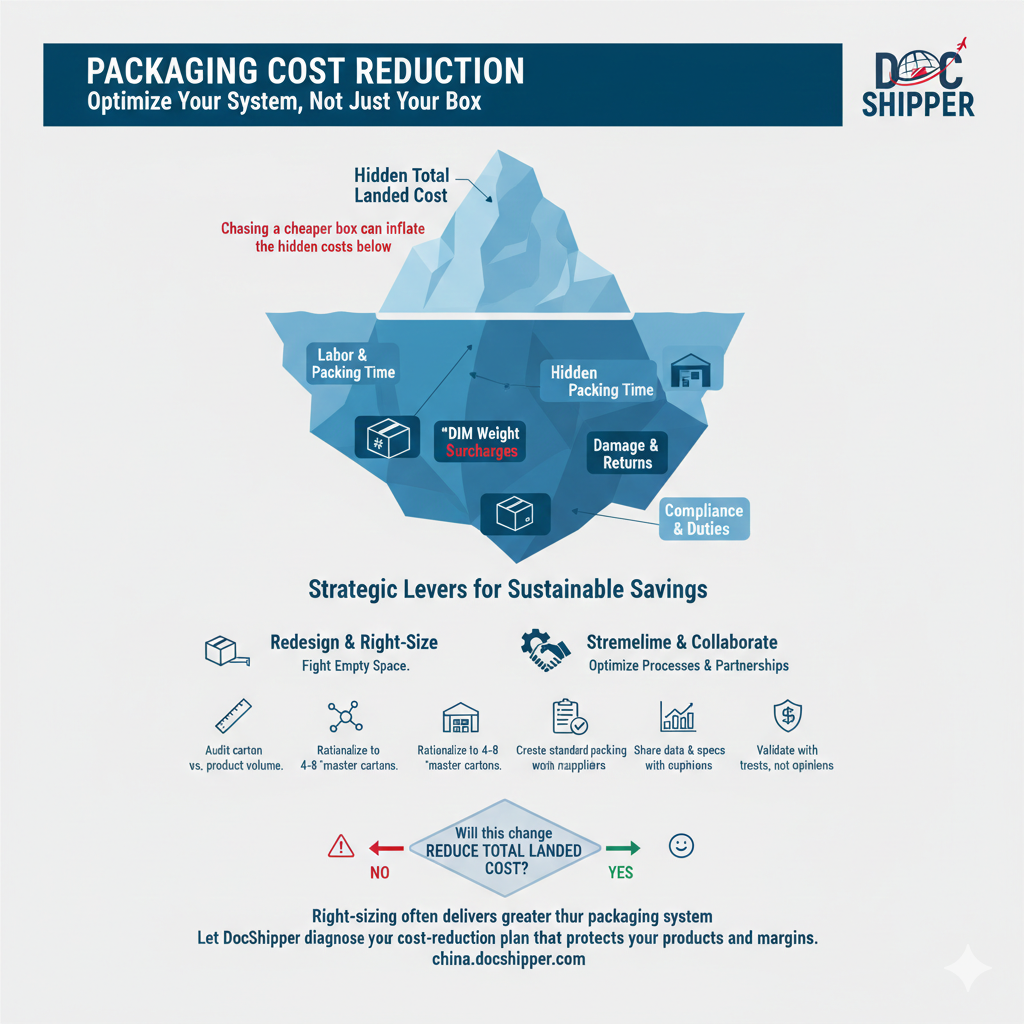
Redesigning formats without freight in mind kills savings.
DocShipper helps you match materials, fragility, and shipping mode, then validates with transit tests.
Get cost effective packaging that protects products and margins.

Right-sizing beats bargaining every time

Packaging cost reduction strategies become tangible once you treat “air” as the enemy. Right-size and standardize, and you’ll cut void fill minimization spend, improve cube utilization, and reduce per-unit freight cost in one move.

We’ve seen a simple carton rationalization project reduce carton SKUs from 18 to 6, then unlock faster warehouse handling and fewer picking mistakes. The surprise win was that freight consolidation improved because pallets built more cleanly with consistent footprints.

Use this short workflow to redesign your carton set without breaking operations.

  • Step 1: Pull order history by SKU and bundle patterns.
  • Step 2: Define 4 to 8 “master” carton sizes that cover 90 to 95 percent of volume.
  • Step 3: Redesign inserts to hold the product, not to fill space, prioritize dunnage reduction.
  • Step 4: Validate palletization and load planning, target stable layers and fewer overhang risks.
  • Step 5: Pilot for two weeks, track damage rate, pack time, and dimensional weight changes.

Standardization also strengthens supply chain management. It simplifies procurement strategy, enables volume discounts, and makes supplier negotiations less chaotic because you’re buying fewer specs at higher volumes.

If you use contract packaging, this approach matters even more because every extra carton SKU adds changeovers and slows process optimization.

DocShipper Advice

Rationalizing carton sizes can disrupt operations if done blindly.
DocShipper models SKU flows, palletization, and DIM impact before you switch.
Secure quick wins in packaging cost reduction strategies without chaos.

Streamline operations and automation to unlock packaging cost savings

We still remember a client who kept fighting packaging cost reduction by squeezing box prices, while the real leak was hidden on the packing line. You’ve likely seen it too, manual steps, rework, and inconsistent packing that quietly inflate costs even when materials look cheap.

Packaging cost reduction often accelerates when you streamline how people and machines work together, not just what you buy. From experience, aligning workflows and light automation usually cuts labor time, damage rates, and freight overcharges faster than any supplier discount.

To see where automation or process fixes really pay off, start with a quick operational self-check. This short checklist reflects what we use with clients before recommending any equipment upgrade.

  • Multiple manual packing steps for the same SKU that slow throughput
  • Inconsistent carton sealing leading to damage claims and returns
  • Overpacking habits driven by fear of breakage rather than testing
  • No standard work instructions for packers across shifts

Once these gaps are visible, even simple tools like semi‑automatic tapers or right‑size carton erectors can deliver a fast ROI. Industry benchmarks from the World Economic Forum often show labor efficiency gains before material savings even kick in.

At DocShipper, we’ve seen automation succeed when it stays practical and scalable, not oversized for volumes you don’t have yet. You’ll reduce packaging cost without locking yourself into rigid systems that break when SKUs change.

DocShipper Alert

Manual, inconsistent packing silently destroys your savings.
Without standard work and the right tools, labor, damage and freight leak every day.
DocShipper maps your flows and deploys pragmatic automation that pays back fast.

Work smarter with suppliers, data, and regulations to sustain lower costs

Direct tip, don’t chase packaging cost reduction alone, pull your suppliers and data into the game early. You’ll notice fast that the best savings come from shared specs, accurate forecasts, and fewer surprises at customs.

Packaging cost reduction holds over time when suppliers understand your real constraints, drop tests, stacking limits, and destination rules. This is where we often step in, especially when suppliers promise cost cuts that quietly raise freight or compliance risks.

To make supplier conversations concrete, here’s a simple comparison we often use during negotiations to anchor decisions in data, not opinions.

ApproachShort-term effectHidden risk
Cheapest material quoteImmediate unit cost dropHigher damage and returns
Joint packaging redesignModerate cost reductionRequires testing and alignment
Data-driven standard specsStable long-term savingsNeeds discipline and tracking

We’ve watched many importers get stuck right here, unsure which option to defend internally. Referencing ISO packaging standards during supplier talks often resets the discussion and keeps everyone aligned on protection levels.

When you manage suppliers with shared data and clear rules, cost savings stick instead of eroding shipment after shipment. That consistency is what turns packaging optimization into a real competitive edge, not a one‑off win.

DocShipper Info

Supplier promises and customs rules can make or break your costs.
DocShipper aligns specs, tests, and regulatory requirements across your partners.
Secure sustainable packaging savings that survive audits and growth.

Conclusion

Here’s the truth, packaging cost reduction is rarely about one big move. You cut spend safely when materials, operations, and supplier decisions all pull in the same direction.

To close the loop, these are the core takeaways you should keep front of mind as you move forward.

  • Diagnose the full cost, labor, damage, and freight matter as much as box price
  • Fix processes before buying automation to avoid locking in waste
  • Work collaboratively with suppliers using data and clear specs
  • Prepare for scale so savings remain when volumes grow

FAQ | Packaging cost reduction: practical strategies to cut spend without risking product damage

Start by swapping “less material” thinking for “smarter material” thinking:

  • Map your risks:
  • Identify fragile SKUs, long-distance lanes, and carriers with rough handling.
  • Check where damages actually occur: warehouse, loading, last‑mile?
  • Reduce “cosmetic” costs first:
  • Simplify printing (1–2 colors instead of full color when brand‑safe).
  • Remove unnecessary inserts, leaflets, and redundant labels.
  • Engineer protection, don’t stack layers:
  • Replace thick, generic boxes plus tons of bubble wrap with:
  • Right‑sized cartons.
  • Simple inserts that lock products in place.
  • Use molded pulp or die‑cut cardboard instead of foam where possible.
  • Standardize and test:
  • Create 4–8 standard specs and run basic drop/vibration tests.
  • If damage rates stay stable or drop, keep cutting cosmetic or redundant materials.

The rule of thumb: if a change doesn’t pass a simple drop test for your worst‑case shipment, it’s not a saving, it’s a future claim.

Ask us anything!

Need Help with
Logistics or Sourcing ?

First, we secure the right products from the right suppliers at the right price by managing the sourcing process from start to finish. Then, we simplify your shipping experience - from pickup to final delivery - ensuring any product, anywhere, is delivered at highly competitive prices.

Component-15.png

Live Chat

Get instant assistance from our team—just click and start chatting!

Live Chat Now
image

Fill the Form

Prefer email? Send us your inquiry, and we’ll get back to you as soon as possible.

Contact us
image
Component-15.png

Call us

Reach out to us on WhatsApp for quick, convenient, and personal support.

Call us
image
Component-15.png