The Logistics Bridge: / China–Europe
Trade News
- June 2026 - Edition 1
Welcome to The Logistics Bridge — your twice-monthly read on the transport and logistics news that actually moves the needle for importers, e-commerce sellers and entrepreneurs sourcing from China for the European market.
In every edition we cut through the noise across ocean, air and rail freight, decode the latest customs and regulatory shifts, and surface the developments that can reshape your import-export operations — before they hit your bottom line.
Our goal is simple: turn a volatile, complex trade landscape into clear, actionable insight, so you can protect your margins, plan with confidence and keep your supply chain one step ahead.
Did You Know?
+23% in one week — the Drewry index jumps as peak season starts early
The Drewry World Container Index surged about 23% in the week to 5 June 2026, then added another 3% to reach $3,549 per 40ft container on 11 June. Shanghai–Rotterdam climbed 25% to $3,579 and Shanghai–Genoa 20% to $5,089. Carriers point to an early peak season, front-loading ahead of expected July tariff changes, and Middle East disruption.
For importers, the cheap-rate window has effectively closed — book early and budget for surcharges.
Steel quota cut 47% — a major EU trade-defence move lands in July
From July 2026, the EU will cut its tariff-free steel quota by 47% (from ~33Mt to 18.3Mt) and double the out-of-quota duty from 25% to 50%, with new “melt and pour” rules to stop Chinese steel transiting via third countries.
Importers of steel and steel-intensive goods from China should re-cost now — it’s one of the bloc’s hardest measures yet against Chinese industrial overcapacity.
Logistics News of the Fortnight
Ocean Freight News
01) Early peak season ignites: Drewry index hits $3,549, Asia–Europe leads
Container spot rates accelerated sharply in early June. The Drewry World Container Index rose about 23% in the week to 5 June, then +3% to $3,549/40ft by 11 June, driven by the Asia–Europe and Transpacific lanes. Drewry confirmed peak season began earlier than usual, with demand fuelled by front-loading ahead of possible July US tariff changes and World Cup-related cargo. Shanghai–Rotterdam jumped 25% to $3,579 and Shanghai–Genoa 20% to $5,089. Drewry / IndexBox
WHAT THE DOCSHIPPER EXPERTS SAY?
A peak season this early breaks last year’s planning calendar. With rates climbing on both the Transpacific and Asia–Europe at once, there’s no slack in the system to absorb a shock — and the market is absorbing several at once. European importers competing with US front-loaders for the same vessels will feel space tighten right through Q3.
THE ESSENTIAL DOCSHIPPER ADVICE
- Bring Q3 orders forward and lock space before the July hikes.
- Track the Drewry WCI and SCFI weekly to time bookings.
- Prefer index-linked contracts over fixed annual rates.
- Confirm quotes at booking — not before
02) Hormuz fallout: 90% of lines still avoid Bab al-Mandab, Cape detour adds 10–14 days
The Middle East crisis keeps reshaping ocean networks: with over 90% of container lines still unable to safely cross the Bab al-Mandab strait, ships keep routing the long way around the Cape of Good Hope, adding 10–14 days of pure sailing time per voyage. Lloyd’s List tied the Hormuz crisis directly to June’s sharp rate rise, as effective capacity is swallowed by longer rotations. Lloyd’s List
WHAT THE DOCSHIPPER EXPERTS SAY?
The Cape detour isn’t just a delay — it’s a structural capacity cut, because every diverted ship spends two extra weeks at sea and out of rotation. That tightens China–Europe supply exactly as peak-season demand rises: a double squeeze that keeps rates high regardless of underlying fundamentals.
THE ESSENTIAL DOCSHIPPER ADVICE
- Extend safety lead times by at least 2–3 weeks on ocean.
- Keep rail and air options live for time-critical SKUs.
- Add a maritime force-majeure clause to contracts.
- Plan inventory buffers around the longer transit baseline.
03) Carriers push mid-June and July GRIs: +$1,000–$2,000/FEU on Asia–Europe
Carriers announced mid-month general rate increases of $1,000–$2,000/FEU on Asia–Europe, with further hikes of up to $2,000/FEU planned for early July. Peak Season Surcharges are holding firm, adding $500–$2,000 per container by carrier tier; Maersk applied a PSS from 4 June on selected Far East lanes. Freightos / J.M. Rodgers
WHAT THE DOCSHIPPER EXPERTS SAY?
GRIs and PSS are how carriers turn tight capacity into margin. Back-to-back increases send a clear signal: carriers expect demand to hold and intend to keep pricing power into July. Importers who wait for “stable” rates will simply book at a higher floor.
THE ESSENTIAL DOCSHIPPER ADVICE
- Book ahead of announced GRI/PSS effective dates.
- Build PSS and bunker surcharges into landed cost now.
- Diversify carriers to limit single-provider exposure.
- Negotiate longer terms to escape fortnightly volatility.
04) Mid-June plateau — but the relief is temporary
By the week of 16 June, spot rates levelled off after the early-June spike, yet forwarders warned that further mid-month and July increases remain likely as bunker costs stay high and peak demand builds. The pause reflects digestion of the surge, not a reversal — equipment-repositioning constraints in Northern Europe still limit availability. Freightos, 16 Jun
WHAT THE DOCSHIPPER EXPERTS SAY?
A plateau after a spike is a window, not a trend. The fundamentals — Cape detours, an early peak, July tariff front-loading — all point upward. Treat any mid-June softness as a booking opportunity, not evidence the market is calming.
THE ESSENTIAL DOCSHIPPER ADVICE
- Use the mid-June pause to confirm bookings, not to wait.
- Watch Northern Europe equipment availability before committing.
- Split volume across spot and contract to hedge.
- Re-quote weekly while the market is this volatile.
Air Freight News
01) Air rates near a 2026 high as importers rush ahead of the July de minimis deadline
The Baltic Air Freight Index sat about +33% year-on-year in early-to-mid June, hovering near 2026 highs. A key driver: shippers front-loading EU-bound goods ahead of the 1 July end of the €150 de minimis exemption, rushing product into Europe before the new duty applies. Continued Transpacific strength and early peak-season capacity-locking added further pressure. TAC Index, June 2026
WHAT THE DOCSHIPPER EXPERTS SAY?
This is a deadline-driven spike, not organic demand — and that makes it sharp but front-loaded. Expect a rush through late June, then a possible air-volume air-pocket in July once the de minimis window closes and e-commerce flows reorganise toward local European stock. Importers should ship pre-1 July only what genuinely benefits from the old rules.
THE ESSENTIAL DOCSHIPPER ADVICE
- Prioritise pre-1 July air shipments that still qualify under de minimis.
- Lock capacity now before the end-June rush peaks.
- Re-plan July flows around the new €3 per-heading duty.
- Consolidate to offset the elevated per-kilo cost.
02) Middle East flare-up halts the fuel-price slide, threatening fresh rate rises
Air rates had eased slightly as jet fuel softened, with global rates down about 1% week-on-week in early June. But a renewed outbreak of Middle East hostilities halted the oil-price decline mid-month, putting upward pressure back on airfreight just as peak season approaches. The market stayed broadly resilient but fragile. Air Cargo Week / WorldACD
WHAT THE DOCSHIPPER EXPERTS SAY?
Fuel is now the swing factor, overtaking pure capacity pressure. With Middle East risk live again, any sustained oil rise feeds straight into fuel surcharges within weeks. Budget from the elevated baseline and assume volatility rather than relief through Q3.
THE ESSENTIAL DOCSHIPPER ADVICE
- Build a fuel/war-risk surcharge buffer into Q3 budgets.
- Avoid Gulf-hub-dependent routings where possible.
- Use alternative hubs (Istanbul, Seoul, Hong Kong).
- Re-quote frequently while fuel is unstable.
03) Capacity still below forecast: Middle East routes down over 60%
Global air cargo capacity remained below 2026 forecasts in June, with Middle East disruption cutting capacity by more than 50% on key routes — over 60% on Middle East lanes — as several carriers kept cargo flights suspended. Asia–Europe flows continue to reroute, keeping space tight on the corridors importers rely on. Air Cargo Week
WHAT THE DOCSHIPPER EXPERTS SAY?
When 60% of capacity disappears on a major corridor, the overflow lands on neighbouring routes and lifts rates everywhere. Importers leaning on Gulf-hub connections for China–Europe should plan for reduced reliability and longer routings for the rest of the quarter.
THE ESSENTIAL DOCSHIPPER ADVICE
- Book earlier to secure scarce widebody space.
- Keep an alternate European gateway in your plan.
- Add 3–5 days contingency on air transit.
- Shift non-urgent cargo to rail.
04) China leads the rebound: chargeable weight +3% w/w, China-origin rates +5%
Air cargo volumes rebounded in the week to 7 June after a holiday-driven dip, with global chargeable weight up 3% week-on-week. Asia-Pacific–Europe spot rates were broadly stable, but China-origin rates rose 5% — the standout move. Semiconductors and data-centre (hyperscaler) demand are now the dominant premium-airfreight driver, with chip revenue up sharply year-on-year. STAT Times / TAC Index
WHAT THE DOCSHIPPER EXPERTS SAY?
China’s +5% while other origins stay flat shows where the pressure concentrates. With AI hardware now a structural air-cargo driver alongside e-commerce, China–Europe lanes will stay firmly bid through the second half — this isn’t a temporary blip.
THE ESSENTIAL DOCSHIPPER ADVICE
- Watch China-origin rates as your lead indicator.
- Reserve space for time-sensitive electronics early.
- Consolidate e-commerce flows to hit rate breaks.
- Lock H2 capacity before the AI/e-commerce peak.
Subscribe to the Newsletter
Receive, twice a month by email, a selection of major news that may impact your operations between China and France.
Rail Freight News
01) New record: China–Europe Express tops 10,000 trips and 1M TEU earlier than ever
By 10 June 2026, the China–Europe Railway Express had already surpassed 10,000 trips and carried more than 1 million TEU for the year — a new record pace for the period. The eastern corridor alone has now logged over 40,000 cumulative trips and 3.9M TEU since launch, linking 60+ Chinese cities with 14 European countries. People’s Daily / Xinhua
WHAT THE DOCSHIPPER EXPERTS SAY?
Hitting these milestones ahead of schedule signals a demand-driven surge, not a subsidy push — importers are actively choosing rail because ocean lengthened and air tightened. That makes the shift durable, and it means competition for slots will keep rising. Onboard rail before everyone else does.
THE ESSENTIAL DOCSHIPPER ADVICE
- Treat rail as a core lane in annual planning, not a backup.
- Secure slots early as demand accelerates.
- Map terminals nearest your European DCs.
- Compare rail vs. ocean on total cost, not per kilo.
02) New Wuhan–Baku service via the Middle Corridor cuts transit to ~18 days
China launched its first Wuhan–Baku freight service on the Middle Corridor in June, combining rail with a Caspian Sea crossing and trimming transit to roughly 18 days versus up to 22 on conventional routes. The trans-Caspian axis — via Kazakhstan, the Caspian and the South Caucasus, bypassing Russia — keeps adding routings. Railway PRO
WHAT THE DOCSHIPPER EXPERTS SAY?
The Middle Corridor matters for two reasons: speed and compliance. Avoiding Russian transit removes sanctions and reputational risk for EU importers, while an 18-day transit is genuinely competitive against a Cape-diverted ocean voyage of 40+ days. This is the route to watch in 2026.
THE ESSENTIAL DOCSHIPPER ADVICE
- Favour the Middle Corridor to avoid Russia-transit risk.
- Match your rail origin to your supplier’s region.
- Factor inland pre-haul into transit comparisons.
- Confirm final-mile delivery from the destination terminal.
03) Trans-Caspian volumes explode: Xi'an route trips up 150% as Hormuz bites
The trans-Caspian route of the China Railway Express from Xi’an saw trip volumes surge about 150% year-on-year, as maritime disruption around Hormuz and the Cape detour pushed shippers onto rail. Full-timetable services have expanded to 17 fixed-schedule routes, with Xi’an–Duisburg/Budapest hitting an 11-day record. Globe Newswire / Sino-Euro Railway
WHAT THE DOCSHIPPER EXPERTS SAY?
A 150% jump on one corridor shows how fast cargo reroutes when ocean breaks down — and how quickly capacity can get scarce. Fixed-timetable services are the real upgrade: predictable schedules turn rail from an occasional option into a plannable, contract-grade lane.
THE ESSENTIAL DOCSHIPPER ADVICE
- Book fixed-timetable services for schedule reliability.
- Pre-qualify trans-Caspian terminals and customs flows.
- Lock recurring slots rather than buying spot.
- Use rail for mid-value, moderately urgent goods.
04) A decade of growth: China–Europe trips up 10.8-fold in ten years
New data released 19 June shows China–Europe freight train trips have grown 10.8-fold over the past decade, with the network now reaching 236 European cities across 26 countries from 129 Chinese cities. The corridor has matured into a structural third lane for China–Europe trade — faster than sea, cheaper than air. CGTN
WHAT THE DOCSHIPPER EXPERTS SAY?
Ten years of compounding growth is what turns a political project into a logistics utility. For importers, that maturity — more routes, terminals and predictable schedules — is exactly what makes rail a planning-grade option in 2026 rather than a gamble.
THE ESSENTIAL DOCSHIPPER ADVICE
- Build rail into your multimodal matrix now.
- Balance cost and transit across sea, air and rail.
- Plan shipments ~3 weeks ahead to secure slots.
- Ask DocShipper to model the best lane per SKU.
Customs and regulations updates
01) EU publishes the legal text on the €3 parcel duty (8 June) — live from 1 July
On 8 June 2026 the European Commission published its guidance and legal text on the temporary flat fee for low-value imports, confirming the regime that applies until 1 July 2028. From 1 July 2026, parcels under €150 lose their duty exemption and face a flat €3 duty charged per tariff heading (HS code) — so a parcel with one silk blouse and two wool blouses carries two €3 charges (€6), not one. Roughly 4.6 billion such parcels entered the EU in 2024, over 90% from China. European Commission, 8 Jun
WHAT THE DOCSHIPPER EXPERTS SAY?
Now that the legal text is out, this is operational reality, not a proposal. Because the €3 is per HS heading, how you consolidate and classify shipments directly drives landed cost. Importers who bundle multi-item orders into single headings where legitimate, and shift from parcels to consolidated B2B freight, will absorb far less.
THE ESSENTIAL DOCSHIPPER ADVICE
- Model the €3-per-heading impact on your top SKUs now.
- Shift from individual parcels to consolidated freight.
- Review packaging to minimise distinct tariff headings.
- Prepare for the additional Union handling fee coming this autumn.
02) EU steel clampdown: tariff-free quota cut 47%, out-of-quota duty doubled to 50%
From July 2026, the EU will slash its tariff-free steel quota by 47% (≈33Mt → 18.3Mt) and double out-of-quota duties from 25% to 50% through 2031, with new “melt and pour” origin rules to block Chinese steel transiting via third countries. It’s part of a broad hardening of EU trade defence against Chinese industrial overcapacity. Atlantic Council
WHAT THE DOCSHIPPER EXPERTS SAY?
This reaches well beyond steel traders — anyone importing steel-intensive finished goods from China faces higher input costs and tighter origin scrutiny. “Melt and pour” means you must now prove where the steel was actually made, not just where the product was assembled.
THE ESSENTIAL DOCSHIPPER ADVICE
- Re-cost steel and steel-intensive imports for July.
- Obtain melt-and-pour origin documentation from suppliers.
- Check quota status before committing orders.
- Explore alternative sourcing where duties bite hardest.
03) ICS2 fully in force: complete advance cargo data now mandatory
With ICS1 fully phased out (3 February 2026) and ICS2 Release 3 live, complete and accurate advance cargo data is now mandatory across all modes. For sea cargo from China, a full Entry Summary Declaration (ENS) must be filed before the vessel reaches its first EU port, with a minimum six-digit HS code. Incomplete filings risk holds and refusals. Carvo / EU Customs
WHAT THE DOCSHIPPER EXPERTS SAY?
ICS2 is fundamentally a data problem — and the data has to come from your Chinese suppliers, often information they’ve never been asked for. The importers avoiding border holds in 2026 are the ones who fixed their supplier data flows early, not those scrambling at the port.
THE ESSENTIAL DOCSHIPPER ADVICE
- Verify ENS completeness before shipments depart.
- Collect accurate six-digit HS codes from suppliers.
- Build data checks into your booking process.
- Work with a forwarder fluent in ICS2 filing.
04) Trade defence intensifies: ceramic tableware duty raised to 79%, CBAM in force
EU trade defence against China keeps tightening: anti-dumping duties on Chinese ceramic tableware were raised to a single 79% duty, and the Commission opened an “absorption” investigation alleging exporters cut prices to offset existing duties. Brussels ran ~33 trade investigations in 2025, many targeting China. Separately, CBAM’s definitive phase (since 1 January 2026) applies to importers of more than 50 tonnes/year of steel, aluminium, cement or fertilisers. Atlantic Council / EU Commission
WHAT THE DOCSHIPPER EXPERTS SAY?
Antidumping exposure is product-specific and moving fast — an absorption investigation means duties can rise again even after they’re set. Classification is the front line: the same item under a different HS code can fall in or out of scope, so proactive tariff classification is now cost control, not paperwork.
THE ESSENTIAL DOCSHIPPER ADVICE
- Check whether your products face active antidumping duties.
- Confirm HS classification with a customs specialist.
- Quantify duty exposure before ordering.
- Confirm whether your volumes trigger CBAM.
The China–Europe Freight Market in Numbers
Interpretation:
The Drewry World Container Index has climbed relentlessly through June 2026, rising from $2,800 on 21 May to $4,166 by 25 June — roughly +49% in five weeks and its highest level in 18 months. The jumps accelerated mid-month (+12% on 18 June, +5% on 25 June), driven by the Transpacific and Asia–Europe lanes. Several forces are stacking up at once: an early peak season, Cape-of-Good-Hope diversions that quietly remove capacity, port congestion at key Asian and European hubs, and front-loading ahead of July’s tariff and de-minimis changes. On the China–Europe corridor specifically, Shanghai–Rotterdam reached $3,579 and Shanghai–Genoa $5,089 per 40ft, with carriers successfully landing higher FAK levels and Peak Season Surcharges. The takeaway for importers is blunt: the cost base has reset sharply upward, and the H2 budget should be built from current levels — not spring lows.
WHAT TO REMEMBER
- The index gained ~49% in just five weeks, hitting an 18-month high — this is a structural reset, not a blip. Drewry, 25 Jun 2026
- Asia–Europe leads: Shanghai–Rotterdam $3,579 and Shanghai–Genoa $5,089 per 40ft as congestion limits vessel availability. Drewry
- Carriers hold pricing power: higher FAK rates and Peak Season Surcharges are sticking, with more GRIs flagged for July. Drewry / Freightos
- Front-loading is amplifying the spike as shippers rush EU-bound goods ahead of the 1 July de minimis and tariff changes — expect a possible cool-down once that window closes. TAC Index

THE ESSENTIAL DOCSHIPPER ADVICE
- Anticipate your cargo bookings 6–8 weeks ahead, especially on China–Europe corridors: with utilisation above 90%, early planning is now essential to secure your space. Private Jets Connect
- Exploit the pricing asymmetry of return flights from China — e-commerce imbalances open negotiation windows on imports, to seize before the market normalises in 2027.
- Diversify your routes by bypassing the disrupted Gulf hubs: Asian flows dominate (+10.5% in April 2026), so favour direct connections via alternative European or Asian hubs (Istanbul, Seoul, Hong Kong). IATA
- Integrate a fuel surcharge into your logistics budgets now: in 2026 it averages 15–20% of the per-kilo price on international flights — a line item often underestimated in freight tenders. IAT
Logistics dates and events not to miss in March 2026
SMC³ Connections 2026
📅 29 June – 1 July – SMC³ Connections 2026
📍 Palm Beach, Florida, USA — The Breakers
Summer gathering of the freight ecosystem — carriers, shippers and 3PLs — for LTL, data and network strategy.
Thailand Warehousing, Logistics Automation & Supply Chain Expo 2026
📅 Date : 1–3 July
📍 Bangkok, Thailand — BITEC
Southeast Asia’s reference show for warehousing, intralogistics automation, robotics and WMS/TMS — key for China+1 sourcing.
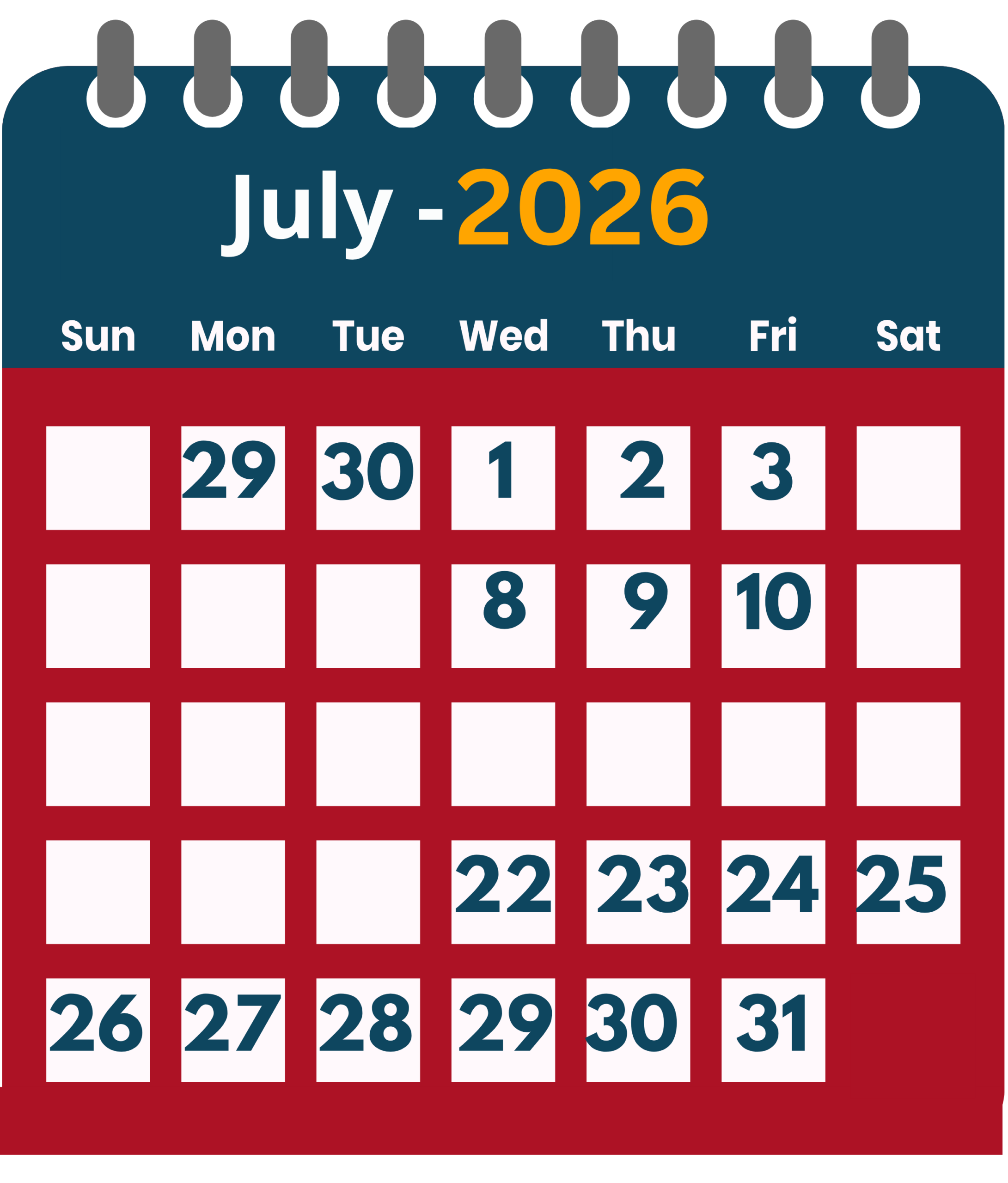
June Supply Chain Calendar
The major logistics events to watch this july 2026.
📅 29 June – 1 July – SMC³ Connections 2026
📍 Palm Beach, Florida, USA — The Breakers
The summer gathering of the freight transportation ecosystem — carriers, shippers and logistics service providers — for strategy, data and LTL/network insights.
📅 30 June – 2 July – Multimodal 2026
📍Birmingham, UK — NEC (National Exhibition Centre)
The UK and Ireland’s flagship freight, logistics and supply chain event, and the centrepiece of UK Logistics Week. Hundreds of exhibitors, five conference theatres and 80+ sessions across road, rail, sea and air — with co-located Warehouse & Yard, eDX and Road Transport Expo. Focus: AI, net zero, customs compliance and supply chain resilience. Free to attend.
📅 1–3 July – Thailand Warehousing, Logistics Automation & Supply Chain Expo 2026
📍 Bangkok, Thailand — BITEC
Southeast Asia’s reference exhibition for warehousing, logistics automation and supply chain technology — robotics, WMS/TMS and intralogistics for the fast-growing ASEAN corridor relevant to China+1 sourcing.
📅 8–9 July – Cold Chain Connection Toronto 2026
📍 Toronto, Canada
GCCA event on temperature-controlled logistics, cold-storage capacity and pharma/food supply chains.
📅 9–10 July – Central Asia Transport, Logistics & Investment Forum (CATLIF) 2026
📍Astana, Kazakhstan
Strategic forum on the trans-Caspian / Middle Corridor — infrastructure, investment and cross-border transit. Directly relevant to the China–Europe rail routes gaining ground as a Hormuz hedge.
📅 22 July – Cold Chain Connection Mexico City / Cold Chain Institute Latin America 2026
📍 Mexico City, Mexico
GCCA regional event on cold-chain operations and nearshoring-driven supply chain growth.
📅 Mid-July – Midwest Association of Rail Shippers (MARS) Summer Meeting 2026
📍USA (Midwest)
Twice-yearly gathering of rail shippers, carriers and providers — rail capacity, intermodal and freight policy. (Exact date to confirm.)
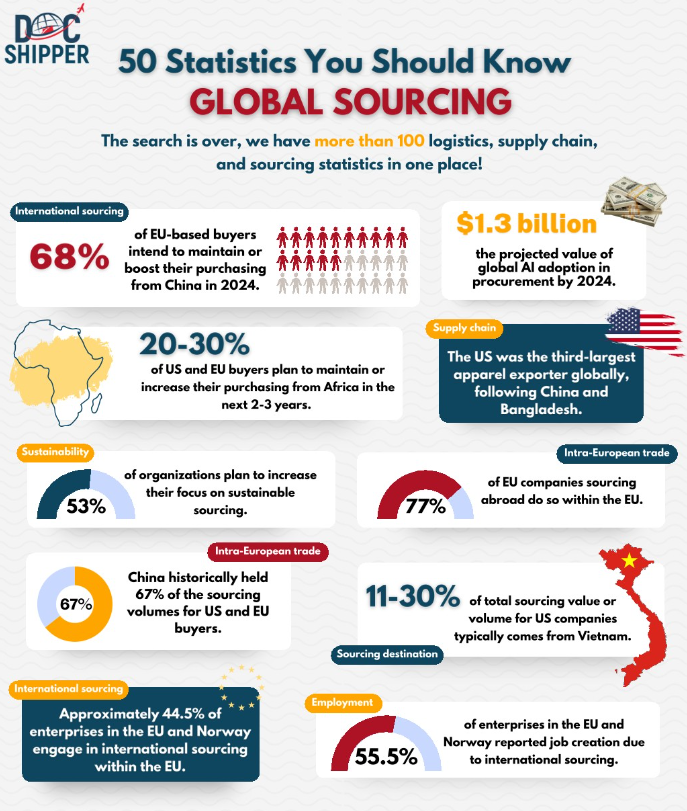
Some logistics infographics that might interest you!
Discover the latest logistics articles & updates