In short ⚡
Moq minimum order quantity is the smallest order size a supplier will accept so they can produce and fulfill a purchase order without losing money or disrupting operations. It’s usually tied to batch size, setup and tooling costs, raw material minimums, and production efficiency, and directly affects your unit price, cash flow, inventory risk, and shipping plan.
We hope you’ll find this article genuinely useful, but remember, if you ever feel lost at any step, whether it’s finding a supplier, validating quality, managing international shipping or customs, DocShipper can handle it all for you!
What MOQ (minimum order quantity) means for your business
Minimum order quantity sounds like a simple supplier rule, but your MOQ requirements shape everything from unit price to cash flow, and even how you book freight, choose Incoterms, and plan customs clearance.
Here’s the thing, when you source on platforms like MOQ Alibaba listings or directly from factories, that “order threshold” is rarely arbitrary.
It’s usually tied to a batch size, a production run, and the supplier’s need to protect their margins across the supply chain.
We’ve seen buyers get stuck right here, you want to test the market, but the supplier quotes 1,000 units and you only want 200.
This is exactly where smart procurement and sourcing planning beats “just negotiate harder.”
DocShipper Info
DocShipper audits your sourcing, freight, and customs plan together so you hit workable MOQs while protecting margins and lead times.
The meaning of MOQ, simple examples, and how it differs from EOQ
Last month, one buyer we assisted wanted a first order of 150 custom pouches, and the factory insisted on a minimum order quantity of 1,000.
The supplier wasn’t being difficult, their lot size matched their printing setup, and the setup cost only made sense across a bigger production run.
So what’s the meaning of MOQ in plain English.
It’s the order threshold a supplier sets so they can produce and fulfill your purchase order without losing money, or disrupting operations like material purchasing, line scheduling, and pack-out.
MOQ and economic order quantity are often confused, but they’re not the same tool.
MOQ is the supplier’s minimum, EOQ is your internal order optimization number based on demand and stock holding cost.
To make the difference concrete, use this quick comparison.
| Concept | What it means | Who controls it | What it optimizes |
| MOQ (minimum order quantity) | Supplier’s minimum order threshold, often tied to batch size and setup | Supplier | Supplier break-even, production efficiency, supplier terms |
| EOQ (economic order quantity) | Your best order size to balance ordering cost and inventory cost | You | Cash flow, inventory management, warehouse capacity |
When you calculate EOQ, you might land at 240 units, but if the supplier’s MOQ is 1,000, your sourcing plan has to adapt.
That’s why calculate minimum order quantity on your side is useful, but it’s only half the equation.
Types of MOQ you will see in practice: simple, complex, high, low, and no-MOQ models
Tip: Always ask what the MOQ is based on, not just what the MOQ is.
You’ll notice fast that “MOQ” can mean different constraints, depending on the factory’s process, packaging, and logistics plan.
Here are the MOQ models you’ll see most often in moq manufacturing, especially with China contract manufacturing.
- Simple MOQ: one number, like “1,000 units per SKU.”
- Complex MOQ: multiple conditions, like “500 units per color, 2,000 units total, and carton multiples.”
- High MOQ: common for custom molds, bespoke materials, or tight tolerances.
- Low MOQ: typical for stocked items, standard packaging, or trading companies.
- No-MOQ model: rare, but possible on ready-to-ship items, usually with higher per-unit cost.
Complex MOQs often include shipping and packing constraints like palletization, carton counts, and cargo space efficiency.
That’s where you start seeing MOQ decisions linked to shipment consolidation, less than container load versus full container load, and whether you buy on EXW, FOB, or CIF Incoterms.
To pressure-test a supplier’s MOQ requirements without wasting weeks, run this quick checklist before you accept the quote.
- Ask if the MOQ is tied to raw material MOQ (fabric rolls, resin bags, zippers, etc.).
- Confirm if the MOQ is per SKU, per color, or per size, not just “per order.”
- Check packaging constraints, carton multiples, pallet specs, and labeling rules.
- Clarify if price breaks apply, so you can model a volume discount curve.
- Validate lead time impact, because smaller runs can get pushed behind bigger schedules.
When you spot which “type” of MOQ you’re dealing with, you negotiate smarter, and you protect your inventory risk.
DocShipper Advice
DocShipper builds this model for you, then reshapes your order structure so suppliers accept realistic quantities with optimized logistics.
How suppliers set MOQ and how you can calculate a workable minimum order quantity
Once you understand minimum order quantity from the supplier’s side, the negotiation stops feeling personal and starts feeling like math.
Suppliers set MOQ requirements to hit a break-even point, fill their weekly capacity, and reduce operational friction in procurement, production, and fulfillment.
We’ve watched buyers fixate on “getting the MOQ lowered,” while the real win was changing the order structure, the pack plan, or the Incoterm so the supplier’s risk dropped.
The WTO regularly highlights how cost pressures and fragmented value chains influence trade behavior, and MOQ is one of those quiet mechanisms you feel immediately when importing.
Key cost drivers behind MOQ: demand, break-even point, and holding costs
Why does a factory push back so hard on MOQ in the first place.
Because they’re juggling demand uncertainty, a break-even calculation, and their own inventory management and cash constraints.
In moq manufacturing, the biggest drivers are usually these, and you can ask about them directly without sounding inexperienced.
- Setup and changeover: tooling, line calibration, printing plates, sampling approvals.
- Minimum raw material buys: suppliers upstream often impose their own order thresholds.
- Labor and line efficiency: short runs waste time between orders.
- Quality risk: early batches may need more QC, rework, and tighter supervision.
- Supplier holding costs: they don’t want to stock your custom materials or finished goods.
And don’t ignore the shipping angle.
If your order doesn’t fill cartons efficiently, freight cost per unit spikes, especially on LCL, and the supplier knows you’ll complain later.
That’s why MOQ, lot size, and your shipping plan, including freight forwarding choices, are linked.
Looking for a Reliable Shipping & Sourcing Partner?


How to estimate your own minimum order quantity and align it with supplier MOQ requirements
Bold truth: If you can’t model your own workable MOQ, you’ll negotiate blind and overbuy the wrong SKUs.
You don’t need a perfect forecast, but you do need a decision framework that ties demand forecasting, warehouse capacity, and landed cost together.
We use a simple workflow with clients before they place a purchase order on Alibaba or with a Chinese manufacturer.
Follow this step-by-step and you’ll immediately see where your leverage is.
Step 1: Estimate 60 to 90 days of demand per SKU using your sales velocity, seasonality, and a conservative buffer.
Step 2: Define your maximum stock risk, based on stock holding cost, expiry risk, and cash tied up.
Step 3: Convert that into a target order size, your internal “workable minimum order quantity.”
Step 4: Compare it to the supplier’s MOQ requirements and map the gap, per SKU and per color.
Step 5: Rebuild the order to fit production logic, adjust mix, cartons, and palletization to protect freight cost.
Step 6: Choose Incoterms, EXW vs FOB vs CIF, then model landed cost with customs clearance and import regulations.
If you want a quick way to calculate minimum order quantity for your own business, start with a practical sanity formula.
Workable MOQ (units) = expected demand during lead time + safety stock, capped by your cash and storage limits.
That’s not EOQ, but it’s the number that keeps you from buying inventory you can’t turn.
To align your figure with the factory’s MOQ, focus on reducing their pain, not just asking for a favor.
Here’s a negotiation-ready checklist you can use before you message a supplier on MOQ Alibaba threads.
- Can you accept a higher unit price for a smaller first batch, then scale into a volume discount?
- Can you standardize materials or packaging so the supplier’s batch size drops?
- Can you combine variants to hit MOQ per material, even if per SKU stays lower?
- Can you plan shipment consolidation with other SKUs to optimize LCL freight?
- Do you have the trade compliance plan ready, including labeling and import regulations, so nothing blocks shipment?
When we support clients at DocShipper, we often find the fastest win is pairing sourcing with logistics planning, so your order structure matches the production run and the shipping mode.
That alignment is what keeps your first import from turning into expensive “dead stock” sitting in a warehouse.
DocShipper Platform
Optimize Your Global Logistics with Cutting-Edge Solutions
Enhance efficiency, cut costs, and gain 24/7 visibility 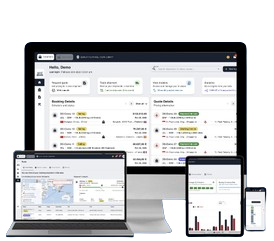 over your entire supply chain.
- Cut your shipping costs and maximize your margins
- Manage sourcing, freight, & customs on one platform
- Get real-time tracking and analytics
How MOQ impacts inventory, cash flow, and your supply chain strategy
We still remember a buyer who proudly accepted a low unit price, then froze when moq minimum order quantity forced a three‑month inventory pileup. You have probably felt that moment too, because MOQ decisions hit your cash flow before anything else.
From our side at DocShipper, we’ve seen how MOQ directly reshapes your storage needs, reorder rhythm, and exposure to demand swings, exactly the trade‑offs highlighted in UNCTAD supply chain resilience research.
To make this impact concrete, here’s a quick comparison based on what you’ll experience in real sourcing projects.
| High MOQ | Lower unit cost but heavier inventory risk and tighter cash position. |
| Low MOQ | Higher price per unit yet more flexibility and faster reaction to sales data. |
| No MOQ | Great for testing, but margins shrink and supplier priority often drops. |
One importer we worked with underestimated holding costs, insurance, warehousing, and aging stock quietly erased negotiated savings. That’s why you’ll want to view MOQ as a supply chain strategy lever, not just a purchasing condition.
DocShipper Info
DocShipper simulates different MOQ scenarios, from high to low, and designs a sourcing plus logistics setup that keeps inventory lean and liquidity safe.
How to handle and negotiate MOQ in manufacturing, Alibaba, and global sourcing
Start with this tip, never negotiate moq minimum order quantity in isolation from tooling, packaging, or inspection terms. We’ve watched buyers win on MOQ on Alibaba, then lose far more on hidden setup charges, a classic trap in Chinese manufacturing.
When we guide you, we lean on negotiation dynamics documented by the ICC Incoterms Committee, because cost breakdown transparency changes supplier behavior faster than pressure.
Below is a simple workflow you can follow before talking numbers with a supplier.
- Request cost structure, ask where fixed costs kick in.
- Offer phased orders, pilot batch now, scale later.
- Swap MOQ for trade‑offs, simpler packaging or longer lead time.
- Lock quality controls, inspection clauses protect small runs.
We once helped a buyer reduce MOQ by 40 percent simply by agreeing to standardized cartons and delayed branding. That move converted a rigid factory into a partner, and the relationship equity paid back on later orders.
1. Production Economics
MOQs are not arbitrary. They often reflect raw material constraints (e.g., 1,000m fabric rolls) or the production capacity of a full work shift.
Typical Supplier Cost Breakdown
Aligning your orders with production unit multiples unlocks pricing flexibility that simple negotiation cannot achieve.
2. Financial Impact & Agility
Choosing an MOQ is a trade-off between unit cost and liquidity. High MOQs lower the price but tie up your working capital.
Comparison: High MOQ vs. Low MOQ
Low MOQs typically cost 15-30% more per unit, but allow for rapid market testing without obsolescence risks.
3. Logistics Optimization
Order size directly influences shipping costs. Moving from LCL (Less than Container Load) to FCL (Full Container Load) can reduce unit landed costs by 25% to 40%.
Potential Savings (Landed Cost)
Leverage SKU Clustering to group multiple references and reach full container capacity.
DocShipper Alert
DocShipper reviews full cost breakdowns, terms, and Incoterms so you avoid invisible charges and secure sustainable supplier agreements.
Conclusion
So, what does moq minimum order quantity really mean for you when you source globally and especially from China? At DocShipper, we see it as a financial, operational, and negotiation signal rolled into one.
- MOQ shapes cash flow, not just unit price.
- Suppliers use MOQ to manage risk, capacity, and setup costs.
- You can negotiate MOQ creatively, if you trade the right variables.
- Smart MOQ alignment, supports resilient inventory and scalable growth.
If you treat MOQ as a strategic variable instead of an obstacle, you’ll source with more control, fewer surprises, and better long‑term leverage.
FAQ | Minimum order quantity (MOQ) explained: how to reduce risk and get better deals from suppliers
MOQ and EOQ are related but solve opposite sides of the problem:
- MOQ (Minimum Order Quantity)
- Set by: the supplier
- Goal: make the production run financially viable and efficient for them
- Typical form: “500 units per color,” “$10,000 per order,” or “1 pallet per SKU”
- EOQ (Economic Order Quantity)
- Set by: you (the buyer) using your own data
- Goal: minimize your total cost of ordering + holding inventory
- Uses: demand, ordering cost, and storage/holding cost
How to use both:
- Start with your EOQ or “workable order size” based on demand and cash.
- Compare it to the supplier’s MOQ.
- If EOQ < MOQ, you:
- Negotiate structure (combine colors/sizes, adjust specs)
- Accept higher unit cost for a smaller first batch
- Or find a different supplier with a lower MOQ that fits your EOQ better.
Don’t just ask “What’s your MOQ?”—you’ll get a number that might be useless. Instead, be very specific. For example, when you message a supplier:
- Clarify the level:
- “What is your MOQ per SKU?”
- “Is the MOQ per color, per size, or per total order?”
- Clarify customization:
- “What is the MOQ for my logo/print/packaging?”
- “Is the MOQ different for stock items versus custom items?”
- Clarify value-based thresholds:
- “Do you also have a minimum order value (MOV) in USD per order?”
- Ask about flexibility:
- “What’s your standard MOQ, and what is the minimum you could accept for a first test order?”
Always restate what you understood:
“Just to confirm, MOQ is 300 units per color, with a total minimum of 1,000 units per order, correct?”
OEM stands for “Original Equipment Manufacturer.” In sourcing, an OEM product usually means:
- The factory manufactures to your design/specification (dimensions, materials, functions), or
- They significantly customize an existing product under your brand
Because OEM implies more customization, MOQ tends to be higher because:
- Custom molds, dies, or printing plates must be amortized over more units.
- Unique raw materials or colors may require larger minimum buys.
- Extra development work (sampling, testing, certifications) needs to be covered.
If you want OEM but keep MOQ lower, you can:
- Use existing molds or base models, only change color/label.
- Limit the number of variants (sizes, colors, SKUs).
- Accept standard packaging instead of fully custom for the first batch.
When supplier MOQ is way above your demand or budget, you have several levers before walking away:
- Adjust the product:
- Use standard materials/colors they already stock.
- Reduce variants (fewer SKUs, sizes, or colors).
- Adjust the deal:
- Propose a trial order at a higher unit price with a plan to scale on later orders.
- Ask if they can split production: “Produce 1,000 now, ship 500 now, 500 later.”
- Adjust the sourcing:
- Look for trading companies or wholesalers with lower MOQs.
- Partner with another buyer to combine volumes on the same item.
- Adjust your business model:
- Start with a simpler version of the product to test the market.
- Use higher-MOQ SKUs only once you have stable demand data.
If none of these work and the MOQ still doesn’t match your risk tolerance, the cheapest decision is often to find another supplier rather than over-commit on stock.
The biggest losses rarely come from the MOQ number itself, but from how it’s handled. Common mistakes include:
- Chasing the lowest unit price:
- Accepting a huge MOQ to get a better price, then sitting on slow-moving stock.
- Ignoring variant-level MOQ:
- Forgetting that MOQ might be per color/size and ending up oversupplied in the wrong variants.
- Not checking MOQ links:
- Overlooking minimums on packaging, labels, or accessories (e.g., hangtags, boxes) that create hidden volume commitments.
- Separating sourcing from logistics:
- Ordering just enough for the factory, but in quantities that are terrible for freight (e.g., half‑empty cartons, very inefficient LCL).
- Miscommunicating:
- Assuming the supplier meant “total per order” when they meant “per SKU,” leading to disputes or re-quotes.
You avoid most of these by clarifying every detail in writing, modeling demand per SKU, and checking how your order interacts with freight and storage before you sign a proforma invoice.
Read more
Looking for more? Check out these articles.
Need Help with
Logistics or Sourcing ?
First, we secure the right products from the right suppliers at the right price by managing the sourcing process from start to finish. Then, we simplify your shipping experience - from pickup to final delivery - ensuring any product, anywhere, is delivered at highly competitive prices.


Fill the Form
Prefer email? Send us your inquiry, and we’ll get back to you as soon as possible.
Contact us