Chinese truck parts: how to source reliable, cost-effective components from China

  • DocShipper Team 9 Min
  • Published on September 11, 2022 Updated on January 6, 2026
img

In short ⚡

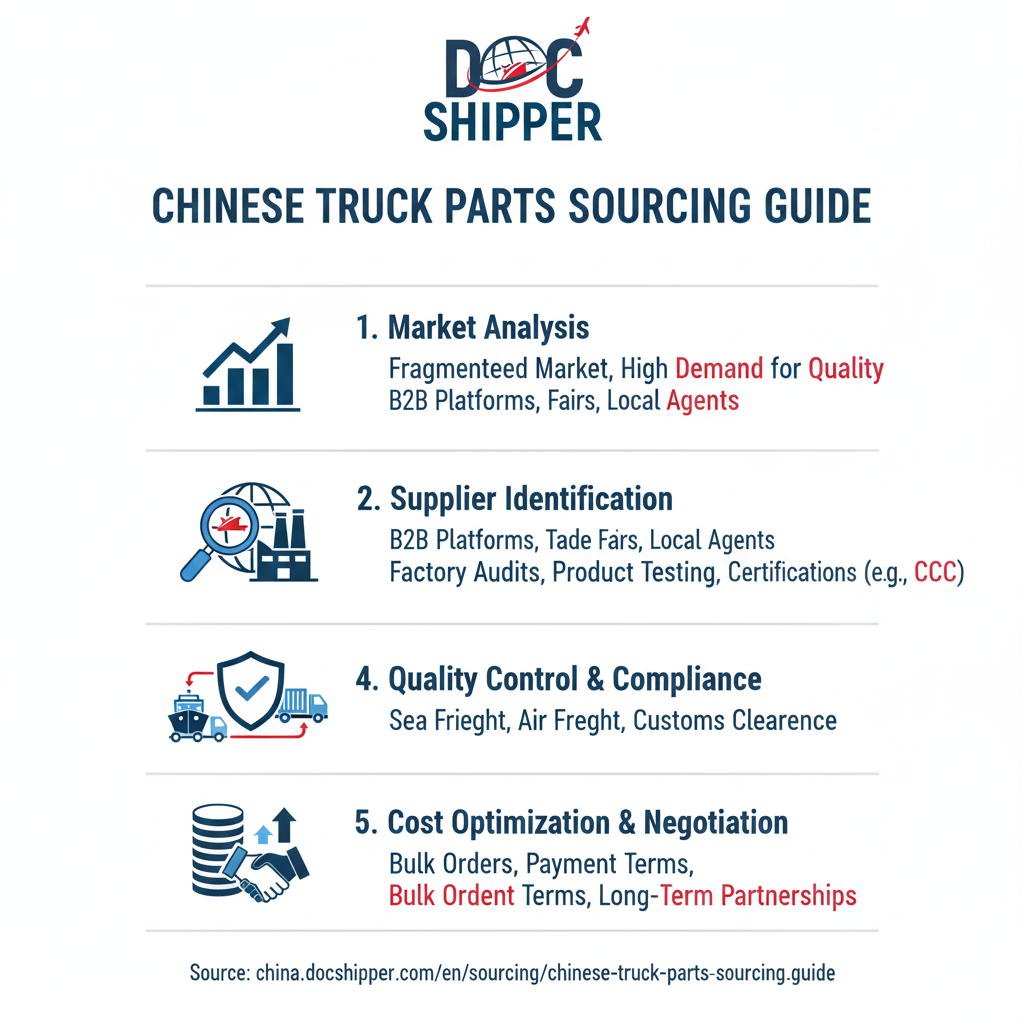
Chinese truck parts are spare components for brands like Sinotruk, Foton, FAW, and Dongfeng that cover chassis, engines, transmissions, brakes, axles, cooling systems, and service consumables. To source them reliably and cost‑effectively from China, importers must choose between genuine, OEM, and aftermarket parts, verify suppliers, and plan logistics, lead times, MOQ, and warranty in detail.

We hope you’ll find this article genuinely useful, but remember, if you ever feel lost at any step, whether it’s finding a supplier, validating quality, managing international shipping or customs,  DocShipper can handle it all for you!

Free shipping quote 24h      I want to talk to a sourcing expert

Understand the Chinese truck parts market before you import

If you’re sourcing chinese truck parts, you’ll notice fast that the “market” isn’t one market at all. It’s a messy mix of genuine parts, aftermarket truck parts, rebuilders, trading companies, and factories that do OEM/ODM services on the side.

Here’s the thing, your results depend less on luck and more on whether you understand how spare parts supply chain channels work, from parts catalog accuracy to MOQ (minimum order quantity) and realistic lead time.

We’ve seen first-time truck parts importers buy the “right” item name but the wrong variant, then spend weeks arguing because the supplier’s catalog images didn’t match the exact chassis series. That pain is avoidable when you map brands, regions, and component families properly.

Key Chinese truck brands, component types, and regional manufacturing hubs
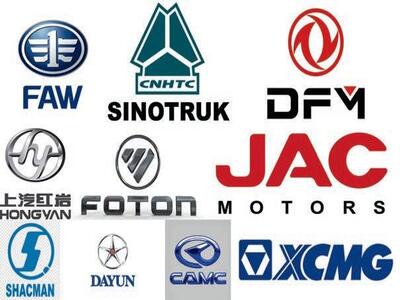
One of our clients once asked for “Sinotruk brake parts,” and got three different quotes for three different platforms. That’s when they learned that Sinotruk parts can mean multiple generations, axle ratings, and brake configurations.

You’ll typically source by brand ecosystem and by component family, not by a vague product name. You’ll see this most with Foton truck parts, FAW truck parts, and Dongfeng truck parts, where the model code dictates fitment and warranty terms.

To keep your cross-border sourcing clean, start by grouping what you need into clear buckets like these.

  • Chassis components, including suspension components and steering linkages
  • Engine spare parts, including turbochargers, fuel injectors, and belts
  • Transmission assemblies, including clutches and flywheels and synchronizers
  • Brake system parts, including pads, chambers, and air valves
  • Axles and differentials, including hubs, bearings, crown wheel and pinion sets
  • Radiators and cooling systems, plus thermostats and water pumps
  • Filters and gaskets, seal kits, and service consumables

Regional hubs matter because they affect specialization and response speed. You’ll often find clusters around heavy industry zones for china heavy truck parts, and coastal export cities where traders bundle mixed SKUs for wholesale distribution.

DocShipper Info

Looking for clarity between brands, hubs and component families,
DocShipper maps your needs into a structured parts sourcing plan,
then shortlists vetted factories so your first RFQ already avoids catalog and fitment mistakes.

Market trends affecting price, quality, and availability of Chinese parts

Direct tip: treat every price quotation as temporary until you lock specifications, MOQ, and shipping terms. In the chinese truck parts world, a quote can change simply because a foundry reallocates capacity to higher-margin orders.

From experience, you’ll get the most surprises in metal-heavy items like axles and differentials components and in fast-moving service items like filters and gaskets. Both swing with raw material pricing and seasonal maintenance cycles.

This is also where import logistics starts shaping your unit cost. Container availability, port congestion, and routing can move your landed cost more than a small factory discount, which is why we keep a close eye on IMO-driven sea freight constraints when planning container shipping.

Use this quick checklist to sense-check availability risk before you place any bulk purchasing order.

  • Lead time confirmed in writing for each SKU, not “20 to 30 days” as a blanket statement
  • Parts catalog with OE reference numbers, clear photos, and revision dates
  • Stated MOQ per item, plus carton quantity rules that impact inventory
  • Clarity on warranty terms and how claims get processed across borders
  • Any upcoming model change that could affect compatibility for Chinese OEM truck components

If you’ve been burned by “available” stock that magically disappears, you’re not alone. You’ll reduce that risk by requesting batch photos and packing lists aligned to your SKU sheet, before money moves.

Choose between genuine, OEM, and aftermarket Chinese parts
Once you decide to import truck parts from China, the biggest lever you control is not shipping. It’s the part type, genuine, OEM, or aftermarket.

This is where buyers get stuck, especially when suppliers blur terms like “OEM quality.” You’ll want definitions tied to documentation, testing, and warranty, not marketing.

We’ve handled cases where a buyer ordered “OEM” china engine parts, then discovered they were actually aftermarket units packed in unbranded boxes. The parts ran fine for a month, then came the comebacks.


DocShipper Alert

Confused by “genuine”, “OEM quality” and replicas,
DocShipper audits technical specs and packaging so you actually receive the part type you paid for,
before quality issues or comeback claims hit your margins.

How original, OEM, and replica parts differ in quality, lifespan, and warranty

What does “OEM” really mean when you’re buying chinese truck parts? If you don’t pin it down, you’ll get three different interpretations and one invoice.

Here’s a simple comparison you can use when negotiating and aligning expectations on quality inspection and warranty terms.

Type Typical source What you can expect Warranty reality
Genuine parts Brand-authorized factory or authorized channel Best fitment consistency, traceability, stable materials Most enforceable, but paperwork must match brand rules
Chinese OEM truck components Original equipment supplier producing to spec, sometimes off-contract Very good consistency if batch control is strong Often limited, clarify claim process and replacement terms
Aftermarket / replica Independent aftermarket factories and trading companies Wide range, from excellent value to risky shortcuts Usually weakest, you’ll rely on your purchase contract

You’ll also hear “OE number compatible.” That’s not the same as genuine, and it doesn’t guarantee metallurgy or heat treatment on items like clutches and flywheels.

To protect yourself, tie the deal to objective checkpoints like ISO-aligned inspection criteria, batch identification, and controlled packaging.

Looking for a Reliable Shipping & Sourcing Partner?

We handle the entire sourcing process, supplier research, negotiation, production, and inspections, so you can focus on what matters most: growing your business.

When to prioritize low cost vs durability for engines, heavy-duty parts, and accessories

Bold statement: cheap parts are only cheap until you count downtime. This becomes painfully obvious when you buy low-grade brake system parts or cooling components and end up paying twice in labor and returns.

That said, not every SKU needs premium spec. You can often save money safely on consumables, while you keep durability high on critical powertrain parts like transmission assemblies and china engine parts.

Use this simple workflow when deciding where to spend and where to optimize on price.

Step-by-step decision workflow:

  • Step 1: classify the part by risk, safety-critical, downtime-critical, or cosmetic
  • Step 2: define your target lifespan in hours or kilometers, not “good quality”
  • Step 3: require material or test evidence for heavy-load SKUs, especially Chinese heavy-duty parts
  • Step 4: choose the channel, genuine for high-risk, OEM for balanced cost, aftermarket for low-risk
  • Step 5: align order size to inventory management, MOQ, and replacement frequency

We’ll say it plainly, if you’re sourcing turbochargers, injectors, or drivetrain components, durability beats an aggressive discount almost every time. If you’re sourcing filters and gaskets for routine service kits, a vetted aftermarket supplier can make financial sense.

DocShipper Advice

Unsure where to pay premium and where to save,
DocShipper classifies your BOM by risk and downtime impact,
then builds a mixed sourcing strategy that protects critical parts while optimizing consumables.

Evaluate Chinese suppliers so you avoid quality and fraud risks

Here’s a situation we see all the time with chinese truck parts: a supplier looks perfect online, clear photos, fast replies, attractive MOQ, then the sample arrives and the steel grade is wrong. From experience, this is where most sourcing projects quietly fail, not on price, but on supplier verification.

You’ll notice fast that reliable truck spare parts suppliers in China behave differently once you start asking operational questions. When we vet suppliers, we cross-check data points that align with ISO manufacturing norms and basic trade compliance standards published by the International Organization for Standardization, because paperwork alone never tells the full story.

This short checklist shows how we separate solid partners from risky ones before you send a deposit.

  • Business license match, exact Chinese company name must align with bank details.
  • Factory scope, their license must explicitly cover truck parts manufacturing or machining.
  • Sample consistency, multiple samples should show identical finish and tolerances.
  • Payment logic, refusal of escrow or milestones is an early red flag.
  • Traceability, batch numbers and material certificates should exist without hesitation.

DocShipper Alert

A factory that looks perfect online can still fail basic QC,
DocShipper runs on-the-ground audits, sample checks and compliance verification,
so you avoid fake entities, inconsistent batches and costly disputes.

Optimize your import process for truck parts from China

Start with this tip: if you don’t lock your chinese truck parts import workflow before production, logistics costs will erase your factory savings. We once handled a brake system shipment where EXW pricing looked cheaper, until inland trucking and last-minute export fees doubled the landed cost.

You’ll benefit from designing the import flow backward, delivery deadline first, then shipping mode, then Incoterms. We align this process with international trade practices referenced by the International Chamber of Commerce to avoid disputes on cost and risk transfer.

This comparison table helps you choose the right shipping setup based on urgency and cargo profile.

Criteria Sea Freight (LCL/FCL) Air Freight
Cost per unit Lowest for heavy parts High
Transit time 25 to 45 days 5 to 10 days
Best use case Engines, axles, bulk spare parts Emergency stock, samples
Risk control Higher, needs inspection and packing checks Lower but costly

DocShipper Advice

Choosing the wrong Incoterms or shipping mode can wipe out your savings,
DocShipper designs an end to end import workflow,
optimizing transport, customs and deadlines so your landed cost stays under control.

Conclusion

So what should you really walk away with after exploring how to source chinese truck parts without painful surprises?

  • Supplier verification matters more than unit price, especially for safety-critical parts.
  • Clear part classification keeps quality expectations aligned from day one.
  • Import planning must start before production, not after it finishes.
  • On-the-ground checks reduce risk far more than contracts alone.
  • Working with experts helps you avoid mistakes we’ve already solved hundreds of times at DocShipper.

FAQ | Chinese truck parts: how to source reliable, cost-effective components from China

Amazon is good for:

  • Small, urgent orders (maintenance parts, service kits).
  • Cross‑checking market prices and part numbers.

But if you’re thinking like an importer:

  • You can’t control the upstream factory, only the seller.
  • Many “brands” on Amazon are just private‑label products from Chinese factories anyway.
  • You rarely get batch traceability, material certificates, or stable pricing for repeat B2B orders.

Use Amazon as:

  • A backup channel for emergencies.
  • A benchmarking tool for retail prices and product positioning.

Not as your main source if you care about long‑term margins, consistency, and technical control.

Ask us anything!

Need Help with
Logistics or Sourcing ?

First, we secure the right products from the right suppliers at the right price by managing the sourcing process from start to finish. Then, we simplify your shipping experience - from pickup to final delivery - ensuring any product, anywhere, is delivered at highly competitive prices.

Component-15.png

Live Chat

Get instant assistance from our team—just click and start chatting!

Live Chat Now
image

Fill the Form

Prefer email? Send us your inquiry, and we’ll get back to you as soon as possible.

Contact us
image
Component-15.png

Call us

Reach out to us on WhatsApp for quick, convenient, and personal support.

Call us
image
Component-15.png