In short ⚡
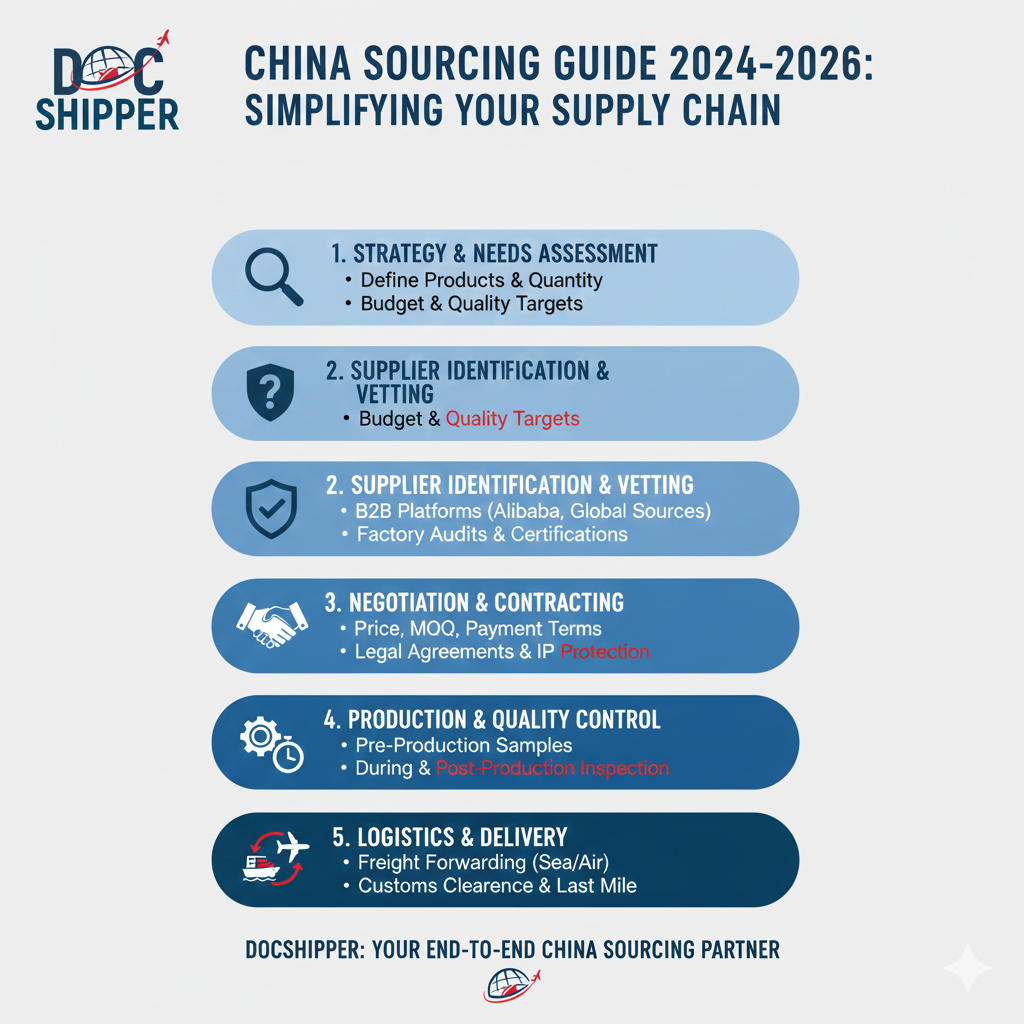
Sourcing goods from China means managing a structured procurement process to find reliable factories, trading companies, or sourcing agents, lock precise product specs and compliance, and control quality, lead times, and landed cost. It requires clear Incoterms, written QC/inspection steps, validated HS codes and paperwork, and planning around Chinese New Year and peak-season capacity risks.
We hope you’ll find this article genuinely useful, but remember, if you ever feel lost at any step, whether it’s finding a supplier, validating quality, managing international shipping or customs, DocShipper can handle it all for you!
How to prepare your business before you start sourcing in China
Sourcing goods from China goes smoothly when you treat it like a procurement project, not a shopping trip.
You’re about to make decisions that affect landed cost, lead time, quality control, and even whether customs clearance will block your shipment.
We’ve seen importers lose weeks because they started talking MOQs and prices before locking specs, compliance, and the right buying channel.
One quick reality check, the WCO classification and documentation rules don’t care if you’re “just testing” a product, your HS code, commercial invoice, and packing list still need to be correct.
Clarify your product, budget, and compliance requirements

Last quarter, we watched a buyer approve a “perfect” sample, then discover the bulk used a slightly different plastic, and the import regulations in their market treated it as a different category.
That’s the hidden trap in China sourcing, if your specs aren’t written, you’re negotiating opinions.
Start with a simple product file that your supplier cannot misunderstand.
- Product spec sheet, dimensions, materials, tolerances, color codes, packaging, labeling, and carton drop test requirements
- Compliance, target market standards (think ISO-type test methods when relevant), certificates, restricted substances, required markings
- Cost model, target unit price, target landed cost, tooling costs for OEM manufacturing or ODM manufacturing, and budget for inspections
- Procurement constraints, acceptable MOQs, payment terms, and required lead time including buffers for peak season
To keep your supplier selection clean, separate must-haves from nice-to-haves before you request quotations.
This is also where you plan your import paperwork, because product compliance affects documents and taxes.
Here’s a quick checklist you can reuse before you contact any sourcing china suppliers.
- HS code hypothesis validated with your broker, plus duty and VAT assumptions
- Customs clearance document set defined, commercial invoice fields, packing list format, and marking rules
- Quality targets written as measurable criteria, not “good quality” wording
- Inspection budget and timing defined, pre-production, during production, or final random inspection
- Timeline includes Chinese New Year, factory shutdowns, and port congestion windows
If you sell online, plan differently, product sourcing from China for ecommerce usually needs tighter packaging specs, barcode accuracy, and returns risk control.

DocShipper Info
Secure your margins before you send the first RFQ.
Decide whether you need factories, trading companies, or sourcing agents
Pick the wrong counterpart and you’ll feel it everywhere, slower answers, fuzzy accountability, and surprises on price breaks.
When you’re sourcing goods from China, what you’re really choosing is your control level in vendor management and supply chain management.
Factories can be ideal for customization and cost, but you’ll manage communication, tooling, and capacity risk more directly.
Trading companies can reduce friction, but you may sacrifice transparency on the real manufacturer and margin structure.
Sourcing agents or china direct sourcing services can speed up supplier selection, audits, and negotiation, especially if you’re new or scaling fast.
This quick comparison helps you decide what fits your procurement reality.
| Option | Best when | Main upside | Main risk |
| Factory (manufacturer) | You need customization, stable volumes, OEM manufacturing | Lower unit cost, clearer technical control | Harder communication, capacity swings, weaker export paperwork support |
| Trading company | You want speed, multi-SKU bundling, smaller MOQs | Convenience, easier coordination across suppliers | Less transparency, mixed quality sources, pricing layers |
| Sourcing agent / sourcing services | You need on-the-ground qualification, audits, and tighter control | Faster vetting, better negotiation support, inspection coordination | Quality depends on the agent, fees, conflicts of interest if unmanaged |
In practice, many importers mix models, a factory for core SKUs, a trading company for accessories, plus an agent for audits and inspections.
If you’re actively sourcing china manufacturers, ask early who holds the export license and who issues the commercial invoice, it affects compliance and traceability.
DocShipper Advice
Build a vendor structure that scales without chaos.
How to find, vet, and negotiate with Chinese suppliers
Sourcing goods from China becomes profitable when you build a repeatable pipeline, not when you chase “the cheapest quote.”
You’ve probably dealt with suppliers who say yes to everything, then change the story when you ask for a purchase order and delivery date.
We’ve seen this most during peak season and right before Chinese New Year, when real capacity tightens and lead times suddenly “update.”
The ICC Incoterms Committee makes one point very clear, trade terms define responsibilities, and that changes your risk more than a small unit price difference.
Looking for a Reliable Shipping & Sourcing Partner?
Use online platforms, fairs, and sourcing services without falling for scams
We once reviewed a case where the “factory” had great photos, fast replies, and a too-good-to-be-true price, then pushed an escrow payment outside the platform.
You can guess what happened next, the bank account name didn’t match the company name on the quote.
When you’re doing China sourcing via platforms, treat every first contact like a lead that must earn trust.
Use these channels, and use them with guardrails.
- Online B2B platforms, great for breadth and first filtering, but verify identity and production capability
- Trade fairs, better for face-to-face qualification and seeing samples, but follow up with factory verification
- china direct sourcing services, useful when you need local language, faster audits, and on-site checks
Here are the red flags we tell you to act on immediately.
- Supplier refuses a video call walk-through of the workshop and warehouse
- Bank account beneficiary doesn’t match the registered company
- They “can do any product,” but can’t explain process steps or quality checkpoints
- They push trade assurance alternatives that remove your protection
- They avoid discussing factory audit or product inspection
If you’re shortlisting sourcing china suppliers, ask for traceable proof, business license, export records if available, and sample shipment references.
DocShipper Alert
Protect every new supplier contact before money leaves your account.
Verify factories, check MOQs and prices, and negotiate terms that work for you
Want a negotiation tip that saves you money and headaches in sourcing goods from China?
Stop negotiating only unit price, negotiate the whole operating system, MOQs, defect policy, payment protection, and Incoterms.
Use this step-by-step workflow to keep supplier selection and negotiation disciplined.
Step 1: Confirm legal identity and scope, business license, address match, ownership of the bank account.
Step 2: Validate capability, process, equipment, QC checkpoints, and whether they do OEM manufacturing or ODM manufacturing.
Step 3: Quote normalization, same specs, same packaging, same Incoterms, same lead time assumptions.
Step 4: Cost and risk review, compare landed cost not just EXW price, include tooling, inspection, freight forwarding, and import duties.
Step 5: Contract and purchase order terms, QC standard, AQL or defect thresholds, rework/replacement, IP clauses, late delivery penalties.
Step 6: Payment safety, consider letter of credit for larger orders, or staged payments tied to inspection milestones.
You’ll notice fast that many “cheap” quotes are really EXW with hidden logistics work pushed onto you.
So bring Incoterms into the discussion early, EXW, FOB, or CIF changes who controls trucking, export clearance, and the risk point.
This table helps you compare suppliers beyond the sales pitch.
| What to compare | What to ask | Why it protects your margins |
| MOQ and price breaks | MOQ per SKU, color, packaging, and tiered pricing | Prevents surprise MOQs and lets you plan inventory cashflow |
| Lead time realism | Production days, material sourcing time, peak season capacity, Chinese New Year shutdown dates | Reduces stockouts and expensive air freight later |
| QC and inspection access | Who owns QC, can you do third-party inspection, what happens if it fails | Stops you paying for defects you can’t sell |
| Trade terms | EXW vs FOB vs CIF, what’s included, export docs responsibility | Controls your logistics risk, freight forwarding choices, and total landed cost |
When you lock the deal, keep the language unambiguous in the purchase order, and match it to the proforma invoice, commercial invoice, and packing list later.
If you want help connecting sourcing to freight forwarding and international shipping choices, we can coordinate the end-to-end flow at DocShipper, from supplier validation support to logistics planning, without turning it into a sales pitch.
One last practical note, if your delivery window crosses late January or February, build buffers.
Chinese New Year can stretch into weeks of ripple effects, including slower replies, delayed raw materials, and missed vessel cutoffs across ocean freight and air freight.
DocShipper Advice
Turn every quote comparison into a structured, risk-controlled decision.
How to manage product development, samples, and quality control
Here’s a moment we see all the time when sourcing goods from China, a supplier sends a “perfect” sample, production starts, and the bulk goods arrive slightly off. Colors drift, materials change, or packaging feels cheaper. From experience, this gap happens when product development and quality control are treated as a formality instead of a system.
We once worked with a buyer who approved samples over video calls only, then skipped pre-shipment inspection to save time. The result was a 12 percent defect rate and delayed deliveries, something the ISO quality standards have warned about for years. Quality in China is controllable, but only if you control it on the ground, step by step.
Before mass production, you need a simple checklist to stay aligned with the factory.
- Golden sample sealed and signed by both you and the supplier.
- Clear product specs, materials, tolerances, and packaging rules.
- Pre-production inspection to validate raw materials.
- During production checks at 20 to 30 percent progress.
- Final random inspection before balance payment.
Skip one step, and you invite surprises, especially during peak seasons or before Chinese New Year.
How to handle shipping, incoterms, and key risks when importing from China
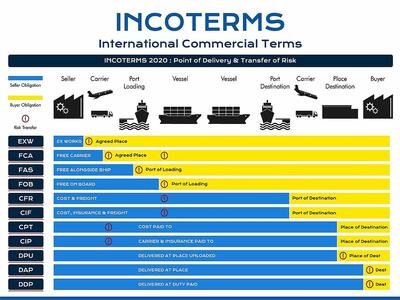
Direct tip. Never confirm a price when sourcing goods from China unless the Incoterm is crystal clear. We’ve seen buyers celebrate a “cheap” EXW price, only to discover later that inland transport, export clearance, and port fees erased all margin.
One client learned this the hard way right before Chinese New Year, when trucking capacity vanished and rates doubled. According to the ICC Incoterms Committee, misunderstandings around Incoterms remain one of the top causes of trade disputes, and shipping delays.
To help you compare options fast, here’s a practical view of common shipping setups.
| Incoterm | Your Control | Main Risk |
| EXW | Low | Hidden local costs in China |
| FOB | Medium | Port congestion and timing gaps |
| CIF | Low | Limited control over freight quality |
| DAP / DDP | High | Supplier markup on logistics |
We usually recommend FOB when you want balanced risk control, then manage freight with a partner who understands seasonality, inspections, and customs as one chain.

DocShipper Alert
Lock transparent costs before you confirm any supplier price.
Conclusion
So where does this leave you after exploring sourcing goods from China? If you’re asking whether it’s risky or manageable, the real answer is simple. It’s predictable when you apply structure, timing awareness, and control at every step.
We’ve seen importers turn China into a growth engine, and others lose sleep over avoidable mistakes. The difference is execution, not luck.
Here are the key takeaways you should walk away with.
- Product clarity and inspections protect you more than friendly supplier promises.
- Incoterms define your true cost, not just the unit price.
- Chinese New Year and peak seasons must be planned months ahead.
- On-the-ground coordination reduces risk, delays, and margin erosion.
FAQ | Sourcing goods from China: how to find reliable suppliers, control quality, and protect your margins
Treat it as a low‑risk pilot. Focus on:
1) Choosing the right channel
- Use B2B platforms (Alibaba, Global Sources, Made‑in‑China) for:
- Low MOQs
- Many suppliers to compare
- Consider wholesale markets / stock sellers for:
- Ready‑made products, no customization
- Very small test quantities
2) Structuring your first order
- Keep SKUs limited (1–3 variants) to avoid spreading your cash.
- Accept slightly higher unit prices in exchange for:
- Lower MOQ
- Clear QC process (inspection allowed)
- Use simple terms: FOB or CIF for early orders so you don’t have to manage too much local China logistics.
3) Reducing risk
- Always pay via secure methods (platform escrow, PayPal for samples, or bank transfer to the company, not a personal account).
- Pay 30% deposit / 70% after pre‑shipment inspection, even on small orders when possible.
- Start with one supplier you can manage closely, instead of many tiny tests everywhere.
You can build a fully remote sourcing process if you layer tools and partners correctly:
1) Find and shortlist suppliers
- Use trusted B2B platforms, plus:
- Filter by years on platform, export markets, and certifications.
- Ask for live video calls and factory walk‑throughs.
- Cross‑check: business license, address, and bank account beneficiary name.
2) Validate and negotiate remotely
- Ask for:
- Detailed photos/videos of production lines and warehouse.
- References of past clients in your region (if possible).
- Use a standardized RFQ (same specs, Incoterms, quantities) for all suppliers.
- Negotiate not just price but:
- MOQ per color/SKU
- Lead time
- Inspection access
- Defect/rework policy
3) Control quality and shipments
- Hire a third‑party inspection company in China for:
- Pre‑production, during production, and/or final random inspection.
- Use a freight forwarder (or a sourcing company) to:
- Arrange pick‑up at factory
- Handle export clearance and international freight
- Coordinate with your customs broker
This way you never need to step on a plane, but still keep eyes and hands on the ground.
Unrealistically low quotes usually hide one (or more) of these problems:
- Lower grade materials than you specified (or no written specs at all).
- Hidden charges in logistics (EXW with expensive local fees, surprise packaging costs, documentation fees).
- Future “quality fading” (good first order, cheaper components in later orders).
To protect yourself:
- Force all suppliers to quote on:
- The same written specs and packaging
- The same Incoterm (e.g. FOB)
- The same order quantity and lead time
- Ask for a cost breakdown (materials, packaging, tooling, assembly) for complex products.
- Build “quality and stability” into the purchase order:
- Golden sample reference
- Clear defect thresholds (AQL)
- Rework/compensation terms if inspections fail
If one quote is much cheaper than the pack:
- Ask very specific questions about materials, processes, testing, and packaging.
- Assume something is being removed to reach that price and verify it explicitly.
The most damaging mistakes for ecommerce and FBA sellers are usually operational, not just “bad suppliers”:
- Vague packaging specs
- Result: cartons rejected by Amazon, barcodes unreadable, higher prep fees.
- Fix: send exact carton dimensions, weight limits, label placement diagrams, and FNSKU examples.
- Ignoring compliance and documentation
- Result: listings blocked, goods stuck at customs, forced recalls.
- Fix: confirm needed tests and certificates (safety, EMC, food contact, etc.) before production.
- No backup supplier
- Result: stockouts and lost ranking when one factory has delays.
- Fix: qualify 2–3 suppliers over time, and move part of your volume once you stabilize.
- Relying only on photos for QC
- Result: color differences, poor finishing, high return rates and bad reviews.
- Fix:
- Approve physical golden samples.
- Run at least a final inspection before balance payment.
- Not planning around Chinese New Year and peak seasons
- Result: urgent air freight, which kills margin.
- Fix: build inventory early and place POs at least 2–3 months before critical sales periods.
Sourcing agents can be an asset if you structure the relationship clearly:
1) Choose the right agent profile
- Good fit when:
- You’re new and lack time/China experience.
- You need ongoing supplier searching, audits, and QC.
- Check:
- Do they charge you a transparent fee/commission, or also take hidden factory kickbacks?
- Can they show you past project examples in your product category?
2) Keep control of key levers
- Contracts and POs:
- Always in your company’s name with the factory, not only via the agent.
- Information flow:
- You receive inspection reports directly from the QC company.
- You see quotes from multiple factories, not just one “mystery” supplier.
3) Define scope and KPIs
- What they do:
- Supplier search and vetting
- Sample coordination
- Negotiation support
- Factory audits and inspections
- Logistics coordination (if needed)
- How you judge performance:
- On‑time deliveries
- Defect rates
- Cost evolution over time
A good agent should reduce your risk and time spent, not become an opaque layer that hides who really makes your products.
Read more
Looking for more? Check out these articles.
Need Help with
Logistics or Sourcing ?
First, we secure the right products from the right suppliers at the right price by managing the sourcing process from start to finish. Then, we simplify your shipping experience - from pickup to final delivery - ensuring any product, anywhere, is delivered at highly competitive prices.
Fill the Form
Prefer email? Send us your inquiry, and we’ll get back to you as soon as possible.
Contact us