In short ⚡
Trump China trade tariffs in 2025 refer to a proposed universal baseline duty of about 10% on most imports, plus extra country-specific surcharges and existing measures like Section 301 tariffs on many China-origin goods. They raise landed costs, increase customs scrutiny on HS codes, valuation and origin, and heighten supply chain and trade-war disruption risks.
We hope you’ll find this article genuinely useful, but remember, if you ever feel lost at any step, whether it’s finding a supplier, validating quality, managing international shipping or customs, DocShipper can handle it all for you!
What exactly changed in Trump’s 2025 tariff plan on China and global imports?
If you’re tracking trump china trade tariffs in 2025, what matters is not the headline politics, it’s the mechanics that hit your landed cost, your customs clearance, and the way your freight forwarding plan behaves under stress.
Here’s the thing, tariffs don’t “just add 10%”. They can trigger customs valuation questions, force country of origin proof, and expose sloppy harmonized system code choices during a customs audit.
We’ve watched importers get stuck at the exact same moment: their supplier says “we’ll mark it differently”, their customs broker refuses, and suddenly a routine shipment turns into a trade compliance mess.
One important reference point for how these measures are framed globally is the World Trade Organization, especially when countries start justifying countermeasures and challenging each other’s tariff schedules.
The new 10% universal tariff and country-specific surcharges explained
Last time tariffs jumped, we saw a U.S. buyer panic-call us after their supplier changed the invoice description the night before sailing, thinking it would “avoid the tariff”. It didn’t, and the entry review flagged the HS classification plus the country of origin evidence.
With trump china trade tariffs back in the spotlight, the 2025 concept being discussed publicly is a universal baseline tariff (often described as 10%) plus country-specific surcharges layered on top, depending on how “reciprocal” the U.S. deems a partner’s treatment of U.S. exports.
To make sense of what that could mean operationally, separate the components you’ll see in your entry cost stack:
- Baseline import tariffs applied broadly across most foreign goods.
- Country add-ons that vary by origin, and can shift quickly during a trade war cycle.
- Product-specific measures already in place, including Section 301 tariffs on many China-origin goods, plus potential anti-dumping duties or safeguard measures on targeted categories.
- Non-tariff barriers that act like friction, tighter documentation requests, more inspections, more holds.
For your day-to-day, the practical effect is simple: you can’t estimate duty by “what it was last year” anymore. You need a duty model that starts with HS code, origin rules, and your declared customs value, then layers the right tariff programs.
And yes, you should assume tariff escalation risk, because the moment one side moves, the other side often answers with retaliatory tariffs, export duties, or administrative pressure.
DocShipper Alert
Let DocShipper review your classification and documentation before customs flags your shipment.
How “reciprocal tariffs” work in practice for Chinese and other foreign goods
Tip: treat “reciprocal tariffs” as a process risk first, and a rate second, because the rate can change faster than your supply chain can.
In plain terms, with trump china trade tariffs framed as “reciprocal”, the U.S. signals it may raise duties to mirror the barriers U.S. exporters face abroad. That can include tariffs, quotas, VAT-like systems, licensing, or other restrictions, even when they don’t look like classic tariffs.
What you’ll notice fast is how this spills into paperwork. A “reciprocal” logic tends to increase enforcement around:
- Country of origin claims, especially when you do a sourcing shift out of China.
- Reclassification of goods attempts that don’t match product reality.
- Related-party pricing and customs valuation for buyers tied to overseas manufacturers.
- Tariff exemption or tariff exclusion filings, when available, and the documentation burden they create.
Before you start changing suppliers or routing, run a quick compliance check to avoid expensive surprises at the port:
- Confirm HS code with supporting specs, photos, and composition data.
- Lock origin proof (BOM, production steps, supplier declarations) before you book.
- Align Incoterms so duty responsibility is crystal clear, especially on FOB vs DDP quotes.
- Validate documents like the bill of lading, commercial invoice, and packing list for consistency.
- Ask your customs broker what would trigger an exam or a post-entry review.
If you want the most practical definition, “reciprocal tariffs” are a policy lever that turns your import pipeline into a negotiation tool. That’s why you’ll see more talk of bilateral trade agreement pressure, trade deficit arguments, and enforcement actions like dumping investigation waves.
DocShipper Advice
DocShipper helps you tighten origin proof, HS mapping, and broker coordination so policy shifts do not paralyze your cargo.
How Trump’s China tariffs hit importers, manufacturers, and consumers
When trump china trade tariffs rise, you don’t just pay more duty, you absorb planning volatility. Your procurement calendar, your safety stock, even your SKU mix start behaving differently.
We’ve seen buyers do everything “right” on price, then lose the margin at the border because duty hit harder than expected, and nobody recalculated the landed cost after a tariff update.
This is also where the trade war story gets real for you. The burden spreads across importers, domestic manufacturers using imported inputs, and consumers watching retail prices creep up.
For a grounded view of macro effects like inflation pass-through and import substitution, the OECD regularly publishes data and analysis that lines up with what we see operationally in logistics and compliance.
DocShipper Alert
DocShipper audits your landed cost by SKU and route so you catch hidden exposure before you sign contracts.
Direct cost impact on landed prices, margins, and retail inflation
What happens first is math. And the math is rarely in your favor.
With trump china trade tariffs, the direct impact shows up in your total landed cost, meaning product cost plus international freight, insurance, handling, plus duties and fees calculated off customs valuation.
Use this quick comparison to see where “a simple tariff” can bite, even before you talk about upstream price increases from suppliers:
| Cost driver | What changes under higher tariffs | Where importers get surprised |
| Duties on customs value | Higher duty rate applied to declared value | Incorrect customs valuation assumptions, missing assists, royalties, tooling |
| Section 301 tariffs | Add-on duty for China-origin categories | Wrong HS code or overlooked product scope updates |
| Freight and accessorials | Congestion premiums during reroutes | Not budgeting for exams, demurrage, port storage |
| Price pass-through | Supplier raises prices to cover uncertainty | FOB quote changes, hidden raw-material surcharges |
One operational note from experience: when your supplier quotes FOB and your freight market spikes, you get hit twice, higher freight plus higher duty if your valuation includes certain freight elements depending on entry rules and structure.
If you’re selling B2C, retail inflation is simply the downstream expression of that. If you’re B2B, it becomes margin compression and ugly renegotiations.
DocShipper Platform
Optimize Your Global Logistics with Cutting-Edge Solutions
Enhance efficiency, cut costs, and gain 24/7 visibility 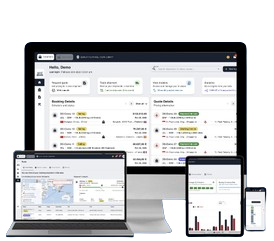 over your entire supply chain.
- Cut your shipping costs and maximize your margins
- Manage sourcing, freight, & customs on one platform
- Get real-time tracking and analytics
Looking for a Reliable Shipping & Sourcing Partner?


Supply chain disruption risks for China-centric sourcing and logistics
Are you prepared for the day your “normal” China lane stops being normal?
With trump china trade tariffs and the threat of retaliatory tariffs, disruption often looks like small operational shocks that stack up, more inspections, new documentation demands, and sudden carrier changes that break your planning rhythm.
We once handled a case where a buyer tried rerouting shipments through a third country to “dilute” the China origin. Customs still treated it as China origin because the processing was minimal, and the shipment faced delays plus additional scrutiny.
To keep your pipeline resilient, you want a clear workflow that your team, broker, and logistics provider can execute without improvising:
Workflow for disruption-ready importing
- Step 1: Map your SKUs by HS code, origin, and exposure to Section 301 tariffs or other trade remedies.
- Step 2: Review incoterms in supplier contracts, confirm who controls freight, insurance, and export documents.
- Step 3: Build alternate routings with your freight forwarding partner, including backup ports and carriers.
- Step 4: Set documentation standards, consistent product descriptions, BOM, origin proof, and align with your customs broker.
- Step 5: Use tools like a bonded warehouse strategy when it fits, to manage timing and cash flow while you confirm duty exposure.
None of this eliminates tariffs. It reduces the odds that a tariff shock turns into a full supply chain disruption.
DocShipper Advice
DocShipper designs alternative sourcing, routing, and documentation workflows so you stay operational even when rules get tighter.
How you can adapt your sourcing and logistics to Trump’s China tariffs
Last quarter, one of your peers called us after realizing a single HS code misclassification had amplified the Trump China trade tariffs impact by 12 percent on arrival. From experience, this is where you feel the squeeze first, on landed cost surprises and delayed cargo.
You’ll notice fast that adapting is not just about changing suppliers, it’s about redesigning flows, contracts, and controls around import cost visibility and tariff exposure, exactly where we focus with you at DocShipper.
Here is a simple workflow we use with you to mitigate tariff risk before cargo leaves the factory.
- Map tariff exposure by product, HS code, origin, and Incoterms, aligned with U.S. Customs guidance.
- Test alternative sourcing in Vietnam, Mexico, or dual China setups while preserving supplier leverage.
- Re-negotiate pricing logic so tariff surcharges are shared, not silently absorbed by you.
- Adjust logistics design using bonded warehouses, FTZs, and smarter routing where allowed.
Institutions like the World Bank have documented how importers who restructure sourcing early absorb shocks far better than those reacting after tariffs are enforced.
DocShipper Info
DocShipper maps your tariff exposure, tests Vietnam or Mexico options, and adjusts Incoterms and routing so your policy risk becomes a controlled variable.
Legal, policy, and trade-war scenarios to watch around US–China tariffs
Direct tip: you want to track policy signals weekly, not quarterly, because with Trump China trade tariffs, timing becomes a legal and financial weapon. We have seen shipments cleared one week and stalled the next under the same contract.
This is where most importers get stuck, you assume stability, while political signaling quietly shifts customs enforcement intensity.
Use this comparison to understand which scenarios matter most for your planning.
| Scenario | What it means for you | Risk level |
| Tariff escalation cycle | Higher duties, faster audits, stricter valuation checks | High |
| Temporary exemptions | Short windows to import at lower cost, documentation critical | Medium |
| Negotiated freeze | Tariffs paused but uncertainty remains | Low to medium |
According to the WTO, past trade disputes show enforcement changes often precede official announcements, which is why we help you prepare scenarios before headlines hit.
DocShipper Alert
DocShipper monitors trade policy shifts and updates your scenarios so you do not ship blindly into a tariff escalation cycle.
Conclusion
This moment is not just about tariffs, it’s about control. Trump China trade tariffs will keep shifting, but you gain leverage when you treat sourcing, customs, and logistics as one system.
Key takeaways
You’ve probably dealt with suppliers who promise stability while policy moves underneath you, so here’s what truly protects you long term.
- Visibility beats reaction. You track landed cost, duties, and margin impact shipment by shipment.
- Flexibility wins negotiations. Multi-country sourcing keeps suppliers honest.
- Compliance reduces friction. Clean HS codes and valuation avoid costly inspections.
- Strategy lowers stress. Planning beats rushing when rules change overnight.
FAQ | Trump’s China trade tariffs in 2025: what they mean for your costs, supply chain, and strategy
Treat this as a mini project before you place the PO, not at arrival. A practical workflow is:
- List your SKUs with:
- HS code
- Country of origin (factory location + substantial transformation)
- Declared customs value (including assists, tooling, etc.).
- For each HS code:
- Check the base MFN duty on the U.S. tariff schedule.
- Confirm if Section 301 still applies and at what rate.
- Identify any China-specific “reciprocal” or additional tariff line.
- Build a simple calculator (even in Excel):
- Column for MFN duty %
- Column for Section 301 %
- Column for new China surcharge %
- Column for AD/CVD if relevant
- Total rate × customs value = expected duty per shipment.
- Validate your result with:
- Your customs broker (screen two or three sample HS codes).
- Written confirmation (email) so everyone internally uses the same assumptions.
Not automatically. Customs looks at *origin rules*, not your commercial story. To avoid China-level tariffs:
- Confirm “substantial transformation”:
- The product must significantly change in the new country (new HS heading, manufacturing steps, assembly that creates a new article).
- Simple repackaging, labeling, or basic assembly rarely changes origin.
- Document the shift:
- Detailed bill of materials (BOM).
- Process description: what operations are done in each country.
- Supplier declarations of origin with factory addresses.
- Avoid “origin washing” risks:
- Don’t ship almost-finished goods from China and do trivial work elsewhere.
- Don’t understate the role of Chinese components if they drive functionality.
- Test with your broker before scaling:
- Share tech sheets, photos, and process flow.
- Ask: “Would CBP likely accept Vietnam/Mexico as origin under this setup?”
If customs decides origin is still China, you’ll owe back duties plus possible penalties.
This is one of the most dangerous shortcuts you can take. To stay compliant:
- Never let the supplier decide HS code alone:
- You, your compliance team, or your broker should control classification.
- Use objective criteria: composition, function, technical specs.
- Red flags in supplier suggestions:
- HS code moves to a completely different product family.
- Descriptions become vague (“metal parts”, “plastic product”) instead of specific.
- Code chosen has an unrealistically low duty rate vs. similar products.
- Instead, do this:
- Have a written internal classification sheet per SKU (HS code + rationale).
- Share only the *final* HS code and description with the supplier to copy onto documents.
- Ask your broker to review any contentious HS codes and keep that email as support.
- If CBP finds deliberate misclassification:
- Expect re‑assessment of duty (plus interest).
- Possible penalties, and higher scrutiny on future shipments.
In many cases, yes, but the levers are more technical than political. Options to explore:
- Use tariff engineering (before production):
- Modify design so the product falls into a less penalized HS code (e.g. change materials, accessories).
- Only if the new design is genuine, permanent, and consistent.
- Optimize customs valuation:
- Remove non-dutiable charges from customs value where allowed (post‑import services, certain inland costs).
- Make sure assists, royalties, and tooling are handled correctly so you don’t over‑declare.
- Explore available programs:
- Foreign Trade Zones (FTZ) or bonded warehouses to delay duty and manage cash flow.
- Duty drawback if you later re‑export the goods.
- Any temporary exclusions or special programs that apply to your HS code.
- Re‑negotiate with your supplier:
- Split tariff cost in pricing.
- Lock in longer-term price bands so you’re not hit by sudden “tariff surcharges” on their side.
All of this must be structured with your broker and legal/compliance advisor to stay on the right side of U.S. customs law.
Patterns repeat across industries. The big pitfalls are:
- Acting before checking:
- Switching origin or HS codes without a classification/origin review.
- Booking cargo under new assumptions no one has validated.
- Ignoring documentation:
- No BOM, no clear production steps by country.
- Inconsistent product descriptions across invoice, packing list, and entry.
- Short-term routing hacks:
- Routing via a third country hoping origin will “change” with no real processing.
- Using unknown intermediaries that complicate traceability and increase fraud risk.
- Poor internal communication:
- Sales using old landed cost assumptions.
- Purchasing signing FOB/DDP deals without understanding duty impact.
- Not involving experts early:
- Waiting until the shipment is on the water to ask a customs broker for help.
- Not centralizing tariff-related decisions (each buyer improvises their own “solution”).
Build a simple rule: no tariff-driven change (origin, HS, valuation, routing) gets implemented without a quick written review from your customs broker or trade counsel.
You want contracts that make cost and responsibility explicit when tariffs move. Key points:
- Clarify Incoterms impact:
- Under FOB: you own international freight + import clearance + duties.
- Under DAP/DDP: make sure who pays duty is clearly defined and priced in.
- Add tariff clauses:
- Define how new or increased tariffs are handled (shared, capped, or trigger renegotiation).
- Set review points (e.g. if duty rises by >X%, parties re-open pricing).
- Lock documentation standards:
- Exact product descriptions, HS codes, and country of origin to appear on documents.
- Requirement for timely, accurate commercial invoices and packing lists.
- Protect timelines:
- Service-level terms around document delivery (late docs = shared cost for demurrage, storage, etc.).
- Align with your broker:
- Share contract and Incoterms with your customs broker so entries reflect reality.
- Avoid situations where the legal importer and the commercial terms don’t match.
This way, when tariffs shift again, you have a framework to adjust cost and responsibility instead of arguing shipment by shipment.
Need Help with
Logistics or Sourcing ?
First, we secure the right products from the right suppliers at the right price by managing the sourcing process from start to finish. Then, we simplify your shipping experience - from pickup to final delivery - ensuring any product, anywhere, is delivered at highly competitive prices.


Fill the Form
Prefer email? Send us your inquiry, and we’ll get back to you as soon as possible.
Contact us