The Global Shift: Why the 2026 China Plus One strategy is Essential
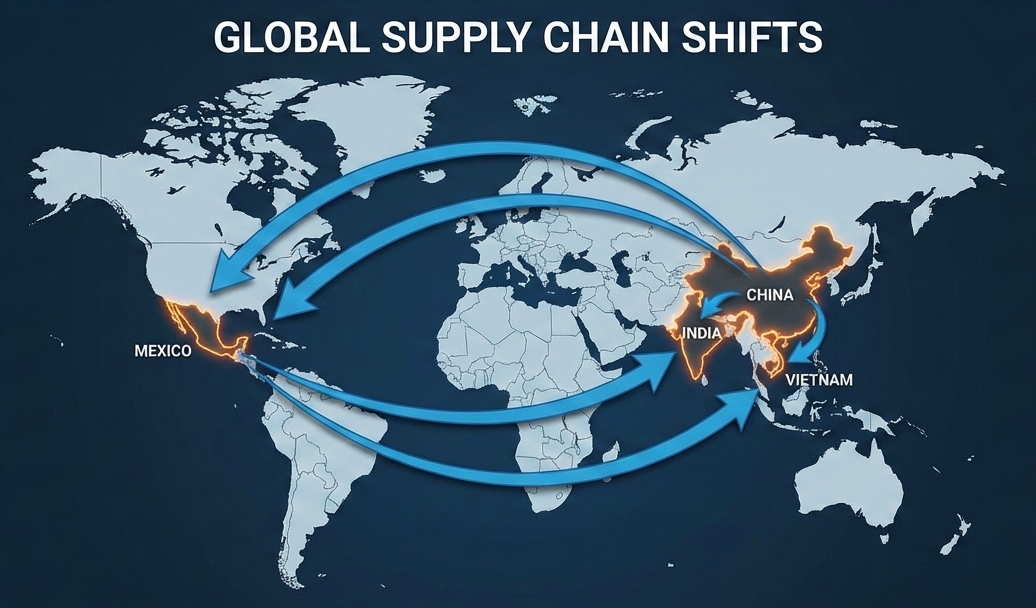
The tectonic plates of global manufacturing are shifting, and 2026 is the year businesses can no longer afford to ignore the fault lines. Between escalating US–China tariffs, unpredictable port disruptions, and post-pandemic lessons burned into every CFO’s memory, the question is no longer whether to diversify, it’s “where, how fast, and at what cost.”
Welcome to the era of the 2026 China Plus One strategy: keeping a footprint in China while simultaneously routing production through one or more alternative hubs. This year, three destinations dominate the conversation (Vietnam, India, and Mexico) each offering a radically different value proposition for small and mid-sized enterprises (SMEs) racing to de-risk their supply chains.
In this article, DocShipper’s sourcing and freight experts break down the Vietnam vs India vs Mexico sourcing 2026 debate with real logistics data, hidden cost warnings, and an actionable framework you can apply to your business today.
Why SMEs are diversifying manufacturing from China in 2026
For two decades, China was the undisputed factory of the world. But three compounding forces have made diversifying manufacturing from China an operational priority rather than a strategic option:
- Tariff exposure: US Section 301 tariffs on Chinese goods now range from 25% to over 100% on strategic categories including electronics, textiles, and EV components. The EU’s own tariff packages added further pressure in 2025. For SMEs operating on thin margins, a 30-point tariff swing is existential.
- Rising Chinese labour costs: Average manufacturing wages in China have tripled since 2010 according to ILO data, eroding the original cost arbitrage that drove offshoring in the first place.
- Geopolitical brittleness: Taiwan Strait tensions, evolving export control regimes, and the potential for sudden regulatory pivots mean that a single-country supply chain is now a strategic liability, not an efficiency gain.
Managing China Plus One logistics 2026 across multiple borders
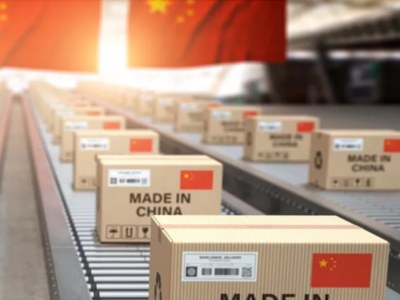 Running a China Plus One logistics 2026 setup means operating at least two parallel supply chains simultaneously:
- maintaining existing production flows out of China
- while building new lanes from an alternative hub.
This creates complexity at every node, procurement, freight, customs, and inventory visibility.
Key challenges reported by DocShipper clients making this transition include:
- dual-currency purchase orders,
- mismatched container lead times,
- and compliance documentation that varies dramatically between jurisdictions.
The companies that succeed are those who invest in a unified logistics management platform, and a freight partner who knows all three corridors.
Comparing the Hubs: Vietnam vs India vs Mexico sourcing 2026
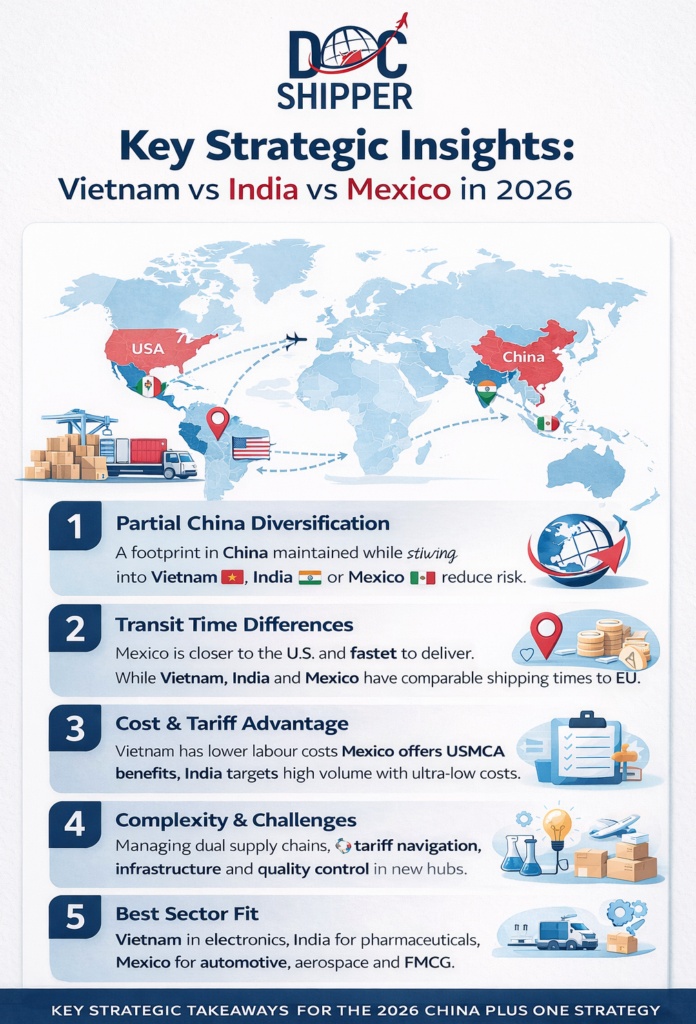
Not all alternatives to China are created equal, and choosing the wrong hub can cost you more than staying put. Here’s how Vietnam, India, and Mexico stack up across the factors that matter most: cost, speed, capacity, and tariff advantage.
Factor | 🇻🇳 Vietnam | 🇮🇳 India | 🇲🇽 Mexico |
Avg. Sea Transit to USA | 25–30 days | 28–35 days | 4–8 days |
Avg. Sea Transit to EU | 28–35 days | 20–28 days | 18–25 days |
Labour Cost Index | Low | Very Low | Medium |
Tariff Advantage (US) | Strong (USMCA n/a) | Moderate | Very Strong (USMCA) |
Infrastructure Quality | Improving | Developing | Strong |
MOQ Flexibility | High | Medium | High |
Best Sector Fit | Electronics, textiles, footwear | Pharma, chemicals, textiles | Auto, aerospace, FMCG |
Sources: World Bank, ILO 2025, DocShipper freight data 2025–2026.
Vietnam’s role in a 2026 China Plus One strategy: Speed vs. capacity
 Vietnam remains the first call for most businesses implementing a China Plus One strategy. Its proximity to Chinese supply chains means components can cross the border with minimal disruption, while finished goods ship to Western markets without the tariff burden of Chinese origin.
In 2025, Vietnam attracted over $36 billion in foreign direct investment primarily in electronics, semiconductors, and footwear. The Hanoi–Ho Chi Minh City manufacturing corridor now rivals Guangdong in density for certain product categories. For SMEs, this translates to a mature supplier ecosystem, competitive FOB prices, and increasingly professional factory management.
The challenge? Capacity is tightening fast.
Industrial zone occupancy in major provinces hit 85–95% in 2025 according to Cushman & Wakefield Vietnam. Lead times for custom tooling have lengthened, and skilled labour shortages are emerging in high-tech segments. Early movers won the best deals; 2026 entrants must move quickly and work with experienced sourcing agents to find available capacity.
India’s infrastructure for China Plus One logistics 2026: High volume potential
 India is the long game. With a population of 1.4 billion, a rapidly expanding middle class, and an ambitious government push under the PLI (Production-Linked Incentive) scheme, India is positioning itself as the next major global manufacturing powerhouse, particularly in pharmaceuticals, chemicals, textiles, and consumer electronics.
For China Plus One logistics 2026, India’s advantages are real but nuanced:
- Labour costs are among the lowest in Asia, roughly 30–40% cheaper than Vietnam for equivalent skill levels in many sectors.
- The sheer scale of India’s industrial base means no category runs out of supplier options.
- However, logistics infrastructure remains a work in progress.
- Port congestion at JNPT (Mumbai), unreliable inland trucking, and multi-layer GST compliance create friction that can erode cost savings. Businesses considering India should build in wider delivery windows and work with freight partners who have strong local customs expertise. See our overview:
Mexico’s nearshoring advantage in Vietnam vs India vs Mexico sourcing 2026
 For North American supply chains, Mexico is the most disruptive development in manufacturing geography since China’s WTO accession. The USMCA agreement gives Mexican-manufactured goods tariff-free access to the US market, and road freight transit times of 4–8 days to US distribution centres make just-in-time inventory strategies viable again.
In the Vietnam vs India vs Mexico sourcing 2026 debate, Mexico wins decisively on speed and North American regulatory alignment. The automotive, aerospace, FMCG, and medical device sectors have driven a nearshoring boom in states like Nuevo León, Jalisco, and Querétaro. Foreign investment into Mexican manufacturing reached a record $36.1 billion in 2024.
The trade-offs: higher wage floors than Southeast Asia and capacity constraints in skilled labour, particularly for complex electronics assembly. Companies serving European markets also face longer sea freight transit (18–25 days via Atlantic lanes), making Mexico less optimal as a single alternative to China for EU-focused exporters.
Challenges in diversifying manufacturing from China
Moving production away from China is the right call, but it rarely goes as smoothly as a spreadsheet suggests. Before you commit, here are the hidden friction points that catch even experienced importers off guard.
Hidden costs of fragmented China Plus One logistics 2026
 The headline cost comparison, Chinese FOB price vs. Vietnamese or Mexican equivalent, rarely captures the full picture.
When businesses begin diversifying manufacturing from China, they often encounter a cluster of hidden costs that quietly erode projected savings:
- Split shipment premiums: Smaller order volumes from new suppliers often fall below full-container thresholds, forcing more expensive LCL (less-than-container-load) freight, sometimes at 2–3× the per-unit freight cost of FCL.
- Dual compliance overhead: Managing export documentation for two or three origin countries simultaneously (with different HS codes, certificate-of-origin requirements, and phytosanitary standards) can cost 0.5–1.5% of cargo value in additional administrative and brokerage fees.
- Inventory buffer inflation: Lower supplier reliability at new facilities during the first 12–18 months typically requires 20–40% higher safety stock, tying up working capital.
Quality control risks when diversifying manufacturing from China to new hubs
Years of deep supplier relationships in China, built on trust, shared tooling, and institutional knowledge, don’t automatically transfer to new manufacturing hubs. Quality management is one of the most frequently underestimated risks in any China Plus One strategy.
The most common failure modes include: insufficient pre-production sampling, lack of in-country inspectors, and over-reliance on self-reported factory certifications. In Vietnam and India especially, ISO certification does not guarantee actual process adherence, on-site audits are non-negotiable for new suppliers.
DocShipper recommends a three-inspection model:
- pre-production audit,
- mid-production inspection,
- and pre-shipment quality check. For Mexico, the cultural and regulatory alignment with North American standards generally makes quality integration smoother, though supplier onboarding still takes 3–6 months for complex assemblies.
Logistics Planning for your 2026 China Plus One strategy

Getting the sourcing decision right is only half the battle, the other half is building the freight architecture to support it. Smart lane design and proactive customs strategy can make or break your total landed cost.
Choosing the right freight lanes for Vietnam vs India vs Mexico sourcing 2026
Freight lane design is not a one-size-fits-all exercise in Vietnam vs India vs Mexico sourcing 2026. The optimal routing depends on your destination market, cargo type, urgency, and Incoterm structure.
- For US-bound cargo from Vietnam: The Trans-Pacific corridor via Los Angeles/Long Beach or Seattle remains the workhorse, with 25–30 day transit times. Air freight from Hanoi or Ho Chi Minh City is viable for high-value, low-volume goods (cost: roughly $4–7/kg depending on destination).
- For EU-bound cargo from India: Sea freight via Nhava Sheva (Mumbai) to Rotterdam or Hamburg operates on 22–28 day transit. The Suez Canal disruptions of 2024 have largely stabilized, but Cape of Good Hope re-routings may add 10–14 days and 20–25% cost for certain lanes, build contingency into contracts.
- For US-bound cargo from Mexico: Road freight via key border crossings (Laredo, El Paso, Otay Mesa) is the default. Rail intermodal is growing as an alternative for the US Midwest. Port of Manzanillo serves transpacific clients efficiently.
Customs and tariff navigation in a 2026 China Plus One strategy

Tariff strategy is where the 2026 China Plus One strategy either pays off or backfires. Three rules guide DocShipper’s approach for clients:
- Rule 1 — Verify substantial transformation: Simply routing Chinese components through Vietnam or Mexico for assembly does not automatically grant preferential origin. US and EU customs authorities apply substantial transformation rules and in some cases value-added thresholds. Failure to comply exposes you to anti-circumvention duties and significant fines.
- Rule 2 — Leverage FTA stacking: Vietnam is party to the CPTPP, EVFTA, RCEP, and VJEPA. India has GSP access to many markets. Mexico has USMCA, EU–Mexico agreement, and 50+ bilateral trade treaties. Working with a customs specialist to identify optimal FTA stacking can cut landed cost by 5–15% on many commodity codes.
- Rule 3 — Monitor rule changes in real time: The US Trade Representative reviews Section 301 tariff lists annually. Subscribe to official notifications and work with a licensed customs broker who provides proactive alerts.
Enhance efficiency, cut costs, and gain 24/7 visibility 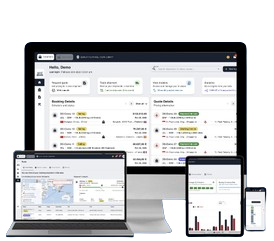 over your entire supply chain.
- Cut your shipping costs and maximize your margins
- Manage sourcing, freight, & customs on one platform
- Get real-time tracking and analytics


Fill the Form
Prefer email? Send us your inquiry, and we’ll get back to you as soon as possible.
Contact us