In short ⚡
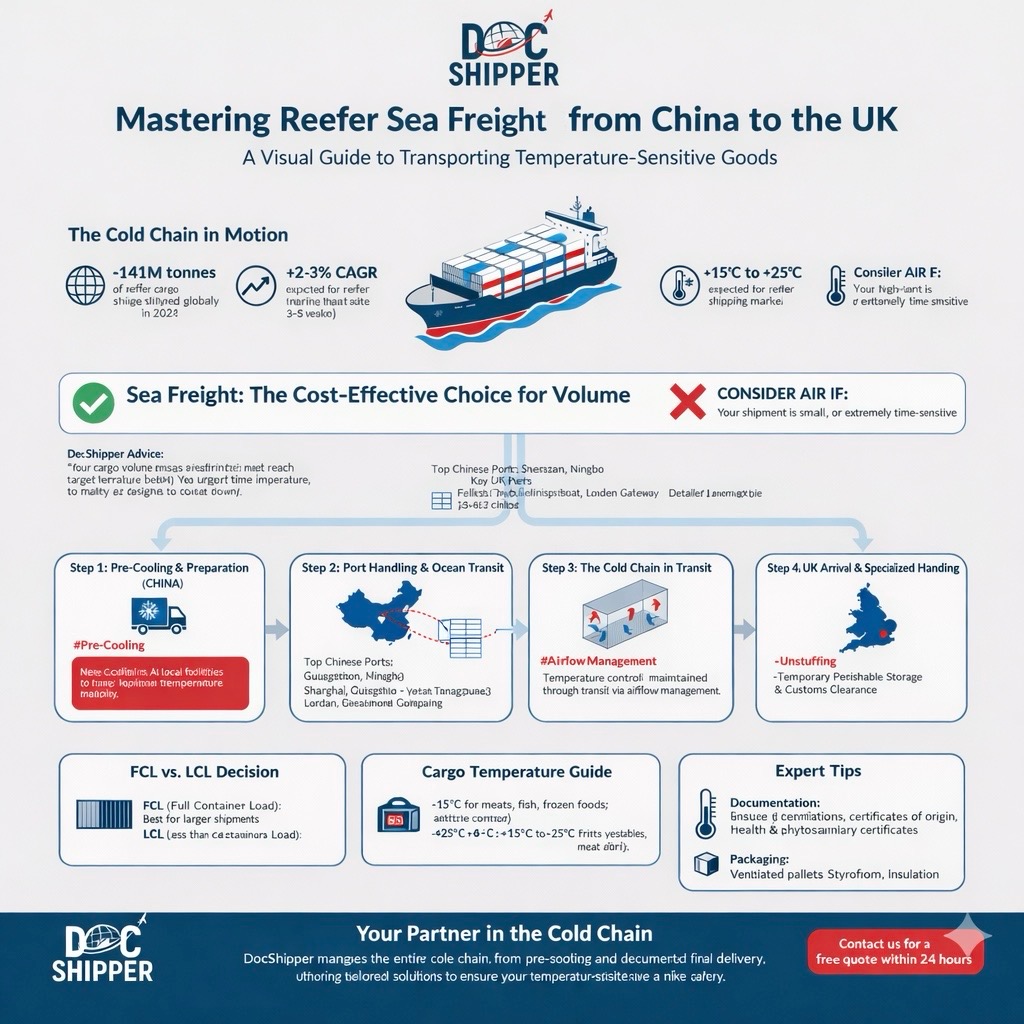
Reefer sea freight is the use of refrigerated sea containers with integrated cooling units to ship temperature‑sensitive cargo that cannot tolerate temperature swings, delays, or poor handling. It provides active temperature control, managed airflow, monitoring, and sometimes controlled atmosphere, making it essential for perishable cargo, fresh food, frozen goods, pharma, flowers, and other products with strict cold chain requirements.
We hope you’ll find this article genuinely useful, but remember, if you ever feel lost at any step, whether it’s finding a supplier, validating quality, managing international shipping or customs, DocShipper can handle it all for you!
What is reefer sea freight and when do you truly need it?
Reefer sea freight is the part of ocean freight built for cargo that cannot tolerate temperature swings, delays, or poor handling. If you’ve ever opened a carton and found sweating, soft packaging, or off-odors, you already know how fast cold chain logistics can break.
You’ll choose refrigerated sea freight when the value of your perishable cargo depends on stable setpoints, documented reefer monitoring, and controlled handoffs from factory to port of discharge, then on to door-to-door delivery.
One useful reference point is how the IMO frames refrigerated transport risks around safety and integrity during maritime operations. In practice, it means you treat temperature control like a critical system, not a “nice-to-have.”
DocShipper Info
Get a quick, unbiased review of your shipment profile with DocShipper, and choose the safest, most cost effective setup
Core definition of reefer sea freight and how it differs from dry containers
Last season, we saw a shipper switch from a dry box to a reefer container after a “simple” condensation issue ruined printed labels and secondary packaging on chilled supplements. The product was still edible, but the retailer rejected the lot.
Reefer sea freight uses a refrigerated container with an integrated refrigeration unit that actively manages temperature, airflow, and sometimes atmosphere. A dry container is basically an insulated container only if you add liners, and even then it cannot actively cool.
To make the differences crystal clear, here’s a quick comparison you can use before you request quotes.
| Point | Dry container (standard) | Reefer container (refrigerated) |
| Temperature controlled shipping | No active control, ambient exposure | Active cooling or heating to a setpoint |
| Airflow management | Natural convection, inconsistent | Forced airflow, designed for chilled cargo |
| Monitoring | Typically none | Alarms, data logs, track and trace options |
| Best fit | General goods, stable products | perishable cargo, pharma, fresh food, frozen goods transport |
| Cost drivers | Base freight rate + local charges | Higher freight rate + energy-related surcharges + tighter operations |
In quoting language, you’ll hear reefer freight priced differently because the carrier commits equipment, plugs, and operational priority. That’s also why a missed loading window can trigger demurrage and detention faster than you’d expect.
Typical products, temperature ranges, and cold chain requirements by industry
Practical tip: don’t start with “what container do you want?”, start with the product’s tolerance and the required documentation for the destination. With reefer sea freight, the paperwork and the temperature profile should match perfectly.
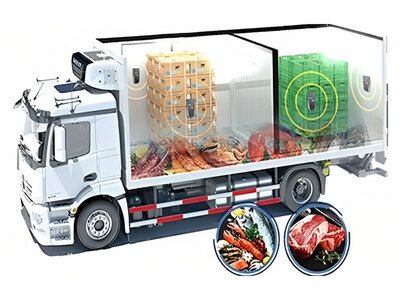
You’ll typically ship in refrigerated freight shipping when you handle fresh produce, seafood, dairy, meat, biotech ingredients, cosmetics with stability constraints, or any frozen freight shipping lane where thawing even once means total loss.
Here are common benchmarks you can use as a starting point before you confirm specs with your supplier and QA team.
- Fresh fruit and vegetables: often 0°C to +12°C, sometimes requires cold treatment and a phytosanitary certificate
- Meat and seafood: typically -18°C for frozen goods transport, strict packaging and loading patterns
- Dairy and chilled food: commonly +2°C to +6°C, sensitive to temperature excursions and odor transfer
- Pharma and health products: often +2°C to +8°C or controlled ambient, may require GDP compliant transport and continuous records
- Flowers and plants: usually +2°C to +10°C, high sensitivity to ethylene, airflow matters as much as temperature
And when you need tighter control than “just temperature”, you may choose a controlled atmosphere container to manage oxygen and CO2 for certain fruits. That’s not a marketing extra, it can be the difference between selling at full price or discounting on arrival.
Before you book, run this quick checklist so your cold chain requirements stay consistent from pickup to port of loading.
- Confirm the setpoint and allowed deviation, in writing, on your packing list and booking notes
- Validate packaging ventilation, carton strength, and pallet pattern to support reefer airflow
- Decide if you ship full container load or less than container load with cargo consolidation (riskier for strict temp profiles)
- Verify destination requirements like customs clearance, phytosanitary certificate, and any HACCP compliance expectations
- Add cargo insurance that explicitly covers temperature deviation and reefer breakdown scenarios
DocShipper Advice
DocShipper helps you define product specific setpoints, packaging specs and compliance checks so your cold chain matches customs and quality expectations at destination
How reefer containers work from door to door
Reefer sea freight only works if you think end-to-end, not port-to-port. The container is one part, but the real game is temperature controlled shipping across trucking, terminals, and the vessel leg, with clean supply chain visibility.
We’ve seen shipments arrive “on time” but still fail because the container sat unplugged at the yard while paperwork lagged. That’s why execution, not theory, drives your outcome.
The ICC frameworks around trade documentation and responsibilities are helpful here, because your risk shifts depending on who controls pre-carriage, main carriage, and on-carriage. In reefer, those handoffs are where temperature swings happen.
DocShipper Alert
Let DocShipper coordinate trucking, terminals and carriers so temperature control stays continuous, not accidental
Inside a reefer: temperature control, airflow, humidity, and monitoring
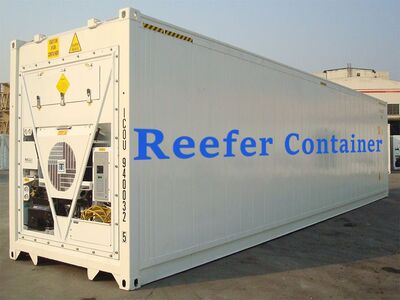
What actually keeps a reefer stable when the outside air is 35°C and the sea leg runs two weeks? The answer sits in the refrigeration unit, the airflow design, and your discipline on loading.
In reefer sea freight, the reefer unit cycles to maintain a setpoint, but it can only do its job if air can circulate through the cargo. If you block floor channels or overwrap pallets, you create hot spots even if the display shows the “right” number.
To help you picture what’s happening, here are the core control levers inside a refrigerated container.
- Setpoint control: cooling or heating to maintain target, especially critical for chilled cargo
- Airflow: forced air circulation, which depends on correct stowage and clearance
- Humidity management: reduces dehydration or condensation for certain commodities
- Fresh air exchange: used to manage respiration gases for produce, sometimes paired with controlled atmosphere container features
- Reefer monitoring: data logs, alarms, and optional remote track and trace for stronger claims support
You’ll also hear about the pre-trip inspection (PTI). Treat PTI as your baseline proof the unit can pull down temperature and hold it, not as a box-ticking exercise.
DocShipper Advice
DocShipper reviews your product specs, defines correct setpoints, airflow and PTI checks, then translates them into clear loading instructions for factories and truckers
Step-by-step reefer shipping process, from pre-cooling to final delivery
Bold truth: most reefer losses don’t come from “broken reefers.” They come from rushed prep, late documents, and weak coordination between truck, terminal, and the vessel schedule.
With reefer sea freight, you’re managing a chain of custody across multimodal transport. Each link can add temperature excursions, especially during gate-in, inspections, and transfers.
Here’s a door-to-door workflow you can follow to keep everyone aligned, including your supplier, forwarder, and the terminal.
Reefer shipping workflow (operational):
- 1) Product readiness: confirm product core temperature, shelf-life, and packaging ventilation, align with HACCP compliance or GDP compliant transport needs
- 2) Pre-cooling: pre-cool cargo when required, and set the container parameters before stuffing
- 3) PTI and container release: ensure pre-trip inspection completion, record unit number and settings
- 4) Stuffing and sealing: load to preserve airflow, apply seal, capture photos for claims support
- 5) Power continuity: use a genset during inland moves when the truck leg needs continuous power
- 6) Gate-in at port of loading: verify plug-in status, terminal receipt, and cutoff times to match the vessel schedule
- 7) Ocean leg: monitor events where available, manage transit time risk and contingency routing
- 8) Port of discharge: coordinate discharge, plug-out timing, and inspections to avoid temperature drift
- 9) Customs and delivery: prepare commercial invoice, packing list, bill of lading, and any certificates for customs clearance, then execute door-to-door delivery
From experience, the most overlooked step is number 5. If your trucker shows up without a working genset, you’re basically gambling with your cold chain before the container even reaches the terminal.
If you want us to pressure-test your process, we can review your documents, temperature profile, and booking plan through our logistics team at DocShipper, then align the operational details with your carrier and truckers. It’s often the fastest way to stop losing money to preventable temperature events.
DocShipper Alert
DocShipper audits your end to end process, from pre-cooling to delivery, and closes the gaps that usually cause temperature claims
Key decisions that shape your refrigerated freight rates
Here’s the thing, a few seasons ago you saw reefer sea freight jump overnight because one exporter skipped a basic step, pre-cooling at origin, and paid for emergency genset time mid‑voyage. From experience, rates are not random, they react to the decisions you make before the container even arrives at the port.
You’ll notice fast that pricing reflects risk, compliance, and energy use, especially under international cold chain standards tracked by bodies like UNCTAD. When we audit shipments at DocShipper, the same cargo can swing in price just because of routing or temperature precision, which is why details drive costs more than volume alone.
This quick comparison helps you see what actually moves your reefer rates.
| Decision factor | Impact on reefer sea freight cost |
| Set temperature and tolerance | Tighter tolerances increase energy and monitoring fees |
| Transit time and routing | Shorter routes often cost more but reduce spoilage risk |
| Port infrastructure | Poor reefer plug availability leads to surcharges |
| Seasonality | Peak harvest seasons push rates up fast |
DocShipper Info
DocShipper models different temperature settings, routes and port options so you see, in advance, how each choice impacts your final freight cost
How to choose the right reefer freight partner or broker
Direct tip, when selecting support for reefer sea freight, you should judge partners by how they manage problems, not how cheap the quote looks on day one. We’ve seen a mango shipment saved only because the broker noticed a humidity alarm during a weekend stopover and acted immediately.
You’re trusting someone with your cold chain, so certifications and network matter, especially those aligned with FIATA best practices, since they reflect global standards for freight forwarders. With the right partner, including teams like ours at DocShipper, you gain real‑time visibility and fast escalation paths when something drifts off spec.
Before you sign, this short checklist keeps you grounded.
- Proven reefer experience in your industry, food, pharma, or chemicals
- 24/7 monitoring with documented response procedures
- Carrier relationships that secure priority reefer slots
- Clear liability terms for temperature deviations
Looking for a Reliable Shipping & Sourcing Partner?
Conclusion
So, what should you really remember about reefer sea freight after all this, especially if you ship temperature‑sensitive goods every month? You’ve probably felt the frustration already, one small oversight can undo weeks of planning.
- Reefer costs depend on your decisions, temperature settings, routing, and preparation shape the final rate
- Cold chain control is non‑negotiable, monitoring and response speed protect your cargo value
- The right partner reduces risk, expertise and networks matter more than headline pricing
- Preparation saves money, proper pre‑cooling and documentation prevent emergency charges
FAQ | Reefer sea freight: how to ship temperature-sensitive cargo safely and cost-effectively
Work backwards from what happens if temperature drifts. Ask:
- Does the product become unsafe (food poisoning risk, degraded medicine)?
- Does quality drop below what your buyer accepts (texture, color, packaging damage, condensation)?
- Do regulations require controlled temperature or logs (pharma, some foods)?
If you answer “yes” to any of these, you almost certainly need reefer.
Use this quick rule of thumb:
- Shelf‑stable goods with only cosmetic sensitivity → dry container + insulation may work.
- Goods with safety, legal, or strict quality specs (e.g., “keep between +2°C and +8°C”) → use reefer.
Most problems come from operations, not from the machine. Watch out for:
- Wrong setpoint or mode
- Always confirm the temperature and mode (chilled/frozen) in writing with your supplier and forwarder.
- Poor loading that blocks airflow
- Use pallets that allow air circulation under and around boxes.
- Don’t push cartons tight against the walls or ceiling; respect floor air channels.
- No pre‑cooling when required
- Cool the product to target temperature before loading (unless instructed otherwise for specific commodities).
- Truck leg without power
- Make sure a working genset is booked, tested, and fueled for any long inland haul.
- Missing or late documents
- Prepare all paperwork (commercial invoice, packing list, certificates) early so the container doesn’t sit unplugged waiting for clearance.
You can lower costs by optimizing decisions rather than “cutting corners”:
- Choose a realistic temperature range
- Don’t set -25°C if -18°C is enough; lower temperatures mean higher energy use and surcharges.
- Optimize routing and transit time
- A slightly longer transit on a stable, well‑equipped port pair can be cheaper and just as safe.
- Ship at the right time
- Avoid peak harvest seasons when rates spike, if your product and contracts allow.
- Consolidate smartly
- Use full container loads when possible; LCL reefers cost more per unit and add handling risk.
- Improve packaging
- Better insulation and airflow‑friendly packaging reduce temperature shocks and product loss, which is often more expensive than the freight itself.
Treat your supplier as part of your cold chain team. Before loading, verify:
- Product side
- Core temperature is already at target.
- Shelf life is enough for transit + customs + distribution.
- Packaging
- Cartons are ventilated (for fresh produce) or properly sealed (for frozen).
- Pallet patterns allow vertical airflow; no film wrapping that chokes ventilation unless required.
- Documentation
- Agreed temperature, mode, and allowed tolerance appear on the packing list and booking.
- All certificates (phytosanitary, health, origin, etc.) are ready or in process.
- Photos and records
- Ask for photos of loading and pallet layout; they’re invaluable if you ever need to file a claim.
You can’t remove all risk, but you can protect your cash flow:
- Buy the right cargo insurance
- Confirm it explicitly covers temperature deviation, delay, and reefer breakdown, not just “total loss.”
- Document everything
- Keep PTI reports, temperature logs, loading photos, and written instructions on setpoints.
- Clarify Incoterms and responsibilities
- Make sure it’s clear who is responsible for the cold chain at each leg (supplier, buyer, forwarder).
- Set clear acceptance criteria with your buyer
- Define what counts as “damaged” or “non‑conforming” cargo to avoid disputes on arrival.
Don’t just compare rates; evaluate their cold chain capability:
- Operational proof
- Ask for examples of similar reefer shipments (same product/region).
- Monitoring and reaction
- Do they have 24/7 monitoring? Who reacts when an alarm appears? What’s the escalation path?
- Network and equipment access
- Can they secure reefer plugs and space during peak season? Do they arrange reliable gensets and reefer‑capable trucking?
- Documentation & compliance
- Are they familiar with your industry’s standards (HACCP, GDP, specific certificates)?
A slightly higher freight rate with a strong reefer specialist usually costs less overall than a cheap quote followed by spoilage, claims, and lost customers.
Need Help with
Logistics or Sourcing ?
First, we secure the right products from the right suppliers at the right price by managing the sourcing process from start to finish. Then, we simplify your shipping experience - from pickup to final delivery - ensuring any product, anywhere, is delivered at highly competitive prices.
Fill the Form
Prefer email? Send us your inquiry, and we’ll get back to you as soon as possible.
Contact us