


Freight Shipping between China and Sweden | Rates – Transit times – Duties and Taxes
The first thing you should know about shipping from China to Sweden is that most delays and cost overruns come from decisions made before the cargo even leaves the factory.
You choose the wrong mode, miss one customs detail, or underestimate lead times around EU entry points, and the rest of the shipment is already compromised.
If you’re looking at this route, you’re probably comparing rates, transit times, and tax exposure while trying not to miss something critical.
We built this guide to give you the operational reality of freight shipping from China to Sweden, what actually matters at each step, where importers usually get caught off guard, and how to structure your shipment so it stays predictable from origin to final delivery.
Which are the different modes of transportation between China and Sweden?
China and Sweden are far apart with many countries in between. Imagine a long car trip with countless roadblocks; you don’t want that for your cargo. The most promising options? Sea and air freight. Airlines can get your goods from Beijing to Stockholm fast, like a cheetah chasing its prey. Moreover, ocean liners navigate vast seas consistently, much like reliable old tortoises. Both methods are like two sides of the same coin – one fast yet expensive, the other slower but economical. And remember, this isn’t a one-size-fits-all approach; it all depends on your specific cargo and business needs.
Docshipper Note:
Need assistance with your shipment? Dont hesitate to contact us even for a simple question. Choose the option that suits you
Live chat with an expert Chat us on WhatsApp Fill the formNote DocShipper :
How can DocShipper help?
Sea freight from China to Sweden
If you’re looking at sea freight from China to Sweden, here’s the first thing we always tell importers. Sea freight makes sense when your cargo is heavy, bulky, or not time‑critical, and when your priority is controlling unit cost rather than speed. Furniture, machinery, industrial goods, retail stock, this route is built for volume. It’s usually not the right choice if you’re under tight delivery pressure or shipping high‑value goods that lose money every day they’re in transit.
Where people get caught out is assuming sea freight is “cheap and simple.” On this lane, the ocean leg is only part of the story. Port selection, Incoterm choice, consolidation strategy, and destination charges in Sweden all have a real impact on your final landed cost and lead time. We’ve seen importers save on the freight rate and then lose it all on local charges or delays at discharge. The goal here is to help you decide if sea freight fits your case, and if it does, how to avoid the classic mistakes before they cost you time or money.
DocShipper Tip:
- You are shipping large volumes or bulky items, as sea freight offers the most space at a cost-effective rate.
- Your cargo doesn't have an urgent deadline, as sea freight typically has longer transit times compared to air or rail.
- Your shipping routes are between major ports, allowing you to leverage the extensive global network of sea shipping lanes.
Which Incoterms should you use?
On the China–Sweden route, Incoterms are less about theory and more about control. From experience, EXW often looks cheap on paper but shifts too much risk onto you, especially around export clearance and origin handling in China. If something goes wrong there, you’re the one chasing solutions from thousands of kilometers away.
FOB is usually the safest balance for most importers. Your supplier handles local export formalities, and you control the main transport from port of loading onward. CIF can work, but many buyers underestimate how little control they actually have once the cargo sails, especially when destination charges in Sweden are not clearly disclosed upfront.
The common misunderstanding is thinking the risk transfer point is the same as cost control. In practice, you want the Incoterm that lets you manage delays, documentation, and surprises. We usually guide clients toward FOB or a well‑structured door‑to‑door solution when predictability matters more than shaving a few dollars off the supplier invoice.
What really matters is knowing who is responsible when something slips. Missing export documents, late cargo at origin, or unclear handover points are where this route breaks down. Choosing the right Incoterm upfront avoids weeks of back‑and‑forth later. This is one of those decisions that looks small, but quietly controls the whole shipment.
Main ports to know in China and Sweden
Port choice on this route is an operational decision, not a formality. In China, ports like Shanghai, Ningbo, Shenzhen, and Qingdao matter because they offer frequent sailings to Northern Europe and better equipment availability. Your port of loading affects not just departure dates, but also inland trucking cost and how easily your cargo gets rolled during busy periods.
In Sweden, Gothenburg is the main deep‑sea gateway and usually the most reliable for direct or near‑direct services from Asia. Other ports like Helsingborg, Stockholm, or Malmö often involve feeder services, which can add time and complexity. That choice directly impacts inland transport. A cheaper discharge port can mean higher trucking or rail costs afterward. We always look at the full door‑to‑door logic, not just vessel arrival.
Should I choose FCL or LCL when shipping between China and Sweden?
Choosing whether to ship by consolidation or use a full container between China and Sweden is more than a toss-up. It’s a strategic move that can significantly shape the cost, timeline, and success of your shipping process. In this section, we’ll unpack the key differences between Full Container Load (FCL) and Less than Container Load (LCL), commonly known as consolidation. Understanding these nuances can be the difference between a seamless journey or a logistical nightmare. So, let’s dive in and find the best fit for your unique shipping needs.
LCL: Less than Container Load
Definition: Less-than-container load (LCL) shipping refers to a transportation method where the shipment does not fill a standard container. Many businesses consolidate their goods with others to make up a full container between the origin and destination points.
When to Use: If your cargo is less than 13/14/15 CBM, LCL shipment could be the most sensible choice. It allows for increased flexibility, particularly for low-volume shippers, by enabling them to pay only for the space they use, thereby reducing excess spending.
Example: Consider an e-commerce business in Sweden sourcing unique handicrafts from China. They may have monthly orders of 10 CBM. Shipping these via LCL would be cost-effective, as they’d only pay for their portion of space in the container, instead of paying for a whole container that isn’t filled to capacity.
Cost Implications: In terms of cost, LCL shipping can be less expensive for smaller volumes, as charges are based on the volume or weight of your goods, not a whole container. However, while the initial LCL freight quote might be lower compared to FCL (Full Container Load), remember that there may be additional handling fees involved in the consolidation/deconsolidation process.
FCL: Full Container Load
Definition: FCL, or Full Container Load, is a type of ocean freight shipping which refers to an exclusive, dedicated container shipment – be it a 20’ft or 40’ft container.
When to Use: Consider FCL shipping when your cargo volume is over 13-15 CBM. This is because of two key reasons: cost-efficiency for bulk orders and security. Once sealed, the FCL container remains untouched until it reaches the destination, hence reducing potential damage or lost items.
Example: Suppose you’re a furniture exporter shipping a large consignment of chairs from Shanghai to Stockholm. Your shipment already occupies more than 15 CBM, filling up majority of a 20’ft container. Opting for an FCL shipment can be more cost-effective compared to LCL.
Cost Implications: For cost implications, it’s crucial to start with an FCL shipping quote. The quote usually includes loading, freight, and unloading costs. However, unlike LCL, you have a fixed rate for the entire container, which can be comparatively cheaper for large volumes. Just remember, the cost-effectiveness of FCL arises when the cubic meter volume of your cargo surpasses the LCL vs FCL break point.
Unlock hassle-free shipping
Experience a new level of stress-free cargo shipping with DocShipper. Our skilled ocean freight experts assess your business needs and evaluate critical factors like shipment size, cost, and deadlines to recommend either consolidation or full container shipping from China to Sweden. Make an informed decision with our guidance to maximize efficiency. Ready to ease your shipping process? Contact us now for a free estimate.
Transit times: how long does it take to ship from China to Sweden?
For ocean shipping China–Sweden, you should plan for roughly 35 to 45 days port to port. That’s a realistic planning range, not a promise. The exact sea transit time depends on your port of loading, whether the service is direct or via transshipment, and how congested European ports are at the time of arrival.
What often adds days is not the sailing itself, but waiting time at origin, transshipment hubs, or during peak season. LCL shipments typically run a bit longer than FCL due to consolidation and deconsolidation steps. If timing matters, we always recommend building buffer days into your supply chain rather than planning on the shortest theoretical lead time.
| Port of loading | Port of discharge | Estimated sea transit time |
|---|---|---|
| Shanghai | Gothenburg | 30–35 days |
| Shenzhen | Helsingborg | 32–38 days |
| Qingdao | Stockholm | 35–40 days |
| Ningbo | Gothenburg | 33–40 days |
These are planning estimates. Weather, congestion, carrier schedule changes, and transshipment delays can all affect the final lead time.
Shipping rates: how much does a sea freight shipment cost from China to Sweden?
| Shipment type | Estimated price range |
|---|---|
| LCL (1–5 CBM) | USD 80–150 per CBM |
| 20ft container (FCL) | USD 2,000–4,000 |
| 40ft container (FCL) | USD 3,000–5,000 |
These figures give you a planning baseline, not a final invoice. On this route, costs are driven by container availability in China, fuel surcharges, and destination charges in Sweden. The ocean freight rate is rarely the final cost. Terminal handling, documentation, customs clearance, and inland delivery can easily outweigh a cheap base rate if they’re not anticipated upfront.
Special sea freight solutions
Not every shipment fits neatly into a standard container. On the China–Sweden lane, we regularly handle out‑of‑gauge cargo, breakbulk machinery, rolling equipment on Ro‑Ro vessels, and temperature‑controlled goods in reefer containers. Each of these solutions comes with its own constraints, port requirements, and cost structure.
The key is choosing the method early. Oversized or special cargo needs planning well before booking, especially when space and handling slots are limited. If you’re unsure whether your cargo qualifies as standard, it’s worth checking before the shipment is locked in. That’s usually where delays and budget overruns start.
Air freight from China to Sweden
If you’re considering air freight from China to Sweden, you’re usually dealing with time pressure, inventory risk, or goods that simply can’t sit in transit for weeks. Air works when speed protects your margin or your supply chain. It’s not the right call for heavy, low‑value cargo, and we’ve seen many importers learn that the hard way after the invoice lands.
Here’s the reality. Air is fast, but it’s unforgiving. Cut‑off times, security screening, chargeable weight, and airport handling matter more than people expect. We regularly see avoidable costs caused by wrong weight estimates, poor packaging, incomplete documents, or suppliers missing the ready date. Air isn’t always 3 days, it’s not always overpriced, and pricing depends far more on volume than most people think. If you get those basics right, air transport for international goods becomes predictable instead of stressful.
DocShipper Tip:
Air freight might be the best solution for you if:
- You are in a hurry or have a strict deadline requirement, as air freight offers the fastest transit times.
- Your cargo is less than 2 CBM (Cubic Meter), making it more suitable for smaller shipments.
- Your shipment needs to reach a destination that is not easily accessible by sea or rail, allowing you to tap into the extensive network of global airports.
Air cargo vs express: how should you ship on this route?
Are you pondering how best to ship your goods between China and Sweden, weighing air cargo against express air freight? It’s like choosing between hitching a ride in an already moving airline or booking your goods a private jet for a faster trip. Understanding the nuances between these two can help chart the optimal route for your business. Let’s dive in!
Should you choose air cargo from China to Sweden?
Air cargo shipping China Sweden starts to make sense once you pass roughly 1 CBM or 100/150 kg (220/330 lbs). That’s the point where express stops being efficient and standard air freight service gives you better cost control. This option fits regular B2B flows, consolidated shipments, and time‑critical air freight shipments that still need structure.
To make air cargo work smoothly, you need a few things clear from the start. Exact dimensions and weights, Incoterm, origin and destination airports, cargo ready date, and the nature of the goods. Where people get caught is assuming airport‑to‑airport means door‑to‑door, ignoring airline cut‑offs, or forgetting that screening and handling fees apply on top of the base rate. We handle this route often, and most overruns come from those blind spots, not from the flight itself.
Should you choose express air freight from China to Sweden?
An express air freight solution is logical when you’re shipping small parcels, urgent samples, or when you don’t have an internal logistics team. If your shipment is under 1 CBM or 100/150 kg and speed and simplicity matter more than cost transparency, express works.
The trade‑off is control. Express is simple, but you give up visibility on how charges are built. Reweighs, volumetric surprises, destination fees, and Incoterm misunderstandings are common. We often see issues with non‑compliant packaging or underestimated dimensional weight. Express is good if you need it fast and simple. It’s risky if margins are tight or if you assume everything is always included.
Main airports to know in China and Sweden
- Shanghai Pudong (PVG), a key origin for high‑frequency cargo flights and consolidations. Strong connectivity but inland trucking timing matters.
- Shenzhen (SZX), widely used for electronics and e‑commerce cargo, efficient but sensitive to peak‑season congestion.
- Guangzhou (CAN), flexible for South China exports, often used when capacity is tight elsewhere.
- Beijing (PEK), stable for scheduled cargo but less flexible on late cut‑offs.
Choosing the right origin airport impacts pre‑carriage cost, real lead time, and backlog risk more than most importers expect.
Main airports to know in Sweden
- Stockholm Arlanda (ARN), the main international gateway with the best cargo connectivity and customs efficiency.
- Gothenburg Landvetter (GOT), useful for western Sweden and specific pharma or industrial flows.
Your destination airport choice affects final delivery cost, clearance speed, and how predictable the last mile really is.
Transit times: how long does air freight take from China to Sweden?
| Service | Estimated transit time |
|---|---|
| Standard air cargo | 5–8 days |
| Express air freight | 3–6 days |
These are planning ranges, not promises. Most delays happen before the flight, not in the air. Cut‑off times, screening queues, and cargo readiness drive real lead time. Congestion during peak seasons or documentation issues at origin can easily add days. If you don’t know the exact airport pair, service level, and ready date, any transit estimate is just a guess.
Shipping rates: how much does air freight cost from China to Sweden?
| Service | Indicative rate range |
|---|---|
| Air cargo | USD 5.5–8.0 per kg |
| Express | USD 7–10 per kg |
These ranges assume normal market conditions. Your final cost depends first on chargeable weight, then on dimensions, density, and packaging. Urgency, seasonality, chosen airports, fuel surcharge in air cargo, and security and handling fees all stack quickly. The biggest mistake is budgeting on gross weight alone. That’s rarely what you end up paying.
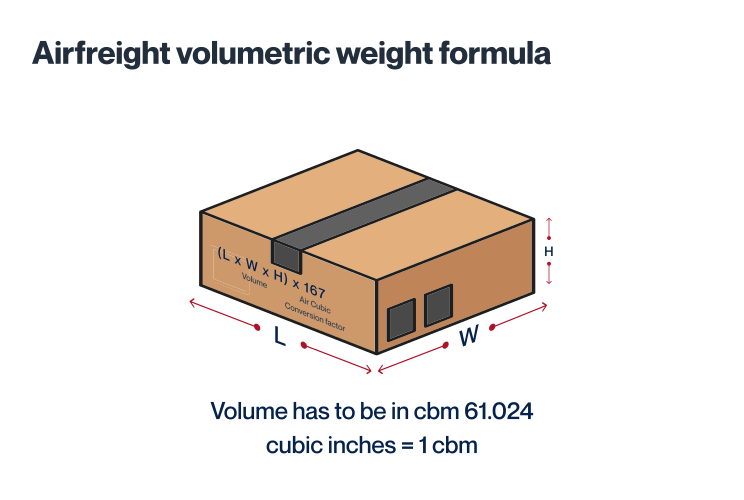
What is the difference between volumetric and gross weight?
In air freight, you don’t pay for what your cargo weighs, you pay for the space it takes or the weight, whichever is higher. That’s the dimensional weight concept, and it drives most pricing surprises.
- Gross weight, the actual scale weight including packaging.
- Volumetric weight, a calculated weight based on volume.
- Chargeable weight, the higher of the two.
How to calculate: (Length × Width × Height in cm) ÷ divisor.
Example: 125 × 80 × 65 cm = 650,000 ÷ 6000 = ~108 kg.
| Service | Standard divisor |
|---|---|
| Air cargo | 1 m³ = 167 kg (÷6000) |
| Express | 1 m³ = 200 kg (÷5000) |
Common mistakes are measuring cartons incorrectly, ignoring pallets, or assuming dense goods avoid volumetric rules. On this route, packaging decisions directly affect what you pay.


Rail freight between China and Sweden
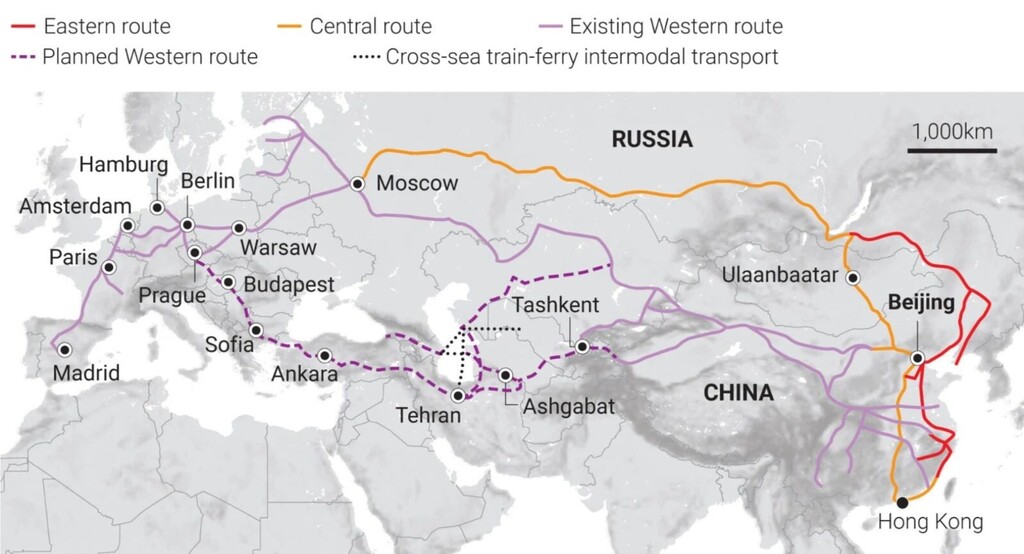
Who needs flying carpets when we have the Trans-Eurasian Railway? Gliding from China to Sweden, this rail freight connection, established firmly in 2017, has been a game-changer, bolstering trade and economic symbiosis between the two nations.
It traverses countries like Russia, Kazakhstan, and Belarus, serving as a conduit for goods ranging from electronics to heavy machinery. Although slower than air freight but cost-effective, it’s indeed the tortoise in our transportation fable; steadily carrying the weight of economic progress.
But, let’s not overlook the customs blues! Document-dodging and regulatory hurdles along this route chew up a fair bit of transit times. Yet, the song remains the same – preparation and expertise can score your smooth passage!
Figuring out whether this suits your shipping needs? Well, that’s an exciting journey in itself, and we’re here to help you navigate your way through it!
DocShipper Tip:
Rail freight might be the best solution for you if:
- You are looking for a cost-effective transportation method for large volumes.
- Your shipping route is well-connected by rail, providing a reliable and environmentally friendly option.
- Your cargo's destination and origin are near rail terminals, minimizing the need for additional road transportation.
What are the main train stations between China and Sweden?
China
Shanghai Railway Station:
Serving one of the world’s busiest ports, Shanghai Railway Station is crucial for businesses importing or exporting goods via rail in China. It handles a significant volume of cargo, linking key trading partners like Japan, South Korea, and the United States. Strategically, its location in Shanghai offers easy access to inland provinces and major cities due to other rail networks. For your business, the station’s comprehensive logistics facilities streamline cargo movement and customs clearance.
Beijing West Railway Station:
Beijing West is another primary station for rail freight transportation. It connects China’s capital with Europe through the trans-Mongolian and trans-Siberian route, making it a significant hub for east-west trade. The station accommodates high cargo volume from trade partners in Russia, Germany, and beyond. The station may play a key role in your shipping strategy if you seek broader market access in Europe.
Shenzhen North Railway Station:
Situated next to the economic powerhouse Hong Kong, Shenzhen North handles an impressive volume of cargo across a wide range of industries. This station is highly beneficial for businesses linked to South-East Asia and Pacific countries, offering swift and efficient freight services. Easily integrable into your holistic shipping strategy, this station also provides comprehensive logistics solutions.
Zhengzhou Railway Station:
One of the main nodes on the new Eurasian Land Bridge, Zhengzhou offers direct rail freight services to many European countries like Germany, Sweden, and the Netherlands. The station enables smooth shipping and timely delivery of goods due to its streamlined customs procedures. If your business requires efficient cross-border shipping with Europe, Zhengzhou could be an ideal choice.
Sweden
Malmö Central Station:
As Sweden’s third-largest cargo station, Malmö Central serves as a bridge to Denmark and broader Europe. It plays a role in the Nordic Triangle rail network, a strategic freight corridor. If your business strategy emphasizes connectivity to various parts of Europe, Malmö Central is an advantageous node to consider.
Gothenburg Central Station:
It is a significant hub for the Scandinavian countries, linked directly with Denmark and Norway. If your business trades predominantly with the Nordics, Gothenburg Central is potentially the most suitable due to its well-connected rail lines and substantial cargo volume.
Helsingborg Central Station:
Helsingborg is strategically situated near Sweden’s busy sea port, providing excellent sea-rail intermodality. Particularly relevant for businesses that require short sea shipping along with rail freight, this station could integrate well into your European shipping routes.
Norrköping Central Station:
Norrköping, part of the EU’s strategic TEN-T network, is a crucial node for rail freight transport. It can streamline your goods’ transport from Sweden to Central Europe with consistent road and rail connectivity. If your business largely serves Central Europe, this station’s strategic location and connections can optimally suit your needs.
How long does rail freight take between China and Sweden?
Determining the exact transit time from China to Sweden via rail freight usually depends on various factors like the cargo’s origin city and destination city, customs clearance speed, and the specific rail route used. On average, it takes around 12-18 days. Below you will find a list of common rail networks connecting China and Europe, including approximate transit times and frequency of departures. Kindly note these timings serve as general estimates, transit times can vary due to the unpredictable nature of rail freight logistics.
- Zhengzhou to Hamburg (Germany): ~ 15-17 days, Departs Daily
- Zhengzhou to Munich (Germany): ~ 17-18 days, Departs Monday and Friday
- Zhengzhou to Liege (Belgium)/Milan (Italy): ~ 20 days, Departs Monday, Thursday and Friday
- Chongqing to Duisburg (Germany): ~ 16-17 days, Departs Monday/Friday
- Yiwu to Hamburg (Germany): ~ 16-18 days, Departs Monday/Thursday/Friday
- Yiwu to Duisburg (Germany): ~ 16-18 days, Departs Monday/Thursday/Friday
- Yiwu to Madrid (Spain): ~ 20 days, Departs Monday/Thursday/Friday
- Wuhan to Hamburg (Germany): ~ 17-19 days, Departs Saturday/Wednesday/Thursday
- Wuhan to Duisburg (Germany): ~ 17-19 days, Departs Saturday/Wednesday/Thursday
- Chengdu to Tilburg (Netherlands): ~ 18 days, Departs Wednesday/Sundayy
- Suzhou to Hamburg (Germany): ~ 18-20 days, Departs Sunday
- Suzhou to Duisburg (Germany): ~ 18-20 days, Departs Sunday
- Xi’an to Duisburg (Germany): ~ 18-20 days, Departs Wednesday/Thursday/Friday/Saturday
What are the advantages of rail transport between China and Sweden
Opting for rail transport when shipping goods from China to Sweden provides a balance of cost and time efficiency. It bridges the gap between sea freight’s slower pace and air freight’s high expenses, making it particularly attractive for businesses on a budget, yet needing some speed. Rail, in fact, can cut the transit time by half compared to sea options, which typically take around 35-40 days. As an example, a shipment from Beijing to Stockholm can be on your doorstep in just around 18-20 days. Moreover, rail freight’s emissions are considerably lower than air freight, making it a greener choice. The combination of these advantages allows businesses to maintain their competitive edge without sacrificing budget, time, or environmental responsibility.
How much does shipping goods by train between China and Sweden cost?
Trucking between China and Sweden
Contemplating shipping goods from China to Sweden? Let’s dive right into a truly viable option – trucking services. With versatile routes, reasonable transport times, and often more cost-effective compared to air or rail freight, it’s an option worth your consideration. Think sweeping highways, stringent road conditions maintained for smooth transit, and potential for lowered costs. Of course, like all methods, road freight carries its own set of challenges, like weather dependency and possible transit delays. Yet, its ability to deliver directly to your warehouse and relative affordability can provide a high-value solution for your shipping needs. Intrigued yet? Let’s explore further!
DocShipper Tip:
- You're looking for a cost-effective option for shorter routes. For relatively short distances, road freight can be more economical than air freight and faster than sea or rail.
- Your destination is within the same continent or a neighboring country. Road freight is often the most straightforward and quickest option for cross-border freight and shorter distances.
- Your shipment is of irregular size or shape. Trucks offer flexibility in terms of cargo types and sizes, making it easier to transport goods that might not fit into standard sea containers or air cargo spaces.
What if I can’t fill a truck between China and Sweden?
Choosing the right type of freight, either Less-than-Load (LTL) or Full Truckload (FTL), can be a game-changer when shipping goods between China and Sweden. Discover how these options offer flexible and cost-effective solutions tailored to your business’s specific needs in our upcoming section.
LTL: Less than Truck Load
Less Than Truck Load, or LTL freight, is your best bet if your cargo doesn’t fill the whole container, especially when it measures below 13/14/15 Cubic Meters (CBM). Let’s illustrate this point with an example – suppose you’re a furniture retailer importing chic armchairs from China, and each shipment only occupies around 10 CBM. Opting for LTL saves both your money and resources, as you only need to pay for the space your product consumes in the freight instead of the entire truckload.
Consider using LTL freight in the following situations:
- You’re dealing with non-time-sensitive deliveries, as LTL shipping can take a little longer.
- The goods aren’t prone to damage during frequent loading and unloading.
- Your cargo is less than half of the full truckload capacity (about 13/14/15 CBM).
- Frequent shipments are needed because your inventory levels are low.
So, your LTL shipment is destined to be a smart choice due to its economical and practical approach to cargo transportation between China and Sweden.
FTL: Full Truck Load
Full Truck Load shipping, or FTL freight, is the go-to choice when you have a substantial amount of goods to transport, typically over 13-14-15 cubic meters (CBM). Picture this: you’re shipping a large, bulky order, and it essentially fills a whole truck. That’s when you’d go for FTL, because you’re utilizing the full space – no room left for sharing.
Sounds familiar? Perhaps you’ve exported those teak chairs from China to Sweden, taking up about 15 CBM. Choosing an FTL shipment ensured all those chairs moved together, safely and swiftly to their destination.
Wondering when else you might use FTL? Here are some handy pointers:
- When peace of mind is key: Your whole shipment stays together, reducing chances of mispicks or lost goods.
- For expedited shipping: FTL usually means faster delivery times compared to shared truck options.
- When handling delicate items: Less handling of your goods can minimize potential damage.
- If special requirements are in play: Maybe you need temperature control or have outsized items, FTL can cater to these needs.
Remember, the goal of choosing FTL is to make your shipping journey as seamless as possible.
What are the main routes between China and Sweden?
What are the road transit times between China and Sweden?
How much does trucking cost between China and Sweden?
Door to door between China and Sweden
Unpacking the nitty-gritty of international Door to Door shipping, it’s a premium service offering total convenience by handling your goods right from the sender’s doorstep in China to the recipient’s doorstep in Sweden. This fantastic choice provides a seamless, stress-free shipping experience saving huge on time and effort. So, ready to get into the fast lane with Door to Door shipping? Let’s dive in!
Overview – Door to Door
Why should I use a Door to Door service between China and Sweden?
Ever heard the saying, ‘don’t sweat the small stuff’? With Door to Door service between China and Sweden, you can forget about the small and big logistic stuff alike! There’s a bunch of reasons why this service is the magic key to your shipping hassles:
- Zero Stress Logistics: Right from goods pickup at the warehouse in China to delivery at your doorstep in Sweden, every inch of the journey is taken care of – paperwork, customs, you name it.
- Timely Delivery: Running against time with your urgent shipments? Leave your worries at the door. This service prioritizes respecting deadlines, perfect for your quotidian and urgent shipments.
- Special Care: Complex cargo can feel like a rebellious teenager – hard to handle. The Door to Door service specialists will ensure your goods arrive intact and on-time, with the TLC they require.
- Trucking Till The Final Destination: Packing and loading your own trucks is a chore – and sometimes a backache. This service eliminates that step, ensuring smooth trucking until the end of your goods’ journey.
- Convenience, Convenience, Convenience: And did we mention convenience? Who wouldn’t want a service that saves time and tedium, offering a hassle-free shipping experience?
So why fret over the details when you can sip your coffee, relax, and let the Door to Door service handle your shipping? You’ll wonder how you ever lived without it!
DocShipper – Door to Door specialist between China and Sweden
DocShipper offers comprehensive, hassle-free shipping solutions from China to Sweden. We expertly manage every step – from packing to transport and customs – using any shipping method that suits your needs. A dedicated Account Executive is at your disposal to ensure a smooth and efficient process. Within 24 hours, we can provide you with a no-obligation, cost-free estimate. Need immediate assistance? Our consultants are just a phone call away and ready to offer complimentary advice. Your stress-free shipping journey starts with DocShipper.
DocShipper Tip:
Door to Door might be the best solution for you if:
- You value convenience and want a seamless shipping process, as door-to-door takes care of every step from pickup to delivery.
- You prefer a single point of contact, as door-to-door services typically provide a dedicated agent to handle all aspects of the shipment.
- You want to minimize the handling of your goods, reducing the risk of damage or loss, as door-to-door minimizes transitions between different modes of transport.
Customs clearance in Sweden for goods imported from China
Customs clearance in Sweden for imports from China is where your total landed cost, release timing, and legal responsibility all become real. This is the moment Swedish Customs decides how much you pay, when your goods are released, and who is liable as the Importer of Record. We coordinate the clearance steps with our partners so you are not left figuring this out alone.
Here’s the thing. Most problems on the China to Sweden route do not come from the border itself, they come from assumptions made upstream. The most expensive mistakes we see are wrong Incoterms, weak HS code classification, undervaluation that ignores freight or insurance, and documents that arrive too late. In the sections below, we walk you through how clearing goods through Swedish customs actually works and how to estimate duties and taxes before you ship.
How to calculate duties & taxes when importing from China to Sweden?
If you want a reliable estimate, you need the right inputs and the right logic. To calculate import duties and taxes, you’ll need the country of origin, a defensible HS code classification, the customs value, and the applicable customs tariff rates in Sweden. Final amounts often differ from early quotes because customs may question classification or valuation.
Be careful with cheap quotes. Many ignore the full tax base, especially freight and insurance. Below is the customs duties calculation workflow we use so you can budget realistically.
Step 1 - Identify the Country of Origin
On this route, country of origin determination is not a formality. Even though your goods ship from China, Swedish Customs looks at where the product was manufactured or substantially transformed. This affects tariff eligibility, proof requirements, and risk of challenge.
Common mistake. Importers confuse origin with shipping country, seller location, or a vague “Made in” statement. If the origin on your invoice, packing list, and product labeling does not tell the same story, expect questions. Preferential tariffs or trade defense measures depend on HS code and origin, which we verify in Step 4.
Step 2 - Find the HS Code of your product
HS code classification drives everything, duty rate, controls, inspections, and delays. A wrong code can trigger reclassification, back-payments, and storage costs while customs reviews the file.
Your supplier’s HS code is a starting point, not a guarantee. We always cross-check it using an official tariff tool and build a light support file, product function, materials, photos, and datasheets. For a harmonized system code lookup, you can start with the EU TARIC database, then confirm how Sweden applies it.
Operational warning. On China to Sweden shipments, vague product descriptions like “electronic parts” or “accessories” are a fast way to get held. Be specific. Customs will ask.
Here’s an infographic showing you how to read an HS code.
Step-by-step: how customs clearance usually works on this route
Here’s what actually happens once your shipment is on the move. The sequence can vary by airport or port, Incoterm, and whether the shipment is express or freight, but the pressure points are always the same.
- We receive the pre-alert and documents before arrival, this is where delays usually start if something is missing.
- The import declaration preparation begins, matching invoice, packing list, HS code, and importer data.
- Swedish Customs reviews the file and may raise questions on value or classification.
- If selected, goods inspection or document checks are triggered.
- Duties and taxes are assessed and must be paid or advanced.
- Once released, we book warehouse appointments and final delivery.
Step 3 - Calculate the Customs Value
Customs value calculation is usually based on the transaction value, what you actually paid. What changes the number is what gets added. Freight and insurance in customs value depend on your Incoterm.
Example. Goods value 10,000. Freight 3,000. Insurance 200. If these costs are included under your Incoterm, your customs value becomes 13,200. This is the base customs will use, not just the invoice line.
Step 4 - Figure out the applicable Import Tariff
An import tariff determination in Sweden starts with your HS code. Sweden applies EU customs tariffs, organized by HS code.
Method we use: open the EU TARIC tool, enter your HS code, select China as origin, and read both the duty rate and any notes. Look for the standard rate, any preferential rate requiring proof of origin, and any additional measures.
Formula. Import duty = customs value × duty rate. If your customs value is 2,000 and the duty rate shown is X%, duty equals 2,000 × X%.
Rates change and classification disputes happen. Save a screenshot of the tariff result and share it with your broker. We can double-check the HS code and tariff logic before you ship if you provide the product details and Incoterm.
Step 5 - Consider other Import Duties and Taxes
Other import taxes and charges are where budgets usually break. In Sweden, VAT is calculated on more than the invoice value. The base typically includes customs value plus duty and certain fees.
Mini example. Goods 1,000. Freight and insurance 200. Duty 150. VAT base becomes 1,350. VAT at 25% equals 337.50.
Beyond VAT, watch for trade defense measures like anti-dumping. These are triggered by HS code and sometimes origin. When they apply, you’ll see an extra line on the assessment and a much higher cash-out, often with delays if not anticipated.
- Verify VAT base for your HS code.
- Confirm if additional measures appear in TARIC.
- Prepare classification and value support in advance.
Step 6 - Calculate the Customs Duties
Customs duty assessment follows a simple logic. Duty equals customs value multiplied by the duty rate. VAT equals the VAT base multiplied by the VAT rate.
What happens next. Depending on your setup, duties and taxes are paid by you or advanced by your broker before release. Delays at this stage lead to storage, handling, and delivery rebooking costs.
Does DocShipper charge customs fees?
When we act as your customs broker, our fees cover the customs clearance process, not the government duties and taxes. You see exactly what Swedish Customs charges and what the service fee is. No blurred lines.
Contact Details for Customs Authorities
China Customs
Official name: General Administration of Customs of the People’s Republic of China
Official website: http://www.customs.gov.cn/

Sweden Customs
Official name: Swedish Customs (Tullverket)
Official website: https://www.tullverket.se/
Required documents for customs clearance in Sweden
When Swedish customs stop a shipment from China, it’s rarely about the border itself. It’s almost always about documents that don’t line up. Names, values, weights, product descriptions, everything must tell the same story across every file. Miss one detail, and you’re looking at holds, questions, or extra costs. Here’s the clean checklist we use in real operations to keep things moving.
Bill of Lading (or Air Waybill)
This is the transport document issued by the carrier that confirms what’s being shipped and to whom. Customs and your broker use it to link the cargo physically arriving in Sweden to your declaration.
Example: Shipper and consignee names must match the commercial invoice exactly, even punctuation matters.
Common mistake: Using a different consignee name than the EORI holder, which triggers an immediate clearance block.
Packing List
This document breaks down how your goods are packed, carton by carton or pallet by pallet. Customs rely on it to assess inspections and verify quantities.
Example: 20 pallets, 400 cartons total, gross and net weight clearly stated per pallet.
Common mistake: Total quantities matching the invoice, but carton or pallet counts missing or inconsistent.
Commercial Invoice
This is the financial and descriptive backbone of your shipment. Swedish customs use it to calculate duties, VAT, and risk level.
Example: Clear product description, HS code, unit value, Incoterms, seller and buyer details.
Common mistake: Declared value that doesn’t make sense compared to market prices, which often triggers a valuation check.
Certificate of Origin
This document confirms where your goods are manufactured. It’s checked to determine applicable duty rates and trade measures.
Example: Country of origin stated as China, matching the factory address on the invoice.
Common mistake: Confusing country of shipment with country of manufacture, which can invalidate the document.
CE conformity and technical compliance documents
For regulated products, you must prove compliance with EU safety and environmental rules before release. Customs may ask for these even if the goods look harmless.
Example: Declaration of Conformity linked to the exact model number on the invoice.
Common mistake: Assuming the CE logo on the product is enough, without supporting documentation.
EORI number
Your EORI is your legal identity in the EU customs system. Without it, nothing clears.
Example: Swedish EORI number shown as consignee reference on the import declaration.
Common mistake: Using a freight forwarder’s EORI instead of your own, which creates ownership and VAT issues.
Get Started with DocShipper
Prohibited and Restricted items when importing into Sweden
Before you ship, check restrictions early. Many delays we see come from goods that need permits the importer did not anticipate.
Restricted Products
- Arms and Ammunition. Permit required from Swedish Police.
- Prescription Medicines. Authorization from the Medical Products Agency.
- Fresh Fruits and Vegetables. Phytosanitary certificate required.
- Alcohol. Import permits apply.
- Live Animals. Veterinary approval needed.
- Hazardous Materials. Special handling and permits.
- Tobacco Products. Public Health Agency authorization.
Prohibited products
- Narcotics and illegal drugs
- Weapons and explosives
- Protected wildlife and CITES products
- Counterfeit goods and currency
- Unauthorized medicines and chemicals
Trade agreements and preferential duties for imports from China to Sweden
This is where many importers get misled. There is no free trade agreement between China and Sweden, or between China and the EU. Imports from China into Sweden follow standard EU MFN duty rates, plus VAT.
What really matters is your HS code. Some products face anti-dumping duties or additional controls, others don’t. These measures are product-specific, not country-wide.
Before you price a shipment or sign with your supplier, you should always check your exact tariff line in the EU tariff database. We regularly use the official tool to confirm duty rates, anti-dumping exposure, and required certificates. You can do the same using Access2Markets.
If your supplier promises reduced duties based on origin, pause and verify it. In our experience, this assumption causes more disputes and surprise costs than almost anything else on the China to Sweden route.
Prohibited and restricted items when importing into Sweden
Here’s the line that matters. Restricted goods can enter Sweden, but only if you meet specific conditions like permits, testing, or prior notifications. Prohibited goods should not enter at all, and usually end in seizure, return, or fines. If you’re unsure, check before shipping, not after arrival.
Restricted products
- Electronics and radio equipment, subject to CE and frequency compliance
- Chemicals, paints, adhesives, often checked under REACH rules
- Cosmetics and personal care items, safety and ingredient review required
- Food supplements, health claims and composition closely controlled
- Medical devices, registration and technical files often requested
- Toys and children’s products, strict safety and material standards apply
Prohibited products
- Counterfeit or trademark-infringing goods
- Illegal drugs and narcotics
- Weapons, explosives, and certain fireworks
- Products made from protected species
- Obscene or banned media content
If your product sits in a grey area, don’t guess. Ask your broker to check the HS code restrictions or get written confirmation before the goods leave China. That single step saves weeks of damage control later.
Your Next Step with DocShipper
Additional logistics services
Discover how DocShipper can streamline your supply chain process, handling more than just shipping and customs. Let us enhance your logistics experience with our extensive range of additional services. Trust us to navigate the complexities, every step of the way.
Warehousing and storage
Finding a trustworthy warehousing partner in a China-Sweden shipping route can feel like an uphill battle. Achieving optimal conditions, such as regulated temperature for specific goods, is critical, and often daunting. Luckily, we've got you covered. Dive into more practical insights and solutions on our dedicated Warehousing page.
Packaging and repackaging
Shipping from China to Sweden? Proper packaging is vital! Without it, your precious cargo may encounter issues en route. Think bespoke crates for your fine china or sturdy cartons for electronics, done by a reliable agent. It could be the difference between a smooth transition and a logistics nightmare! Sail smooth with our packaging solutions. More info on our dedicated page: Freight packaging.
Cargo insurance
Shipments aren't immune to mishaps, from container scratches to losses at sea. Cargo insurance is your dependable ally against such incidents. Unlike fire insurance, it covers more than just fire damage, including theft and accidental damage. Consider this: a shipment of prized pianos insured under cargo insurance. If a costly accident happens mid-transit, you're covered! Prevention is always better. More info on our dedicated page: Cargo Insurance.
Supplier Management (Sourcing)
Embarking on foreign procurement? DocShipper makes sourcing a breeze. We're your eyes and ears in Asia, East Europe, and beyond. We locate trusted suppliers, master tricky language hurdles, and handle the entire purchasing journey. Think of us tackling a shipping puzzle in Mandarin while you focus on your core business. For a deeper dive into supplier management, unwrap the process on our dedicated page: Sourcing services.
Personal effects shipping
When moving precious, bulky items from China to Sweden, our Personal Effects Shipping service ensures every item is handled with utmost care. For example, your grand piano or antique vase is only as safe as its packaging - and we ace that! From custom boxing to flexible delivery options, it's all tailored for your peace of mind. More info on our dedicated page: Shipping Personal Belongings.
Quality Control
Quality inspections are your safeguard when shipping goods from China to Sweden. Don't let defective or sub-standard products spoil your reputation! Our service ensures that your goods adhere to both Swedish and international standards, just like we helped an electronics supplier avoid a costly recall by inspecting their batch for faulty wiring. More info on our dedicated page: Quality Inspection.

Product compliance services
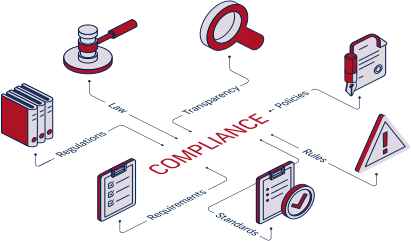
Ensuring your goods fit regulatory standards is a prime concern in the logistics process. Our Product Compliance Services plays a vital role here, testing your items in our labs to guarantee acceptance. Imagine avoiding the hassle of a rejected load at port - that's peace of mind we deliver. For the whole scoop, explore our Product compliance Services page.
FAQ | For 1st-time importers between China and Sweden
In practice, yes. Sweden follows EU customs rules, and clearance is fully electronic, but that does not make it simple. Someone must lodge the import declaration, calculate duties and VAT, and respond if customs asks questions. If you are not registered and experienced with Swedish customs systems, a broker is the safest option. We either act directly as your customs representative or coordinate with a licensed Swedish broker we trust. This avoids the classic mistake where goods arrive in Gothenburg or Stockholm and sit there because no one is legally able to clear them.
It can, but only in very specific cases. If your shipment is small, usually under 1 to 2 cubic meters or a few hundred kilos, sea freight still looks cheap on paper, but destination charges in Sweden quickly add up. Terminal handling, documentation, and deconsolidation fees can erase the savings. Air freight often becomes the smarter option for small, high‑value cargo because the pricing is more predictable and delivery is faster. We always compare the true door‑to‑door cost, not just the ocean or air rate, before advising.
Insurance is not mandatory, but skipping it is one of the riskiest decisions importers make. Carriers have very limited liability, especially at sea. If cargo is damaged or lost, compensation rarely covers the real value of the goods. For shipments from China to Sweden that spend weeks in transit and pass multiple handling points, insurance is a small cost compared to the potential loss. We usually recommend insuring at least the commercial value plus freight so you are protected from factory gate to final delivery.
For large or heavy shipments, sea freight remains the cheapest option. Transit times typically land between 30 and 45 days door to door, depending on origin port, transshipment, and customs clearance in Sweden. This works well for furniture, machinery, and non‑urgent stock. That said, cheapest does not always mean best. If you miss a selling season or tie up cash for too long, the savings disappear quickly. We help you decide based on volume, urgency, and cash‑flow impact, not just freight cost.
This choice matters more than most importers expect. EXW gives you full control, but also full responsibility from the factory door, which often surprises first‑time buyers. FOB is usually the safest balance for China shipments because the supplier handles local export logistics and you control the international leg. CIF looks simple, but you lose visibility and control over costs in Sweden, where fees can escalate fast. We generally recommend FOB paired with a door‑to‑door service, so nothing falls into a grey zone.
Arrival at port or airport is not the finish line. After landing in Gothenburg, Stockholm, or another entry point, the shipment must clear customs, have duties and VAT paid, and then be released for local delivery. If your shipment was under CIF or CFR, this part is on you unless arranged in advance. With a DAP or door‑to‑door service, we manage customs clearance and final trucking to your warehouse. This is often where first‑time importers get stuck, so planning the last mile before departure is critical.
Our quotations are built to reflect the real door‑to‑door cost. Freight, handling, documentation, and delivery are clearly itemized. The only elements not included by default are Swedish import duties and VAT, because those depend on your HS code and customs value. What you will not see are surprise destination fees or last‑minute handling charges. If something cannot be confirmed upfront, we flag it before you book, not after your cargo arrives.
Transit time depends on the mode, but also on how well the shipment is prepared. Air freight usually takes around 7 to 12 days door to door. Sea freight commonly lands between 30 and 45 days. Rail can sit in the middle, roughly 25 to 32 days. What slows things down most often is not the transport itself, but missing paperwork or customs checks in Sweden. We always recommend building buffer time into your planning, especially before peak seasons.
Yes. Sweden applies EU import VAT and, depending on the product, customs duties. VAT is calculated on the customs value plus freight and duty, not just the product price. This catches many first‑time importers off guard. If you are VAT registered in Sweden, you may be able to reclaim it later, but it still affects cash flow at import. We help you estimate these costs before shipping so there are no surprises at clearance.
The biggest issues we see are unclear Incoterms, incomplete invoices, and underestimating destination charges. Another frequent problem is choosing sea freight for very small shipments and paying more at arrival than expected. Finally, many importers forget that compliance matters in Sweden, especially for CE‑marked goods. Catching these points early saves days or even weeks. This is exactly where having a forwarder involved before production finishes makes a real difference.