


Freight Shipping between China and Luxembourg | Rates, Transit Times, Duties and Taxes
Luxembourg has no seaport, so every shipment from China will pass through at least one foreign hub before reaching its final destination.
You’ll notice fast that small routing choices upstream can add days, costs, or paperwork if you don’t plan them early.
If you’re looking at shipping from China to Luxembourg, you’re probably trying to lock a budget, a timeline, or both.
The real challenge isn’t finding options, it’s knowing which ones actually work for your cargo, your deadlines, and EU customs rules.
We wrote this guide as the operational standard for this route.
We focus on what you need to decide, when it matters, and where importers usually get surprised on transit times, rates, duties, and customs clearance.
From experience, most issues come from assumptions made too early with suppliers or forwarders.
We’ll help you see the logic before that happens, and if you want backup, our team is always here to take over or sanity-check your plan.
Which are the different modes of transportation between China and Luxembourg?
When planning to ship goods from China to Luxembourg, the journey greatly depends on the path the dragonfly takes. Picture it. The dragonfly represents your shipment and has numerous ways to reach its flower or destination in Luxembourg.
Will it fly directly over the vast Eurasian landmass, using road or rail freight? Or will it flit across the expansive sea, using cargo ships?
These dragonfly routes are chosen with the package’s nature, urgency, and cost in mind, creating a tailored journey. The key is mastering the winds of logistics to fit your shipping needs. After all, only a careful dragonfly reaches the most fragrant flower.
Docshipper Note:
Need assistance with your shipment? Dont hesitate to contact us even for a simple question. Choose the option that suits you
Live chat with an expert Chat us on WhatsApp Fill the formNote DocShipper :
How can DocShipper help?
Looking to transport goods from China to Luxembourg? Let DocShipper simplify the process for you, managing everything from customs clearance to delivery. With our expert knowledge and vast experience, we turn complex shipping setups into seamless logistics solutions. Don’t keep your questions to yourself – reach out to our dedicated consultants for free advice. Get a no-cost estimate within 24 hours. Contact us today!
Sea freight from China to Luxembourg
If you’re looking at sea freight from China to Luxembourg, here’s the first thing we always tell people. This route makes sense when your cargo is heavy, non-urgent, or containerized in volume. It stops making sense the moment you expect speed, simple delivery, or port-to-port logic that works like coastal countries.
Luxembourg is landlocked, so ocean shipping always means at least one European gateway port plus inland transport. That extra leg is where many first-time importers get surprised. Costs do not stop at the port of discharge, and timelines rarely end when the vessel berths.
From experience, the most common mistakes on this lane are choosing the wrong Incoterm, underestimating destination charges in Europe, and assuming a fixed sea transit time. If you understand those trade-offs upfront, sea freight remains the most economical option for containerized cargo moving on this ocean shipping route China Luxembourg.
DocShipper Tip:
Sea freight might be the best solution for you if:
- You are shipping large volumes or bulky items, as sea freight offers the most space at a cost-effective rate.
- Your cargo doesn't have an urgent deadline, as sea freight typically has longer transit times compared to air or rail.
- Your shipping routes are between major ports, allowing you to leverage the extensive global network of sea shipping lanes.
Which incoterms should you use?
On this route, Incoterms are less about theory and more about control. If you choose EXW, you’re responsible for everything from the factory gate, including Chinese export formalities. That’s where many importers lose visibility fast.
FOB is usually the safer balance. Your supplier handles the port of loading in China, and from that point on, we manage the ocean freight, the bill of lading, and the European arrival. You control the risky part of the journey.
CIF often looks attractive on paper, but in practice you give up control over the carrier choice and destination charges. On a landlocked destination like Luxembourg, that lack of control can quickly translate into higher inland and handling costs.
The key misunderstanding we see is assuming Incoterms define total cost. They don’t. They define where risk and responsibility shift. On China to Luxembourg shipments, choosing the right Incoterm is really about deciding who controls the European leg and the final invoice.
Main ports to know in China and Luxembourg
In China, the ports that matter most for this lane are Shanghai, Ningbo, Shenzhen, and Guangzhou. They offer the most frequent sailings to Northern Europe and better reliability for containerized cargo. Your choice usually depends on factory location and sailing schedule, not port prestige.
In Europe, there is no seaport in Luxembourg. Cargo typically discharges in Antwerp, Rotterdam, Hamburg, or Zeebrugge, then moves inland by truck or barge to Luxembourg. This inland leg directly affects cost and delivery time, especially during congestion.
Port choice impacts inland distance, customs strategy, and trucking availability. That’s why we always look at the full port-of-loading to final delivery chain, not just vessel arrival.
Should I choose FCL or LCL when shipping between China and Luxembourg?
Making the right shipping decision between China and Luxembourg can feel like steering a massive vessel – a small choice can have a huge impact.
To anchor your decision-making, we’ll breakdown Full Container Load (FCL) and Less than Container Load (LCL), or consolidation. By understanding these, you can optimize costs, speed up delivery time, and navigate your business toward successful shipping.
Get ready to dive into the nitty-gritty of sea freight to ensure your cargo sails smoothly across the waters. Remember, it’s not just about shipping; it’s about doing it right.
LCL: Less than Container Load
Definition: Less than Container Load (LCL) shipping refers to a shipping method where different consignments from multiple shippers are consolidated into a single container. This is an ideal choice when the shipment is not large enough to fill up an entire container on its own.
When to Use: Opt for LCL when the volume of your cargo is less than 13, 14, or 15 CBM (Cubic Meter), as it offers a cost-effective and flexible option for lower volume shipments, allowing you to only pay for the space you use.
Example: Suppose you are a small business in Luxembourg importing specialized machinery parts from China that fill only a quarter of a 20ft container. Instead of having to pay for a full container, an LCL shipment allows you to share the container space and cost with other shippers, thereby making it economical.
Cost Implications: With LCL freight, costs are calculated based on the volume of your goods, rather than the entire container. This means you’ll likely pay less than you would for a full container. However, it’s worth noting that LCL might have additional charges due to the extra handling required at consolidation and deconsolidation points.
FCL: Full Container Load
Definition: FCL, or Full Container Load, refers to a scenario in fcl shipping where an entire container, either a 20’ft container or a 40’ft container, is used for a single shipment. Normally, this type of shipment ensures that the container is sealed from origin to destination for added security.
When to Use: FCL is a great option when you are shipping a high volume of goods. It becomes cost-effective when your cargo is more than 13/14/15 CBM, as your fcl shipping quote is priced per container, rather than per cubic meter.
Example: Imagine a toy manufacturer in Guangzhou, shipping a large number of toy cars to a distributor in Luxembourg. To make sure the cargo is secured and cost-effective, he opts for FCL. Using an FCL container, his cargo is the only one in the container, reducing potential damage and loss from other substances and ensuring cost-efficiency for high volume.
Cost Implications: FCL shipping is generally cheaper for larger volumes. With an FCL container, you pay a flat rate, whether your goods entirely fill the container or not. It can be more economical if your shipment occupies more than half of the container’s consolidation space.
Remember to request an FCL shipping quote for accurate pricing.
Unlock hassle-free shipping
Simplify your shipping process from China to Luxembourg with DocShipper — your trusted freight forwarding partner. Our ocean freight experts analyze factors like cost, volume, and timing to help you decide between consolidation and full container options. Benefit from our mission to make global shipping a breeze, regardless of your business size or industry. Ready to ease your cargo shipping woes? Reach out now for a free estimation!
Transit times: how long does it take to ship from China to Luxembourg?
Shipping time by sea from China to Luxembourg is best understood as a range, not a promise. Most shipments move through a Northern European gateway port before inland delivery.
| Port of loading | European gateway port | Estimated sea transit time |
|---|---|---|
| Shanghai | Antwerp / Rotterdam | 33–40 days |
| Shenzhen | Hamburg | 30–35 days |
| Ningbo | Rotterdam | 32–38 days |
These estimates cover port-to-port sea transit only. Add 2–6 days for inland transport to Luxembourg depending on congestion and trucking availability.
Shipping rates: how much does a sea freight shipment cost from China to Luxembourg?
| Shipment type | Price range (USD) |
|---|---|
| LCL (1–5 CBM) | 60–120 per CBM |
| 20ft container (FCL) | 1,800–2,800 |
| 40ft container (FCL) | 2,800–4,200 |
These figures are planning estimates for ocean freight only. On this route, costs are driven by European port selection, inland delivery to Luxembourg, and seasonal equipment balance. The ocean rate is rarely the final invoice, destination charges often matter more.
Special sea freight solutions
If your cargo doesn’t fit standard containers, sea freight still offers options. We regularly handle out-of-gauge cargo, break bulk machinery, reefer containers for temperature-controlled sea freight, and project cargo by sea. Each requires different booking logic, port compatibility, and handling approvals. This is where planning early really matters.
If you’re unsure which solution applies to your shipment, we walk you through it and flag constraints before booking, not after the cargo is already at the port.
Air freight from China to Luxembourg
If you’re looking at air freight from China to Luxembourg, you’re usually chasing time, reliability, or risk control. This route makes sense for high‑value cargo by air, time‑critical replenishment, fragile goods, or temperature‑sensitive air cargo. It’s not the right call for bulky, low‑margin products where cost per unit matters more than speed.
Here’s the thing most guides don’t say. Air is fast, but it’s also unforgiving. Cut‑off times are strict, cargo screening can delay flights, and your price is driven by chargeable weight, not just what the pallet weighs. We see costly mistakes on this route all the time, miscalculated volumetric weight, cartons rejected at cargo acceptance, or export documents not ready when the flight closes.
DocShipper Tip:
Air freight might be the best solution for you if:
- You are in a hurry or have a strict deadline requirement, as air freight offers the fastest transit times.
- Your cargo is less than 2 CBM (Cubic Meter), making it more suitable for smaller shipments.
- Your shipment needs to reach a destination that is not easily accessible by sea or rail, allowing you to tap into the extensive network of global airports.
Air cargo vs express: how should you ship on this route?
If you’re shipping on the air cargo shipping route between China and Luxembourg, the first real decision is simple on paper and tricky in practice. Do you book standard air freight service through a forwarder, or do you hand everything to an express air freight solution? Both move by plane, but the control, cost logic, and risk profile are very different. Let’s put structure around that choice.
Should you choose air cargo from China to Luxembourg?
Air cargo becomes logical on this lane once you pass roughly 1 CBM or 100–150 kg (220–330 lbs). That’s where express pricing starts to hurt and where consolidation and airline capacity planning start working in your favor. This option fits regular B2B flows, controlled airport‑to‑airport shipping, and cargo that needs flexibility on routing or scheduling.
To make it run smoothly, you need to have your dimensions, gross weight, Incoterm, ready date, and departure airport locked early. Screening rules, IATA terminology, and minimum charges are where people get caught. Another common mistake is assuming airport‑to‑airport means door‑to‑door. It doesn’t. Export handling at the origin airport and import handling at the destination airport are separate steps that need to be planned.
Should you choose express air freight from China to Luxembourg?
Express air freight makes sense when speed and simplicity matter more than control. If you’re shipping small parcels, urgent samples, or time‑critical air shipments under about 1 CBM or 100–150 kg, express can be the cleanest option. You usually get door‑to‑door air freight, a single invoice, and minimal coordination on your side.
The trade‑off is visibility and cost control. Rates are recalculated if the carrier reweighs or remeasures, volumetric weight is often underestimated, and destination fees are rarely well understood. Express works well if you value speed and don’t want to manage AWB documentation or multiple handovers. It becomes risky if margins are tight or if your packaging is not compliant.

Main airports to know in China and Luxembourg
- Shanghai Pudong (PVG). One of the main cargo airports in China, with high frequency to European air cargo hubs. Good choice for consolidated freight and high‑value cargo.
- Guangzhou Baiyun (CAN). Key for South China production zones, strong connectivity and efficient cargo acceptance process.
- Beijing Capital (PEK). Useful for North China suppliers and stable long‑haul capacity.
Your airport choice affects inland trucking cost, real flight lead time, and congestion risk. Choosing the wrong one can add days before the cargo even flies.
Main airports to know in Luxembourg
- Luxembourg Findel (LUX). A core European air cargo hub and home base of Cargolux. Excellent handling for secure air freight, pharmaceuticals, and high‑value goods.
LUX is efficient, but it’s still an airport, not a magic door. Import handling, customs clearance, and last‑mile delivery need to be aligned to avoid hidden delays.
Transit times: how long does air freight take from China to Luxembourg?
| Service type | Estimated transit time |
|---|---|
| Standard air cargo | 5–10 days door‑to‑door |
| Express air freight | 2–5 days door‑to‑door |
Those are realistic planning ranges for international air transport on this lane. The flight itself is short, but most delays happen before departure or after landing.
What really moves the needle are cut‑off times at origin, cargo screening, and seasonal capacity pressure. If your documents or cargo aren’t ready when the airline closes, you wait for the next flight. That’s usually where timelines slip.
Shipping rates: how much does air freight cost from China to Luxembourg?
| Service type | Indicative rate range |
|---|---|
| Standard air freight | USD 3.5–6.0 per kg |
| Express air freight | USD 6.0–10.0 per kg |
These ranges reflect current market logic, not a promise. Your final air freight rates depend first on chargeable weight concept, then on dimensions, density, urgency, and chosen airports.
Air shipping cost drivers are predictable once you know where to look. Bulky cartons, low density, peak season capacity, and extra trucking on either end can double a quote faster than most importers expect.
What is the difference between volumetric and gross weight?
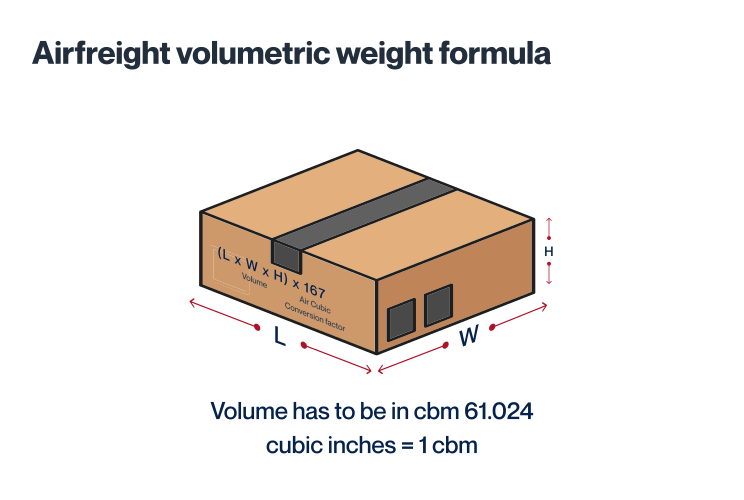
Gross weight is what your shipment actually weighs on a scale. Volumetric weight reflects how much space it occupies on the aircraft. Airlines always bill the higher of the two, which is why gross weight vs volumetric weight matters so much on air.
- Gross weight. Physical weight including packaging.
- Volumetric weight. Space converted into kilos.
How to calculate
Volumetric weight (kg) = (L × W × H in cm) ÷ divisor.
Example: 50 × 50 × 50 cm carton.
Air cargo: 125,000 ÷ 6000 ≈ 21 kg.
Express: 125,000 ÷ 5000 = 25 kg.
| Service | Standard divisor |
|---|---|
| Air cargo | 1 m³ = 167 kg (6000) |
| Express | 1 m³ = 200 kg (5000) |
Common mistakes? Measuring cartons too late, ignoring pallets, or assuming carriers bill on real weight. On this route, that misunderstanding is one of the fastest ways to blow a budget.


Rail freight between China and Luxembourg
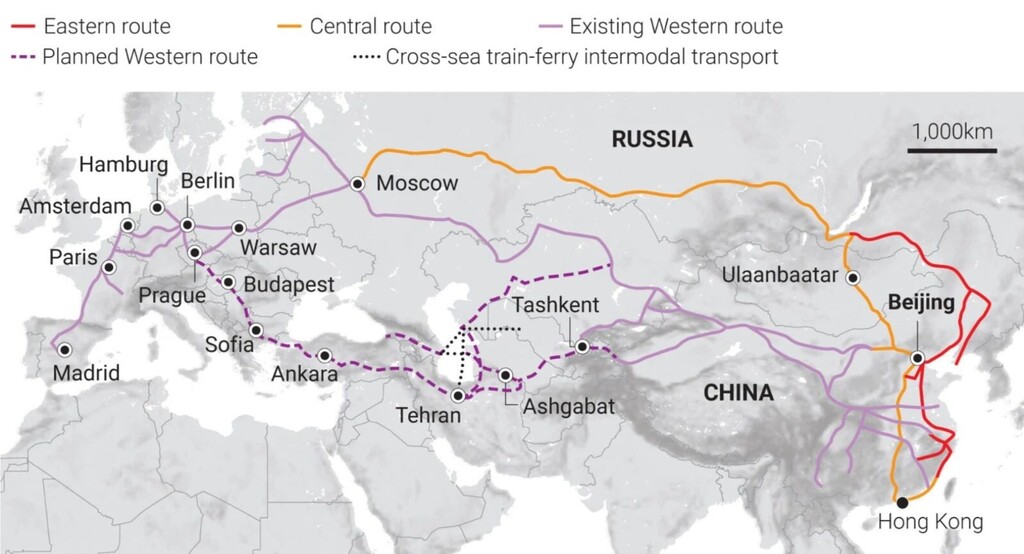
Ever thought trains could be international globetrotters too? Welcome to the intriguing world of rail freight between China and Luxembourg, a story that started in 2007.
Chugging through the vast terrains of Russia, Belarus, and Germany, this 10,000-kilometer logistical marvel became a vibrant artery for goods like electronics, machinery, and auto parts.
Trade bloomed thanks to this dependable iron horse. China found in Luxembourg a strategic gateway to Europe, boosting the economic interplay between them.
However, fast-paced businesses might find the pace of rail freight a tad slower compared to air freight, but hey, your pocket will thank you!
The mystery of customs, though, isn’t spared from this route. Delays due to inspections or paperwork mishaps are potential bumps on this road. So grab your detective’s hat and let’s dig deeper.
Could the rhythmic clatter of train wheels be the new melody of your shipping journey?
DocShipper Tip:
Rail freight might be the best solution for you if:
- You are looking for a cost-effective transportation method for large volumes.
- Your shipping route is well-connected by rail, providing a reliable and environmentally friendly option.
- Your cargo's destination and origin are near rail terminals, minimizing the need for additional road transportation.
What are the main train stations between China and Luxembourg?
Shanghai Railway Station, China
This station is a major hub in the national railway network of China and handles a significant volume of cargo. It boasts a strategic location due to its proximity to Shanghai Port, one of the busiest in the world.
If your business heavily relies on maritime shipping, the Shanghai Railway Station can facilitate seamless transfers between ocean and rail freight.
Chengdu Railway Station, China
Being the centerpiece of the Chengdu-Chongqing economic zone, this station caters to a huge cargo volume and deals extensively with major trading partners like the United States and Europe.
If your business involves frequent shipping to these areas, incorporating Chengdu Railway Station into your strategy can offer major operational advantages. If your business involves diverse shipping routes within and outside China, Zhengzhou Railway Station might be a sensible decision.
Wuhan Railway Station, China
Renowned for its large rail transfer center, Wuhan Railway Station is connected to all the major cities in China.
If you are a business considering freight consolidation strategies to and from different Chinese cities, Wuhan Railway Station could be an efficient consideration.
Zhengzhou Railway Station, China
This is a significant railway port in the national rail network. It’s critically positioned at the intersection of the Longhai and Beijing-Guangzhou railway lines, which are major east-west and north-south freight corridors, respectively.
Luxembourg Central Railway Station, Luxembourg
Being a small nation, Luxembourg has only one major train station for cargo – Luxembourg Central Railway Station. It’s an intermodal freight hub that handles high cargo volume and connects with multiple international rail links.
This means that despite other countries having many cargo train stations, you have a singular key location to handle all rail freight shipping to and from Luxembourg.
Keep these strategic locations in mind as you chart your shipping strategy, as the right choice of rail freight stations can significantly streamline your shipping operations and meet your business needs more efficiently.
Remember, aligning your shipping strategy with these hubs can provide economical, efficient, and diverse shipping options.
How long does rail freight take between China and Luxembourg?
Transit times for shipping between China and Luxembourg by rail freight can be influenced by numerous factors including customs procedures, weather conditions, and more. On average, it takes around 16-20 days.
Below, you’ll find a breakdown of various rail networks connecting China and Europe detailing transit times and frequency of departures. Remember, these are estimates; real-world transit can be unpredictable.
- Zhengzhou to Hamburg (Germany): ~ 15-17 days, Departs Daily
- Zhengzhou to Munich (Germany): ~ 17-18 days, Departs Monday and Friday
- Zhengzhou to Liege (Belgium)/Milan (Italy): ~ 20 days, Departs Monday, Thursday and Friday
- Chongqing to Duisburg (Germany): ~ 16-17 days, Departs Monday/Friday
- Yiwu to Hamburg (Germany): ~ 16-18 days, Departs Monday/Thursday/Friday
- Yiwu to Duisburg (Germany): ~ 16-18 days, Departs Monday/Thursday/Friday
- Yiwu to Madrid (Spain): ~ 20 days, Departs Monday/Thursday/Friday
- Wuhan to Hamburg (Germany): ~ 17-19 days, Departs Saturday/Wednesday/Thursday
- Wuhan to Duisburg (Germany): ~ 17-19 days, Departs Saturday/Wednesday/Thursday
- Chengdu to Tilburg (Netherlands): ~ 18 days, Departs Wednesday/Sundayy
- Suzhou to Hamburg (Germany): ~ 18-20 days, Departs Sunday
- Suzhou to Duisburg (Germany): ~ 18-20 days, Departs Sunday
- Xi’an to Duisburg (Germany): ~ 18-20 days, Departs Wednesday/Thursday/Friday/Saturday
What are the advantages of rail transport between China and Luxembourg
Choosing rail transport for shipping goods between China and Luxembourg can offer several advantages, perfectly straddling the line between cost-efficiency and speed.
Imagine having to dispatch your product in an economical yet somewhat swifter way – rail freight is your answer. It’s faster than sea freight – where a shipment could take up to 35-40 days, rail transport usually cuts this to about 16-20 days. It also proves to be cheaper than air freight, reducing your overall expenses and thereby boosting your profit margin.
For instance, suppose you’re in the electronics industry where delivering cargo quickly is crucial, but air freight is too expensive. Rail freight provides a viable solution to maintain a balance.
So, whatever your industry, this blend of timeliness and affordability can make rail freight an attractive option for your supply chain.
How much does shipping goods by train between China and Luxembourg cost?
Understanding the precise cost of shipping goods by train between China and Luxembourg goes beyond figures in a guide.
Lots of factors come into play—not just distance and haulage costs, but factors like nature and volume of goods, customs duties, and specifics of the route. It’s why we tailor every cost estimate to individual shipments, keeping your needs upfront.
Rest assured, we’re keen on offering you the most competitive rates in the business. Ready to take the next step? Hit the contact button. Our quotes are quick, free, and delivered to your inbox in under 24 hours.
Door to door between China and Luxembourg
Making the logistics journey as simple as possible, international door-to-door shipping is your all-inclusive service, efficiently moving goods from a location in China straight to your doorstep in Luxembourg.
This method packs benefits like greater convenience, faster delivery, and cost-effectiveness. Now, let’s dive in and master the secrets of door-to-door shipping between these places!
Overview – Door to Door
Experiencing challenges with shipping from China to Luxembourg? Explore Door to Door shipping – an immensely popular solution among our clients at DocShipper.
Stress and complexity are eliminated, giving you absolute convenience and a peace of mind. Its perks? Duties, customs clearance, tracking…all taken care of!
However, be eagle-eyed for potential delays and customs issues. A thorough understanding lets you turn shipping from being a herculean task to a walk in the park. Dive in to decode this shipping method’s triumphs and trials.
Why should I use a Door to Door service between China and Luxembourg?
Ever tried juggling sushi rolls while riding a unicycle? That’s what handling international shipment logistics can feel like sometimes. But that’s where Door to Door service steps in like your favorite superhero, between China and Luxembourg. Let’s break this down into five easy-to-digest reasons.
1. Stress-Buster: Forget about juggling different carriers or navigation through customs – your shipment is picked up directly from the source and delivered to the desired location. No you swivel your chair stress-free.
2. Timeliness: Sudden urgent shipment? Keep cool! Deliveries are precisely timed to meet your tight schedules. Say goodbye to those nail-biting last-minute hitches.
3. Specialized Handling: Complex cargo can be trickier than a 3000-piece jigsaw puzzle. Which is why Door to Door services ensure that your shipment gets the specialized care it deserves. No more worrying about mishandling or damages.
4. Trucking is on Us: You won’t have to deal with truck arrangements from the port to the final destination. Think of it like having a personal chauffeur for your goods. How’s that for VIP treatment?
5. Convenience: Circle this one twice! Remember, Door to Door service is about maximum ease and simplicity. It’s your one-stop-shop for international shipping, No more endless paperwork or red tape.
So, if you’re looking to take the hassle out of transportation logistics, Door to Door services may just be your perfect match. After all, who wouldn’t want a simpler, faster and smoother cargo-shipping experience?
DocShipper – Door to Door specialist between China and Luxembourg
Experience hassle-free shipping with DocShipper, your one-stop solution for door-to-door shipping between China and Luxembourg. Our experts manage everything from packing your goods to navigating customs and arranging transportation. We boast a myriad of shipping method expertise, ensuring a smooth shipment journey.
Rest assured, a dedicated Account Executive is at your call for personalized assistance. Need a quote? Reach out and get a free estimate within 24 hours or call our consultants for expert advice. Sit back and ship with confidence as we handle the complexities. Your shipping task is now ours.
DocShipper Tip:
- You value convenience and want a seamless shipping process, as door-to-door takes care of every step from pickup to delivery.
- You prefer a single point of contact, as door-to-door services typically provide a dedicated agent to handle all aspects of the shipment.
- You want to minimize the handling of your goods, reducing the risk of damage or loss, as door-to-door minimizes transitions between different modes of transport.
Customs clearance in Luxembourg for goods imported from China
If you’re importing from China into Luxembourg, customs clearance in Luxembourg is where your total landed cost, release timing, and legal responsibility come together. Duties, VAT, and compliance checks are assessed here, and the Importer of Record is the party on the hook if something is wrong. On this route, we usually coordinate the import customs process with our local partners so you’re not handling filings, payments, and follow-ups alone.
Here’s the thing, most problems don’t come from the border itself. They come from documents and assumptions. We see delays caused by the wrong Incoterm logic, weak HS code classification, undervaluation that ignores freight or insurance, or incomplete customs documentation at filing time. Below, we’ll walk you through how clearance actually works on this lane, and how to estimate duties and taxes calculation without nasty surprises.
How to calculate duties & taxes when importing from China to Luxembourg?
To estimate import duties and taxes accurately, you need a few solid inputs, not guesswork. On this route, customs looks at the country of origin rules, the harmonized system code, and how you determined the customs value determination. Miss one, and the numbers change.
Why do estimates differ from the final import tax assessment? Because classification can be challenged, valuation methods can be adjusted, and taxes are often calculated on more than just the invoice. Cheap quotes usually ignore freight value inclusion or insurance value consideration. The steps below show you the logic customs uses so you can budget realistically.
Step 0 - Quick checks before you calculate
Before running any numbers, stop and check three things. First, who is the Importer of Record, because that’s who customs will pursue if something goes wrong. Second, which incoterms and customs responsibility apply, this determines who controls the import declaration process and who pays what. Third, check if your shipment qualifies for a low-value or simplified clearance path in Luxembourg. Thresholds and rules change, so verify this with the carrier or the Luxembourg customs portal before assuming anything.
Step 1 - Identify the Country of Origin
Your goods are coming from China, but origin still matters beyond geography. In Luxembourg, origin affects tariff eligibility, documentary expectations, and customs risk assessment. If the origin stated on the invoice, packing list, and product labeling doesn’t match the manufacturing reality, you invite questions.
This route is usually treated as non-preferential origin, but depending on the HS code, trade defense measures can apply. We’ll cover how to verify that in Step 4. A common mistake is confusing origin with the shipping country or the seller’s address. Customs won’t.
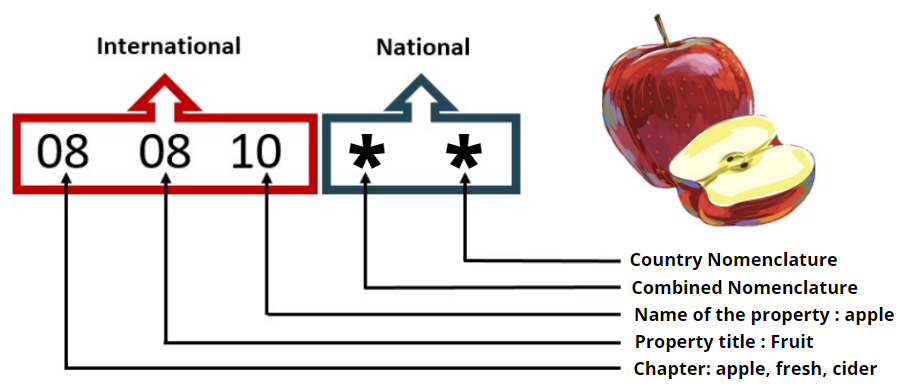
Step 2 - Find the HS Code of your product
The HS code classification drives everything, duty rate, controls, inspections, and sometimes whether your goods are released at all. On the China to Luxembourg lane, misclassification is one of the top reasons for documentary control or physical examination of goods.
Start with your supplier’s HS code, but don’t stop there. Validate it using the EU TARIC database and build a small support file, product description, materials, function, photos, and datasheets. This makes your tariff classification defendable if customs questions it.
You can cross-check using the official EU tool here: TARIC consultation. When the HS code is wrong, shipments get reclassified, duties back-paid, and storage costs pile up fast.
Here’s an infographic showing you how to read an HS code.
Step 3 - Calculate the Customs Value
Luxembourg customs usually applies the transaction value method, but the taxable base is rarely just the invoice. What matters is how the customs value determination is built.
Depending on your Incoterm, freight value inclusion and insurance value consideration are added to the goods value. For example, goods worth 10,000, plus 2,000 freight and 100 insurance, gives a customs value of 12,100. That’s the number duties are calculated on. If you declare only the invoice value, expect questions.
Step 4 - Figure out the applicable Import Tariff in Luxembourg
An import tariff is the duty rate applied to your product based on its HS code. In Luxembourg, rates follow the EU tariff structure.
To find the real rate, open the TARIC tool, enter your HS code, select China as origin, and read both the duty rate and any notes shown. Look for differences between standard and conditional rates, proof of origin requirements, and any additional measures flagged.
The formula is straightforward, import duty = customs value × duty rate. If your customs value is 12,100 and the rate shown is X%, your duty is 12,100 × X%. Rates and measures change, so save a screenshot of the result for your budget and your broker.
If you want, we can double-check the HS code and tariff logic with you before you ship, using your product description, value, and Incoterm.
Step 5 - Consider other Import Duties and Taxes in Luxembourg
After duty, VAT is usually the biggest cost. In Luxembourg, VAT is assessed on a tax base that typically includes the customs value plus duties and certain fees. It’s rarely just the invoice.
Example, if the tax base is 12,500 and VAT is 17%, VAT equals 12,500 × 17%. That’s why under-declaring freight or duty skews your cash flow.
Other measures can apply. A common pattern is anti-dumping duties on specific HS codes from China. When triggered, they add an extra line to the assessment and often delay release if not anticipated. Always check your HS code in TARIC for additional measures before shipping.
Before you ship, confirm the VAT base for your product, whether any trade defense measures apply, and that your value and classification support is ready.
Does DocShipper charge customs fees?
Step 6 – Calculate the Customs Duties
Step-by-step: how customs clearance usually works on this route
Here’s how the import declaration process usually unfolds when goods arrive in Luxembourg from China. The sequence feels predictable once you’ve seen it a few times.
- Before arrival, documents are pre-checked, commercial invoice details, packing list requirements, HS code, and value.
- A pre-alert is sent, and this is where document mismatches often surface.
- The import declaration is lodged, triggering documentary control.
- Customs may ask questions or request additional proof, this is a common customs hold reason.
- If selected, goods undergo physical examination of goods.
- Duties and VAT are assessed and paid or advanced.
- Once cleared, goods are released for free circulation.
- Post-clearance process steps follow, including record retention and potential audits.
Delays usually come from late documents, weak HS support, or value questions, not the border itself.
Contact Details for Customs Authorities
China Customs
Official Name: The General Administration of Customs of the People’s Republic of China.
Official Website: www.english.customs.gov.cn

Luxembourg Customs
Official Name: Customs and Excise Administration of Luxembourg
Official Website: www.do.etat.lu
Required documents for customs clearance in Luxembourg
Here’s the thing you’ll notice fast with Luxembourg customs. Most delays don’t come from inspections, they come from paperwork that doesn’t line up. Names, values, product descriptions and quantities must match across every document. One mismatch is enough to freeze a shipment. Treat this as a checklist, not theory.
Bill of Lading or Air Waybill
This is the transport document issued by the carrier that proves the goods were shipped.
Customs uses it to confirm the route, shipper, consignee, and how the goods entered the EU.
Example: Consignee name and address must be identical to the commercial invoice and customs declaration.
Common mistake: Using a different consignee name than the one registered under your EORI.
Packing List
This document breaks down how your cargo is physically packed.
Customs relies on it to assess inspections, weights, and container or pallet logic.
Example: 12 pallets, 480 cartons, net and gross weight clearly stated per pallet.
Common mistake: Quantities that don’t match the commercial invoice line by line.
Commercial Invoice
This is the financial and product reference document for your shipment.
It’s used to calculate customs value, duties, VAT, and to verify classification.
Example: HS code, unit price, total value, Incoterms, seller and buyer details all visible.
Common mistake: Declaring values that don’t reflect the real transaction price.
Certificate of Origin
This document confirms where the goods were manufactured.
Customs checks it to apply origin rules, trade defenses, or additional duties.
Example: Country of origin stated as China and consistent with manufacturing records.
Common mistake: Confusing country of export with country of manufacture.
EU conformity documents (CE and others when required)
These prove that your products meet EU safety and compliance rules.
Without them, customs can block release even if duties are paid.
Example: CE declaration matching the exact product model shipped.
Common mistake: Using a generic or outdated conformity file.
EORI number
This is your customs identification number in the EU.
Without an EORI, your broker cannot lodge an import declaration in Luxembourg.
Example: EU-based importers use their VAT-linked EORI across all member states.
Common mistake: Assuming your supplier’s EORI can be used instead of yours.
Get Started with DocShipper
Cut through the red tape when shipping from China to Luxembourg—hand off the hassles of customs clearance to us! DocShipper will manage the intricate procedures, dealing with the paperwork, briskly and efficiently. Need help to make your global trade smoother? Get in touch today for a free quote. Prompt response guaranteed within 24 hours.
Prohibited and restricted items when importing into Luxembourg
Before you ship, you need to separate two ideas clearly. Restricted goods are allowed, but only if you meet specific conditions like permits or compliance checks. Prohibited goods should not enter the EU at all and usually lead to seizure or forced return.
Restricted products
- Electronics and machinery, CE compliance and technical files required
- Chemicals and substances, registration and safety data obligations
- Food products, health certificates and traceability checks
- Medical devices, conformity assessment and EU market authorization
- Radio or telecom equipment, frequency and safety compliance
Prohibited products
- Counterfeit or pirated goods
- Narcotics and illegal substances
- Weapons and ammunition without authorization
- Illicit cultural artifacts or protected heritage items
- Illegal pharmaceuticals
If you’re unsure, stop before shipping. Ask your customs broker or request written confirmation from EU customs. Fixing it after arrival is usually too late. ([guichet.public.lu](https://guichet.public.lu/en/citoyens/justice/protection-consommateur/droits-voyageurs/importation-marchandises-luxembourg.html?utm_source=openai))
Trade agreements and preferential duties for imports from China to Luxembourg
There is no free trade agreement between China and the EU. That means Chinese goods entering Luxembourg follow standard EU customs duties with no automatic preference.
More importantly, you need to watch EU trade defense measures. In 2025 and early 2026, the EU imposed anti-dumping and anti-subsidy duties on several Chinese products such as tinplate, mobile access equipment, and fused alumina. These duties can range from double digits to over 100 percent on top of normal customs duties, depending on the product and manufacturer.
This is where many experienced importers get caught off guard. Two identical shipments with different HS codes or factory origins can face completely different duty outcomes. Before you quote landed cost to your customer, you should always check whether your product is subject to EU trade defense measures. ([policy.trade.ec.europa.eu](https://policy.trade.ec.europa.eu/news/commission-acts-against-unfairly-subsidised-imports-mobile-access-equipment-china-2025-04-28_en?utm_source=openai))
Your Next Step with DocShipper
Feeling overwhelmed by the complexities of shipping between China and Luxembourg? Let us lift that weight off your shoulders. At DocShipper, we are seasoned experts in transport organization, customs clearances, and ensure your goods get from China to Luxembourg hassle-free. Discover how smooth international shipping can be. Don’t wait, contact us today for your shipping solutions.
Additional logistics services
Explore DocShipper's full suite of supply chain solutions, beyond just shipping and customs. We handle everything, making global trade hassle-free and more rewarding for you. Your business, our mission.
Warehousing and storage
Finding the right warehousing in China can seem like looking for a needle in a haystack. If you're dealing with temperature-sensitive products like wine or chocolates, it increases the level of complexity. Don't fret. We have you covered with our top-notch warehousing services, fitting for an assortment of goods. Jump over to our take on perfect Warehousing for in-depth details.
Packaging and repackaging
Understanding effective packaging is crucial in shipping from China to Luxembourg! Why? It safeguards your goods from damage and conforms to regulations. Having a reliable agent like DocShipper to oversee the process can also help, whether you're shipping electronic gadgets or delicate porcelain.
Cargo insurance
While fire insurance covers losses from flames, cargo insurance is your safety net on the move. It wards off unexpected expenditure due to accidents or mishaps during transport; like that expensive machinery damaged at a rough sea. Prevention is key and cargo insurance is a proactive step to mitigate risks. Swap those worry lines for peace of mind with Cargo Insurance, your knight in shining armor.
Supplier Management (Sourcing)
Shipping from China to Luxembourg and grappling with supplier issues? DocShipper simplifies sourcing, even in Asia or East Europe. We spot suppliers, handle procurement, and bridge language gaps to make the whole process smooth sailing. Imagine zero fuss about supplier management! Intrigued?
Personal effects shipping
Transitioning personal belongings between China and Luxembourg? We've got you covered! Your heirlooms, sentimental gems, and bulky furniture are handled with the utmost care – we treat them as if they were our own. Remember that time when we maneuvered a grand piano through tight stairways in Shanghai? Exactly!
Quality Control
Quality control in shipping China-Luxembourg is your safeguard against product defects that can disrupt your supply chain. Picture this: Your recently shipped batch of high-tech gadgets fails EU inspections due to a minor glitch that slipped through at a factory in Shenzhen. By implementing rigorous quality inspections, you'll catch these errors early, reducing costly customs issues. Ensure your product's excellence with us.

Product compliance services
When shipping goods, ensuring product compliance with regulations is crucial. That's where our product compliance services come in handy, we conduct laboratory tests to certify your goods align with the rules of the destination. Ship with confidence knowing there will be no legal hiccups. It’s a stride towards fostering trade relationships that are smooth sailing and satisfying.
Freight Shipping between China and Luxembourg | Rates – Transit times – Duties and Taxes
Shipping your goods from China to Luxembourg entails dealing with several essential documents. If moving goods by sea or air, the corresponding shipping documents are the bill of lading or airway bill, respectively. But don't worry, as DocShipper, we handle these for you. You will need to provide us with key pieces of information, such as your packing list and the commercial invoice - these are critical for ensuring smooth shipment. Depending on the specifics of your cargo, other documents such as MSDS, certifications, and the like may be required as well. Always check with us to confirm which paperwork your shipment needs.
Absolutely, we at DocShipper highly recommend using a customs broker when importing goods into Luxembourg. The process can be complex and there are specific details and documents you need to provide. Navigating these intricacies is easier with an experienced broker. Additionally, employing a customs broker can save you time and hassles, ensuring a smooth clearance process for your cargo. In most cases, we directly represent your cargo at customs, simplifying the process for you and ensuring that everything goes as smoothly as possible.
Deciding if air freight is cheaper than sea freight between China and Luxembourg isn't a simple yes or no. There are many factors to consider such as the route, weight, and volume of your shipment. However, as a guide, when your cargo is less than 1.5 Cubic Meters or weighs under 300 kg (660 lbs), air freight may be more cost-effective. At DocShipper, we strive to provide you with the best possible solution. Thus your dedicated account executive will evaluate all the factors to offer you the most competitive option. Let us manage your logistics while you focus on your business.
While insurance isn't legally required for shipping goods to Luxembourg, we highly advocate securing insurance coverage. We've seen how unpredictable incidents can lead to significant loss or damage of goods. Transportation involves many variable elements, and anything from severe weather to logistical mishaps can result in unexpected circumstances. By having insurance, you're protected from a hard financial hit caused by theft, loss, or damage. So, despite not being mandatory, this extra level of protection makes a worthwhile investment in the unpredictable world of international shipping.
The most cost-effective option for shipping from China to Luxembourg typically is ocean freight, given the long distance between the countries and the higher cost of air transport. However, for time-sensitive shipments, we offer budget solutions like air-sea or rail-sea combinations. We recommend discussing your specific needs with us at DocShipper so that we can deliver the most economical solution tailored to your cargo type, size, and delivery urgency.
Choosing between EXW, FOB, or CIF largely hinges on the relationship you have with your supplier. Remember, they might not be logistics experts, so it could be preferable to involves logistics professionals like us at DocShipper. Suppliers commonly sell under EXW (at the door of their factory) or FOB (including all local charges until the origin terminal). Regardless of these terms, we're equipped to offer a comprehensive door-to-door service, overseeing the international freight and the procedures at the final destination. This way, we streamline the process and make it more convenient for you.
If your goods arrive at Luxembourg port under CIF/CFR incoterms, you must engage a customs broker or freight forwarder to navigate customs and cover import costs. We, at DocShipper, can assist with this rarely straightforward process. Alternatively, if you prefer a hands-off approach, our DAP incoterms service encompasses all necessary steps, from goods clearance to final delivery. Remember, your dedicated account executive at DocShipper is also available to clarify any details.
Indeed, our quotation encompasses all costs excluding duties and taxes at the destination. However, your dedicated account executive can provide an estimated amount for these charges. We prioritize transparency, therefore, we ensure not to hide any fees to avoid any unforeseen inconveniences.