
Freight shipping between China and Japan | Rates – Transit times – Duties & Taxes – Advices

As the world’s leading exporter for several years, China has been supplying the world with its cheap products of relatively good quality. This competitiveness in terms of price is mainly due to the cheap labor of the product. With a great diversification of products, all kinds of goods are offered by the country’s suppliers. Thanks to this, many commercial partnerships have been created with the whole world, and particularly with its neighboring country Japan. China is indeed one of the main trade partners of the country.

Understanding the import of products between Japan and China is not a simple matter. Therefore, in this guide we will explain we will explain everything you need to know about shipping freight from China to Japan, from transporting your goods to regulations. In order to get the most appropriate import for your needs, follow our understanding step-by-step guide, whether you are an individual, a start-up, a small business or even a large company wishing to import or export goods between Japan and China.

Contact our DocShipper teams for any additional questions. We will evaluate your requests and advise you on the most suitable solutions for your project!

The different methods of transportation between China and Japan?

Japan is an archipelago located in the North-East of the Asian continent. China, on the other hand, is located on the Asian continent. Despite the proximity of these two countries, rail or road freight is impossible, as the two countries are not connected by land.

The shipping time from China to Japan varies depending on the mode of transport chosen.

Trade between these two countries is therefore done by sea freight, as well as by air freight.

Below, you will find a comparison of these two types of freight, listing the advantages and disadvantages of each. We also list the major ports and airports. We’ll do the comparisons, and then you can choose the freight that suits you best! 

Note DocShipper :

How can DocShipper help?

DocShipper is an international freight forwarder that organizes air, sea (LCL and FCL), road, rail or intermodal shipments to and from China without you having to do anything. Don’t worry. We operate anywhere in the world and get you through all customs without incident. So do not hesitate to contact us.

sea-freight-dg

Sea freight from China to Japan

If you’re looking at sea freight from China to Japan, here’s the thing you should know right away. This route is short, dense, and operationally active. It works very well when your priority is cost control and predictable flows, but it’s not friction‑free. Ocean shipping China Japan makes sense for full container loads, regular replenishment, or cargo that does not justify air freight urgency.

You’ll notice fast that mistakes usually come from assumptions. Importers often underestimate how port choice affects inland delivery, assume transit time equals lead time, or pick the wrong Incoterm and lose control where it matters. Maritime transport between China and Japan is efficient, but only if you align Incoterms, port strategy, and timing from day one.

We always tell clients this. Sea freight is the right choice if your cargo is heavier than time‑critical, your volumes are stable, and you can absorb small schedule shifts. If you need door‑to‑door speed guarantees or your shipment is under 2 CBM, this route can still work, but only with eyes wide open.

Which incoterms should you use?

On this lane, FOB shipping terms and CIF shipping terms dominate, but they don’t offer the same control. With FOB, you decide the carrier, the port of loading China, and how risks are managed once the container hits the water. That’s why experienced importers usually prefer it.

CIF looks easier on paper, but here’s what often goes wrong. Your supplier chooses the cheapest option, not the most reliable one, and you inherit destination charges you didn’t anticipate at the port of discharge Japan. Incoterms responsibilities buyer seller are clear in theory, but in practice, control matters more than definitions.

If you’re importing for the first time, FOB with a forwarder like us reduces surprises. You see costs earlier, you control documentation, and you avoid last‑minute pressure at arrival.

Main ports to know in China and Japan

You don’t need a long list of ports. You need the right ones.

  • Shanghai and Ningbo handle most container shipping route China Japan flows, with frequent sailings and strong inland access.
  • Shenzhen and Guangzhou are strategic for South China manufacturing, but inland trucking timing matters more here.

On the Japan side, port choice affects delivery speed more than sea transit.

  • Nagoya is ideal for automotive and central Japan distribution.
  • Yokohama and Tokyo work well for Kanto deliveries but can feel congestion pressure.
  • Osaka and Kobe are practical for Kansai region cargo.

Main seaports in China and Japan are well connected, but picking the wrong discharge port can add days on land even if the vessel arrives on time.

Port selection is never just about where the ship docks. It directly affects trucking availability, storage costs, and how fast you clear customs. This is where experienced importers usually adjust their strategy after one or two shipments.

Transit times: How long does it take to ship from China to Japan?

Sea transit time China Japan is short compared to most international routes. Port‑to‑port estimates usually range between 3 and 14 days, depending on origin, destination, and service type.

From ChinaNagoyaChibaYokohamaKitakyushu
Shanghai2–33–43–41–2
Shenzhen7–95–65–64–5
Qingdao3–43–43–42–3

These figures are port‑to‑port estimates. Inland transport, customs clearance, and congestion can extend the real shipping lead time.

What container can I choose for shipment between Japan and China ?

There are three standard container sizes:

  • The 20’GP container, with a capacity of 33m3
  • The 40′ GP container, with a capacity of 67m3
  • The 40′ HC container, with a capacity of 76m3

For each of these container sizes, two options are available in terms of ocean freight:

DocShipper Tip:

For cargoes with a volume of less than 2 m3 air freight will be more interesting, compared to sea freight. With air freight, the delivery time will also be reduced: the goods will take less time to reach their final destination if transported by air.

Maritime grouping or LCL (Less than Container Load)

Conceived for shippers whose goods don’t fill a container completely, LCL is a system that groups orders from different customers with the same destination into a single container. This system is economically advantageous: the customer will only pay for the space needed for his goods, and not for the entire container. This means of transport is therefore particularly profitable for small volume shipments.

This type of freight will be interested in the following cases:

  • The volume of goods shipped is relatively small
  • The customer wishes to consolidate his shipments
  • The customer wants to deliver to several recipients
  • The weight of the goods to be shipped is too heavy, and air freight is not cost-effective for shipping

FCL (Full Container Load)

Conceived for shippers who require a full container for their goods, Full Container Load refers to a container owned by a single customer from the time the goods are loaded to their final destination.

The handling is relatively small and the costs are lower. The container is sealed from the production site to its final destination. Full Container Load is used more for large quantity purchases.

This method of shipment is not only cheaper in relation to the relatively large import volume, but also safer. This method of transport is particularly interesting for goods with a volume of more than 15 m3, and represents a lower cost than groupage.

DocShipper Tips:

If your volume exceeds 13 to 14 CBM, full container load option is usually cheaper and operationally safer than consolidation.

Special sea freight solutions

On this route, standard containers cover most needs, but some cargo requires tailored setups.

Reefer containers are used for food, chemicals, and temperature‑sensitive products. Breakbulk sea freight and oversized cargo by sea apply when dimensions exceed container limits. Hazardous cargo sea transport requires advance compliance checks and carrier approval.

If your cargo doesn’t fit standard boxes, contact us early. These solutions work well between China and Japan, but planning makes the difference.

Shipping rates: how much does a sea freight shipment cost from China to Japan?

ModeIndicative planning range
LCL (1–5 CBM)Variable, depends on origin port, consolidation, and destination charges
20ft containerRoute‑dependent, equipment availability matters more than distance
40ft containerUsually more cost‑efficient per CBM than 20ft

On this lane, the ocean freight rate itself is rarely the main cost driver. Sea freight rates China Japan fluctuate with equipment balance, port handling, and destination fees. That’s why cheap‑looking offers often expand once the container arrives.

How to estimate your sea freight cost before requesting a quote

Start with four numbers. CBM, weight, Incoterm, and the exact ports. For LCL, the billable unit follows the 1 CBM = 1 ton rule. If your cargo is 4 CBM and 6 tons, you pay on 6. That’s the logic carriers apply.

Then add destination reality. Terminal handling charges, documentation fees sea freight, and inland delivery usually outweigh the sea leg itself. This is where total landed cost thinking matters.

If you want a route‑specific breakdown, we can run it for you and send a clear estimate in less than 24h.

Surcharges and hidden cost drivers to watch for

Most surprises hit at destination. THC, documentation, and port handling come first. Then time‑related charges like demurrage and detention appear if clearance or pickup is delayed. Finally, congestion surcharges can apply during peak periods.

The headline ocean rate is never the final number. Some charges are outside your control, others are triggered by paperwork delays or late decisions. Knowing which is which saves money.

Air freight from China to Japan

If you’re looking at air freight from China to Japan, here’s the reality. Air makes sense when time matters, when your goods are high value, or when stockouts would hurt more than transport cost. It’s not the right choice if your cargo is bulky, low margin, or not truly urgent.

Air is fast, but it’s demanding. Cut‑off times are strict, cargo is screened, and pricing is based on chargeable weight, not what your pallet feels like it weighs. We see costly mistakes all the time on this lane, miscalculated volumetric weight, poor packaging rejected at cargo acceptance, or documents not ready when the flight is.

Air cargo vs express: how should you ship on this route?

On China–Japan lanes, you’ll almost always hesitate between standard air freight service and an express air freight solution. They look similar on paper, but operationally they’re very different. One gives you control and scalability. The other gives you speed and simplicity.

Choosing wrong usually means paying more than expected or losing control at destination. The sections below help you decide based on volume, urgency, and how involved you want to be in the process.

Should you choose air cargo from China to Japan?

Standard air cargo shipping China Japan becomes logical once you’re above roughly 1 CBM or 100–150 kg (220–330 lbs). It’s the go‑to option for B2B flows, regular replenishment, and shipments where you want visibility on costs and Incoterms.

You’ll need a few things ready to avoid friction: exact dimensions and weights, the right Incoterm, your chosen origin and destination airports, a realistic ready date, and a clear description of the goods. Where people get stuck is assuming airport‑to‑airport equals door‑to‑door. It doesn’t. Pre‑carriage, export handling, screening, and import handling are separate steps, and minimum charges apply even on light cargo.

Should you choose express air freight from China to Japan?

Express works when shipments are small, urgent, and you don’t have a logistics team. It’s common for samples, e‑commerce orders, or an urgent shipment by air that needs to land fast with minimal coordination.

The trade‑off is control. Express is usually door to door, but re‑weighs, volumetric recalculations, and destination fees can appear after pickup. Many importers also misunderstand Incoterms here and assume everything is included. Express is good if speed and simplicity matter more than cost precision. It’s risky if margins are tight or packaging is not compliant.

Transit times: how long does air freight take from China to Japan?

Service typeEstimated transit time
Airport‑to‑airport air cargo1–3 days
Door‑to‑door air cargo3–6 days
Express air freight1–3 days

On this East Asia lane, flight time itself is short. What really drives lead time is what happens before and after the flight. Export handling and cut‑off at origin, security screening, and import handling in Japan matter more than the hours in the air.

Delays usually come from missed cut‑offs, incomplete air waybill documentation, or congestion during peak seasons. If timing is critical, always confirm flight availability for cargo and the exact ready date at the supplier.

Shipping rates: how much does air freight cost from China to Japan?

ServiceIndicative range
Standard air cargoUSD 2.5–6.0 per kg
Express air freightUSD 8–12 per kg

Rates on this route are driven first by chargeable weight concept, not urgency. Dense cargo flies cheaper than light, bulky cartons.

Dimensions, packaging quality, seasonality, and airport choice all impact the final bill. Inland trucking in China or last‑mile delivery in Japan can easily outweigh the flight cost itself.

What is the difference between volumetric and gross weight?

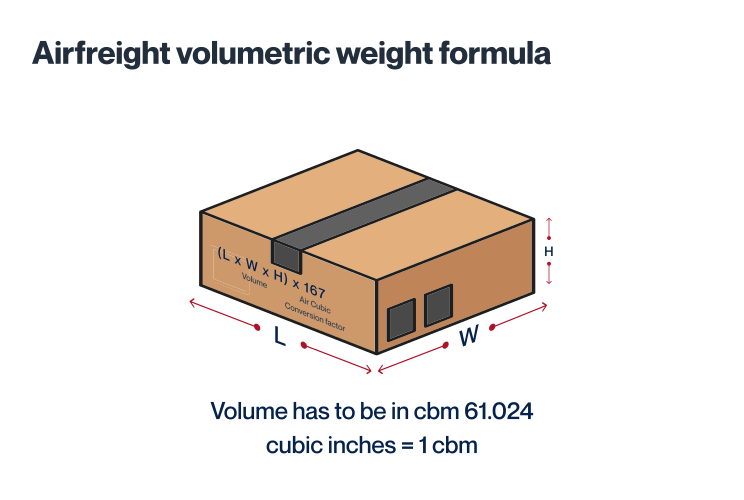
Air freight is priced on what takes space, not just what feels heavy. You always pay the higher of gross weight versus volumetric weight, which is why light but bulky cargo often surprises first‑time importers.

  • Gross weight, the actual weight on the scale.
  • Volumetric weight, the space your cargo occupies.

How to calculate:
(L × W × H in cm) ÷ 6000 = volumetric weight in kg.

Example: a carton 100 × 80 × 60 cm = 80 kg volumetric weight.

Common mistake: optimizing weight but ignoring dimensions. On China–Japan air lanes, volumetric weight calculation often drives the final cost.

Step-by-step: how an air shipment usually works on this route

This is what it looks like in real life when we handle an air shipment between China and Japan. It’s fast, but every step depends on the previous one being done right.

  1. We confirm cargo details, dimensions, weights, Incoterm, and ready date.
  2. Cargo is picked up or delivered to the origin airport for export handling.
  3. Security screening and cargo acceptance at airport take place.
  4. The air waybill issuance process is completed before flight departure.
  5. Goods fly to Japan, often on the same day or next day.
  6. Import handling at destination airport and customs clearance are done.
  7. Final delivery is arranged if the shipment is door to door.

Most delays come from underestimating screening time or having documents ready too late. One mistake here can push you to the next flight and add unexpected cost.

One last thing many importers miss. Air freight security screening, consolidation for air cargo, and handling rules in Japan are strict. Temperature‑controlled, restricted, or high‑value goods need extra checks, which can add time and cost if not planned early.

Door-to-door delivery between China and Japan

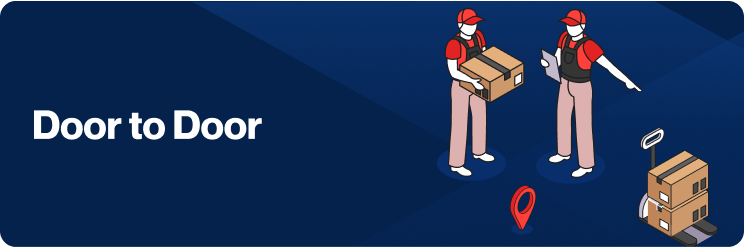
The door-to-door delivery method means that the freight forwarder takes care of the entire shipping process, from pick-up to the final destination. The door-to-door method can be used for any type of cargo, whether it is air or sea freight.

This method of delivery is very frequently used, and is very much appreciated by the customers. Indeed, this method of transportation takes care of all the procedures related to the transportation of goods. It is fast, convenient, because the products are taken care of from the beginning to the end of the operation. their journey: from the collection to the delivery at destination, which includes the stages of loading, collection, forwarding and customs clearance.

This method is not only a time saver, but also a money saver.

With an expert team like Docshipper, you don’t have to worry about importing your goods, we take care of the whole process! We supervise your shipments from your supplier’s door to the final destination of your goods.

What are the benefits of door-to-door service?

This service offers several advantages. The first is of course for Docshipper customers, who do not have to worry about shipping their goods. Our experts take care of everything and supervise the journey of your goods to the final destination.

DocShipper is a full-service company. We supervise your shipments regardless of the type of shipment, whether by sea or air freight, LCL or FCL, conventional or express, and this to simplify all your procedures.

Time saving

When you use our door-to-door service, we manage your entire shipment, leaving you free to go about your business.

A professional team

Thanks to the professionalism of our DocShipper experts, our customers enjoy a personalized experience, and every step of the shipping process can be followed closely. Friendly and detail-oriented, our team will guide you through your project and answer any questions you may have.

Security of goods

Our Docshipper experts ensure the safety of your goods and guarantee a quality experience. Your goods will be delivered to your home or warehouse in the best possible conditions and according to your request.

To save time and money, contact our DocShipper agents! With our “all-inclusive” solution, we offer you the best solutions for your project, at the best price!

For more details about our door-to-door service, please visit our dedicated page and fill out our online form to get a quote within 24 hours.

Customs clearance in Japan for goods imported from China

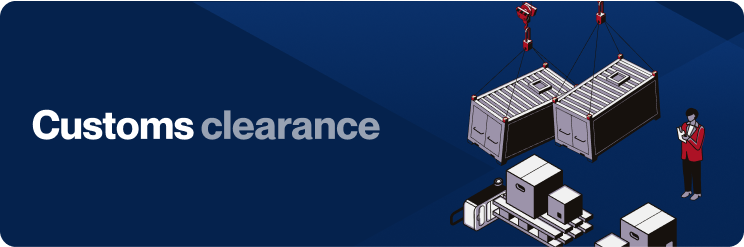
Customs clearance in Japan for goods from China directly impacts your total landed cost, your delivery timeline, and who is legally on the hook if something goes wrong. The Importer of Record carries that responsibility, not the carrier, not the supplier. On this route, we usually coordinate the import customs process Japan-side with licensed partners, so you are not dealing with filings, questions, and payments alone.

Most clearance issues here do not come from the border itself. They come from documents and assumptions made upstream. Typical pain points are wrong Incoterms logic, weak HS code classification, and an undervalued declared customs value that ignores freight or insurance. Below, we walk you through how customs clearance actually unfolds on this China–Japan lane, and how to estimate duties and taxes without nasty surprises.

Step-by-step: how customs clearance usually works on this route

If you are looking at this route, you should know that Japanese customs is structured and predictable, but also very detail-driven. Things move fast when documents are clean, and stop quickly when something feels inconsistent. Here is what usually happens in real life.

  1. Before departure, we collect and review shipping documents for customs, mainly the commercial invoice review and packing list verification. This pre clearance check is where most delays are prevented.
  2. A pre-alert is sent to the customs broker in Japan. This is a key moment. Missing HS support or unclear country of origin determination often triggers early questions.
  3. Once the cargo arrives at the port or airport, the customs entry submission and import declaration filing are lodged electronically.
  4. Japan Customs may accept the declaration as-is, or raise questions on value, HS code classification, or origin. This is where clearance delays causes usually appear.
  5. If selected, the customs inspection process can be documentary only, or physical. Physical inspections add days and handling costs.
  6. Duties and taxes are assessed. The duty payment workflow depends on whether your broker advances funds or you pay directly.
  7. After payment confirmation, release is issued and post clearance procedures begin, including terminal pickup and last-mile booking.
  8. If something was misdeclared, post-clearance adjustments or audits can still happen. This is why trade documentation accuracy matters even after release.

How to calculate duties & taxes when importing from China to Japan?

To estimate duties and taxes, you need three core inputs: the HS code classification, the declared customs value, and the country of origin determination. The challenge is that customs may interpret these differently than your supplier or your quote.

Final assessed amounts can differ because of tariff classification process reviews, valuation questions, or taxes calculated on a broader base than expected. Cheap quotes often ignore this, especially freight and insurance in the tax base. Let us break the method down step by step.

Step 0 – Quick checks before you calculate

  • Importer of Record concept: confirm who is legally responsible in Japan, and whether a power of attorney customs setup is needed.
  • Incoterm control: check who controls clearance and who pays duties and taxes in practice.
  • Simplified clearance: verify if your shipment qualifies for a low-value or simplified path under carrier or Japan Customs rules.

Step 1 – Identify the Country of Origin

On this route, origin is not a label, it is a pricing and compliance lever. Even when shipping from China, customs will check if the origin aligns with the product, manufacturer, and documents.

Origin affects tariff eligibility, proof expectations, and the risk of challenge if invoices, packing lists, or markings contradict each other. Preferential or trade defense measures can apply depending on HS code and origin, which we will revisit in Step 4. A common mistake is confusing origin with shipping country or seller address.

Step 2 – Find the HS Code of your product

HS code classification drives duty rates, controls, and inspection risk. A wrong code here can freeze the whole file.

Start from the supplier’s HS code, then validate it. Cross-check using the official Japanese tariff resources or a reputable HS lookup like a global HS database, and build a small support file with product function, materials, photos, and datasheets.

When HS codes are wrong, we see reclassification, back payments, penalties, and storage fees while it is sorted. Electronics, spare parts, and mixed-material goods are common triggers on this lane.

Here’s an infographic showing you how to read an HS code.

Step 3 – Calculate the Customs Value

Japan generally uses the transaction value method when applicable. That means the price actually paid, adjusted where required.

What changes the base is usually freight and insurance, depending on Incoterm, plus packing costs, assists, or royalties if they apply. Example: if goods are invoiced at 10,000, freight is 1,000, and insurance is 200, the customs value may be 11,200 depending on the valuation base used.

Step 4 – Figure out the applicable Import Tariff in Japan

An import tariff is the duty rate applied to your product, organized by HS code in Japan’s tariff schedule.

  1. Open the official Japan Customs tariff lookup tool.
  2. Enter your HS code and select China as the origin when prompted.
  3. Review the duty rate and any notes or additional measures.
  • Check standard vs preferential rates and proof of origin requirements.
  • Look for any additional measures tied to this HS code and origin.

Example: import duty = customs value × duty rate (X%). Save a screenshot of the result for budgeting and broker alignment.

We can double-check the HS code and tariff logic with you before shipment if you share the product details, value, and Incoterm.

Step 5 – Consider other Import Duties and Taxes in Japan

Beyond duty, consumption tax is usually calculated on a base that includes customs value plus duty, and sometimes other fees. It is rarely just the invoice amount.

Mini example: tax base = customs value + duty. Consumption tax = tax base × X%. This is where landed cost often jumps unexpectedly.

A common additional measure globally is anti-dumping duty. Triggered by HS code and origin, it adds a separate line to the assessment and can block release if not anticipated.

  • Verify taxes and measures tied to your HS code in Japan.
  • Prepare value and classification support.
  • Ask your broker what could be advanced on your behalf.

Step 6 – Calculate the Customs Duties

Duty = customs value × duty rate. Consumption tax = tax base × tax rate.

Once assessed, payment timing affects release. If clearance stalls, storage, handling, and delivery rebooking costs start adding up quickly.

Customs brokerage support matters most when documentation is inconsistent. Clear coordination between shipper and customs broker avoids last-minute rework.

This is where customs compliance best practices pay off. Clean data, consistent documents, and realistic values keep Japan clearance predictable.

What are preferential tariffs?

Preferential tariffs reduce duty when strict rules of origin terminology and proof are met. Without valid proof, Japan Customs will revert to the standard rate.

Special preferences apply only when explicitly granted and proven. Assuming eligibility without documentation is a common customs clearance issue.

Generalized preferences exist globally, but you must verify current eligibility and conditions for your HS code before budgeting around them.

If you are unsure how any of this applies to your shipment, coordinating early avoids post-clearance corrections.

Learn more about how we support importers on the China–Japan route with real operational guidance.

How to clear customs in Japan, practical recap

Accurate documents, defensible HS codes, and realistic values are what keep your customs clearance timeline under control.

HS code classification is not paperwork trivia. It is the backbone of duty, tax, and inspection decisions.

Procedure and customs contact

Chinese Customs

General Administration of Customs of China, involved on the export side.

Japan Customs

Japan Customs oversees import declaration filing, inspection, and release.

Always align exporter and importer documents before cargo moves.

Required documents for customs clearance in Japan

Here’s the reality. Japan Customs does not stop cargo because it feels like it. Most holds happen because documents don’t line up. Different values, different descriptions, missing proof. If one document says something slightly different, your shipment gets parked. This checklist is what we use in real operations to keep cargo moving.

Commercial Invoice

This is the document that states what you are selling, to whom, and for how much.

Customs uses it to assess duties, taxes, and to understand exactly what is entering Japan.

Example: Product description, unit price, total value, Incoterms, shipper and consignee names all match the packing list and transport document.

Common mistake: Declaring a vague product name like “electronics parts” without technical detail.

Packing List

This shows how your goods are physically packed, carton by carton.

Customs and warehouse teams rely on it to verify quantities, weights, and inspections.

Example: 12 cartons, gross and net weight per carton, exact product reference per box.

Common mistake: Total quantities that do not match the commercial invoice.

Bill of Lading or Air Waybill

This is the transport contract confirming your cargo is in transit.

Customs uses it to link the shipment to the importer and confirm routing.

Example: Consignee name in Japan matches the importer on the invoice, same port or airport of arrival.

Common mistake: Using a different consignee name than the one registered for import.

Certificate of Origin

This confirms where the goods were manufactured.

It becomes critical if you want preferential duties under trade agreements.

Example: Country of origin listed as China, consistent with factory address on the invoice.

Common mistake: Confusing country of shipment with country of manufacture.

Import Declaration Information

This is the data set submitted by your customs broker to Japan Customs.

Customs checks consistency across all documents before releasing cargo.

Example: HS code, customs value, and importer details aligned with the invoice.

Common mistake: Wrong HS code copied from a previous shipment.

Regulatory or Compliance Documents

These are permits or approvals required for controlled products.

Customs will not release cargo without proof of compliance.

Example: Test reports, safety certificates, or prior approvals attached to the declaration.

Common mistake: Assuming documents can be provided after arrival.

Prohibited and restricted items when importing into Japan

This distinction matters more than most first-time importers realize. Restricted goods are allowed, but only if you meet conditions like permits, inspections, or quantity limits. Prohibited goods should not enter Japan at all. Expect seizure, return, or fines if they do.

Restricted products

  • Food products and ingredients, subject to health and quarantine checks
  • Plants, seeds, and wood packaging, phytosanitary inspection required
  • Animal products and meat, veterinary controls and origin rules apply
  • Pharmaceuticals and supplements, quantity limits and approvals apply
  • Cosmetics and personal care products, ingredient compliance required
  • Chemicals and industrial substances, safety and usage restrictions

Prohibited products

  • Narcotics, psychotropic substances, and illegal drugs
  • Firearms, ammunition, weapon parts, and explosives
  • Counterfeit goods and intellectual property infringing products
  • Obscene materials and child exploitation content
  • Certain endangered species and banned wildlife products

If there is any doubt, do not rely on supplier assurances. Ask your broker or get written confirmation from customs before shipping. This is where most expensive mistakes happen.

Restricted Products

Certain categories trigger additional review or permits. Always verify before shipping.

Prohibited products

If a product is prohibited, no amount of paperwork will fix it.

When in doubt, ask before shipping. It is always cheaper.

Trade agreements and preferential duties for imports from China to Japan

China and Japan are both members of the Regional Comprehensive Economic Partnership, known as RCEP. Unlike older agreements, this one is already in force and actively used in customs clearance today.

Under RCEP, many goods manufactured in China can enter Japan with reduced or zero customs duties, provided the rules of origin are met and properly documented. The benefit depends entirely on your HS code and origin criteria, not on the shipping route.

In practice, this means two things. First, a correctly issued certificate of origin can materially reduce your landed cost. Second, a wrong or incomplete origin declaration can trigger audits or retroactive duty claims.

We see importers miss savings simply because the factory cannot support origin proof, or because the product only partially qualifies. Before you plan pricing or margins, you should always confirm eligibility at HS code level, not assume RCEP applies automatically.

Note Docshipper:

We regularly step in when importers face clearance delays caused by documentation or valuation gaps. Early checks save weeks later.

Top 7 freight forwarders in the Japan and list 7 companies

  • DocShipper
  • Kintetsu World Express
  • Nippon express
  • Mitsui-Soko Holdings
  • Sagawa-express
  • Toll group
  • DHL Worldwide Shipping

Other logistics services

1 Warehousing and storage
1

Warehousing and storage

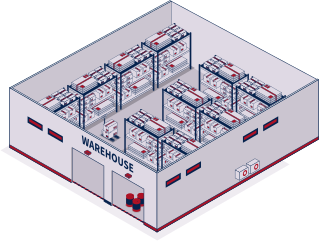
DocShipper offers you a storage service. Our warehouses are strategically located near major Chinese cities and we receive your goods. The storage period is according to your request, before shipping to the destination of your choice. We can also provide you with our services in terms of optimizing your entire container, whether you want to fill a full container or share your container with other suppliers. For more information about our warehousing services, don't hesitate to visit our page!
img
2 Packaging and repackaging
2

Packaging and repackaging

The packaging, as well as the packing, are not to be neglected in the process of shipping your goods. This step guarantees a certain stability of your shipment during its entire journey. It also ensures the protection of your goods. At DocShipper, our partners provide a quality repackaging service thanks to their professionalism. We also provide you with materials for your goods, such as pallets, cartons, bubble wrap, crates and adhesive tape. For more information about our packing services, don't hesitate to visit our page!
img
3 Transportation insurances
3

Transportation insurances

The insurance rate varies depending on the nature of your goods, the insurance company, but also on the type of transport you have chosen to bring your goods to their final destination. By increasing your declared value, you will be able to cover possible damages, as well as more goods. However, be sure to increase this value by a maximum of 20%. The calculation generally used for transport insurance is as follows premium rate x amount declared For more information about our insurance services, don't hesitate to visit our page!
img
4 Supplier Management in China
4

Supplier Management in China

In order to obtain more details about your products, DocShipper will contact your suppliers for you! We make sure that your products also have the necessary certificates of conformity for the approval of your goods in the import territory. We also offer quality control of your goods. Thus, we make sure of the quality, the state and the packing of the goods. Finally, we check the size of your products as well as the HS code. Docshipper has a team that speaks multiple languages! Our experts are fluent in French, English and Mandarin. For more information about our sourcing services, don't hesitate to visit our page!
img
5 3PL Service
5

3PL Service

Packing, ordering and labeling: Thanks to our warehouse, strategically located in the middle of Europe, in Camporosso in northern Italy, we store your goods and prepare them for delivery throughout Europe. This solution has been designed to save you time, so that you can focus on developing your business. With this service, we oversee all the steps involved in inventory, storage, packaging, order picking, labeling, and of course distribution. Delivery of your goods to the last mile: We ensure from our warehouse the shipment of each of your orders in B to C for our e-merchant customers. Thanks to our strategic location, we ensure to deliver your customers within 48 hours maximum. For more information about our 3PL Services, don't hesitate to visit our page!
img
6 Shipment of personal effects
6

Shipment of personal effects

For any excess luggage, for an expatriation or for a return from expatriation, Docshipper helps you in your steps! Available anywhere in the world, our services include packing, wrapping, customs clearance, and of course the safe shipment of your goods by our expert teams. For more information about our moving services, don't hesitate to visit our page!

img
7 Shipment of personal effects
7

Shipment of personal effects

For any excess luggage, for an expatriation or for a return from expatriation, Docshipper helps you in your steps! Available anywhere in the world, our services include packing, wrapping, customs clearance, and of course the safe shipment of your goods by our expert teams. For more information about our moving services, don't hesitate to visit our page!
img

FAQ - Freight Shipping From China To Japan Between China And Japan | Rates – Transit Times – Duties & Taxes – Advices

The cheapest option depends less on theory and more on how your cargo fits into real carrier pricing. On the China–Japan route, sea freight is almost always the lowest cost per unit once you pass very small volumes. In practice, here’s how we look at it.

If you’re shipping samples or very small cartons, under roughly 0.5 cubic meters, express air can make sense because you avoid handling fees that kill small ocean shipments. Between about 0.5 and 2 cubic meters, standard air freight is faster but usually costs more than the goods are worth unless timing is critical.

Once you reach around 2 cubic meters, LCL sea freight becomes the cost-efficient choice. Japan has frequent sailings from major Chinese ports, so consolidation works well if documents are clean. Full containers only make sense when you can actually fill them, otherwise you’re paying for empty space.

What most importers miss is that port fees, documentation, and destination charges in Japan can outweigh the freight itself. We always compare total landed cost, not just the line-haul rate, before recommending a mode.

We help you with the entire sourcing process so don’t hesitate to contact us if you have any questions!

  • Having trouble finding the appropriate product? Enjoy our sourcing services, we directly find the right suppliers for you!
  • You don’t trust your supplier? Ask our experts to do quality control to guarantee the condition of your goods!
  • Do you need help with the logistics? Our international freight department supports you with door to door services!
  • You don’t want to handle distribution? Our 3PL department will handle the storage, order fulfillment, and last-mile delivery!