Freight from China to the Democratic Republic of the Congo | Rates, transit times, duties and taxes

Here’s the hard truth about shipping from China to DRC, most delays and cost overruns don’t come from China or the ocean leg. They happen after arrival, when inland routes, clearance habits, and local constraints start to bite.

If you’re planning shipping from China to the Democratic Republic of the Congo, you’re probably trying to lock a budget, a timeline, or both. This guide gives you the operational reality of this route, so you know what actually matters before decisions get expensive.

What is the best method of transport between China and the Democratic Republic of the Congo?

The decision is usually clear once you look at your priorities. You choose sea freight when cost control matters and your cargo can handle longer transit, typically arriving via Matadi or through regional hubs like Dar es Salaam, then moving inland through corridors such as Kasumbalesa depending on where you’re delivering in DRC. You choose air freight when speed, cargo value, or urgency outweighs cost, most often flying into Kinshasa where faster handling can reduce exposure to inland delays.

From experience, the inland leg often makes or breaks the shipment more than the sea or air segment itself. That’s why we always look at your final delivery point first, not just the port or airport, and why you can always reach out to our team. We work with real-time availability, routing limits, and market conditions to help you choose the option that fits your cargo today, not last year. We’ll break down each transport mode in more detail below so you can fine-tune the choice based on your constraints.

sea-freight-dg

Sea freight from China to the Democratic Republic of Congo

If you’re looking at sea freight from China to DRC, you’re usually doing it for one reason, cost control. This route works when you’re shipping containerized cargo, heavy machinery, retail stock, or industrial goods where air freight would simply erase your margin. It’s a core lane of international maritime transport China Africa, but it’s not forgiving if you underestimate how it actually behaves.

Here’s the part most guides skip. Ocean shipping China to Democratic Republic of Congo is rarely direct, rarely fast, and very paperwork-sensitive. The vessel itself is usually not the problem. Delays tend to appear during transshipment, at arrival in Matadi, or when documents don’t line up perfectly with Congolese customs expectations. If you’re used to Asia–Europe reliability, you’ll notice the difference fast.

Sea freight makes sense on this route only if you build buffer into your maritime shipping timeline, choose Incoterms that give you operational control, and accept that inland delivery inside the DRC can be as challenging as the port-to-port sea freight itself. If your cargo is urgent, high value, or has zero tolerance for uncertainty, this is usually the moment we tell people to rethink their mode or timing.

Which incoterms should you use?

On this shipping route China Central Africa, control matters more than theory. In real operations, we see the fewest surprises with FOB or CFR. They let you control the booking, carrier choice, and bill of lading, while we manage the logistics flow end to end.

CIF often looks simpler on paper, but it usually hides weak carrier selection and poorly defined destination charges. Once the container lands, you’re exposed to local handling, demurrage, and port decisions you never negotiated. EXW is even riskier unless your supplier truly understands export clearance, shipping instructions, and cut-off discipline in China.

The misunderstanding we see all the time is thinking Incoterms decide everything. They don’t. What actually protects you is who controls the booking, the documents, and the information once the vessel sails.

Main ports to know in China and the DRC

  • Shanghai, Ningbo, Shenzhen, Guangzhou. These origins dominate container shipping to DRC because schedules are more stable, less than container load consolidation is easier, and recovery options exist when cargo misses a cut-off.
  • Matadi / Matadi Gateway Terminal (MGT). This is the primary container gateway into the DRC. It’s a river port with draft constraints, and congestion can escalate quickly. Your port choice directly affects inland trucking to Kinshasa and overall shipping lead time by sea.

Port choice is not just about vessel arrival. It determines inland transport availability, storage exposure, and how quickly you can actually access your cargo after discharge.

DocShipper Tip:

Sea freight might be the best solution for you if:

Transit times: how long does it take to ship from China to the Democratic Republic of Congo?

Origin port (China)Destination port (DRC)FCL transit timeLCL transit time
Shanghai / NingboMatadi32–40 days38–50 days
Shenzhen / GuangzhouMatadi34–45 days40–52 days

So, how long does sea freight take from China to DRC? In practice, you should plan for five to seven weeks port to port. FCL shipping China to DRC is usually more predictable. LCL shipping China to DRC adds time because of consolidation at origin and deconsolidation on arrival.

Most services operate with at least one transshipment, and that’s where variability enters the ocean freight schedule. Congestion in Matadi, document verification, and terminal capacity constraints can easily add days. Before Chinese New Year or during peak export months, timelines stretch even further.

What really matters is not the published transit time. It’s how much buffer you leave between your cargo readiness date and when the goods are actually needed inland.

Shipping rates: how much does a sea freight shipment cost from China to the Democratic Republic of Congo?

ServiceTypical price range
LCL (1–5 CBM)USD 180–220 per CBM
FCL 20ft containerUSD 2,550–4,250
FCL 40ft containerUSD 3,050–5,550

These figures reflect current planning ranges for sea freight rates on this lane. Rates fluctuate with capacity, season, and bunker adjustment factor, but this gives you a realistic budget window for container shipping costs.

How to estimate your sea freight cost before requesting a quote

Start with volume and weight. For LCL, we calculate chargeable units using the 1 ton = 1 CBM rule. For example, 3 CBM at 2 tons is charged as 3 CBM.

Add the ocean freight, then layer origin charges, destination charges, and inland delivery. Your Incoterm changes where these costs sit, not whether they exist. This is how you get a true landed cost estimation, not just a headline rate.

If you want us to run this properly with your real data, you can request a free quote from DocShipper and get a clear breakdown in under 24h.

Surcharges and hidden cost drivers to watch for

Most surprises appear at destination. Port handling charges, customs-related fees, and demurrage build fast if documents are delayed. These are often outside your direct control once the container arrives.

Origin charges, bunker adjustment factor, and documentation fees usually come next. They’re predictable, but only if they’re disclosed upfront. Delays triggered by missing shipping instructions or late bill of lading corrections are avoidable, but common.

This is why the cheapest quote on paper often becomes the most expensive shipment in reality.

Should I choose FCL or LCL when shipping between China and Kazakhstan?

There are three different types and sizes of shipping units described below:

Delivery dates mentioned are approximate and can change according to many factors, we suggest that you be very flexible. In addition, it doesn’t include collection, distribution, and clearance processes.

  • 20ft container = 33 m3
  • 40ft container = 67 m3
  • 40ft HQ container = 76 m3

Here is a comparison of transport according to the last modes presented.

The following provides you with an overall view of the most up-to-date methods used for transportation.

LCL: Less than Container Load

Forwarding is for people who would prefer not to transport a whole cargo box but would like to use the available spaces for other goods inside one container, This method only requires that you pay for the room you use to transport the goods, which means that the shipments you make are more profitable. Therefore, you will have to cover the expenses associated with carrying out the container’s storage activities.

Your shipments will then be transferred with others who have a transit location on the same road as that of the container, so you will have to cover costs related to the transportation of the goods.

This solution is ideal for you if :

  • You are sending out a few volumes of goods
  • You intend to group several goods for further processing and consolidation.
  • The weight of the load may be too high for airfreight.

FCL: Full Container Load

In a full container ship loading (FCL), the entire load is reserved for one customer from the beginning until the end of delivery, in which case all the goods are packed in one container.

The package is secured under a seal to prevent it from being damaged or tampered with – thus minimizing costs of handling and cost of delivery associated with the service offered to the client by the company and its employees. As a result, the amount of storage space is reduced and the prices are lower.

FCL cargo represents reliability and efficiency from 15CBM upward, since subtracting any handling operations would make the cost of an FCL filled at 15CBM more attractive than an LCL at 15CBM.

Unlock hassle-free shipping

Discover stress-free cargo shipping with DocShipper, your go-to freight forwarder. Our ocean freight experts can assist you in making the right choice between consolidation and full container shipping, factoring in your specific needs, cost constraints, and shipping timeline. Let us simplify complex logistics for your business. Contact us now for a free estimation and embark on a smoother shipping journey between China and RDC.

Step-by-step: how a sea freight shipment usually works on this route

This is the logistics flow for sea freight when you ship from China to the DRC with us managing the process. On paper, the steps look straightforward. In real life, this route rewards patience and preparation. Most surprises come from early decisions that only show their impact weeks later.

  1. We confirm volume, weight, Incoterm, whether you need door-to-port ocean freight or door-to-door sea freight, and the final inland destination.
  2. We secure space with a carrier and align on a realistic maritime shipping timeline, not optimistic cut-offs.
  3. Your supplier delivers the cargo to the terminal or consolidation warehouse, this is where missed deadlines often start.
  4. Export customs clearance and documentation are completed in China, accuracy here prevents delays later.
  5. The container is loaded and the vessel departs.
  6. Transshipment takes place if required, this is statistically where most delays appear.
  7. The vessel arrives in Matadi, and local handling and port handling charges begin to apply.
  8. Import customs clearance is processed, document mismatches are the most common blocker.
  9. Cargo is released and moved inland once all charges are settled and equipment is available.

Special sea freight solutions

Beyond standard containers, this route regularly handles full container load ocean freight, less than container load consolidation, breakbulk sea freight, bulk cargo shipping, reefers, RoRo for vehicles, and OOG cargo on flat racks or open tops. These solutions are common for mining, energy, and infrastructure projects tied to China–Central Africa trade.

Availability is rarely the issue. The real risk is choosing the wrong equipment or port setup. On this lane, that mistake almost always shows up later as delays, extra handling, or unexpected cost lines.

Air freight from China to the Democratic Republic of Congo

If you’re looking at air freight from China to DRC, it’s usually because time matters more than unit cost. This route makes sense for electronics, spare parts, medical goods, or any time‑critical air shipment where waiting weeks by sea would disrupt operations. Air is fast, but it’s demanding. Cut‑off times are strict, cargo is screened, and pricing is driven by chargeable weight, not just what the scale shows.


Here’s what people often get wrong. Air freight from China to the Democratic Republic of Congo is not “always 3 days”, and it’s not “always too expensive to consider”. Delays usually come from poor packaging, wrong volumetric weight estimates, missing AWB documentation, or suppliers missing the ready date. We see this every week. Fix those points early and air cargo shipping China to Democratic Republic of Congo stays predictable instead of becoming an expensive surprise.

Air cargo vs express: how should you ship on this route?

As 90% of goods are shipped by ocean nowadays, many importers are under time constraints that require a rapid and accurate shipment process toward the final destination. This is generally in the case for seasonal products, electronic items, and goods that are risky to send by sea, so they prefer air freight.

There are 2 possible ways to deliver goods: traditional Air Cargo and Express Air Cargo.

Both have significant variations when it comes to price and service.

Should you choose air cargo from China to the Democratic Republic of Congo?

Standard air cargo becomes relevant as soon as you’re around 1 CBM or roughly 100–150 kg (220–330 lbs). On China–DRC lanes, it’s typically used for B2B shipments, consolidated air freight, or regular replenishment where you need control over airports, flight schedule cargo options, and costs.

For this to run smoothly, you need accurate dimensions, final gross weight, the right Incoterm, a clear ready date, and to know if you’re shipping airport‑to‑airport air freight or door‑to‑door air freight. Where people get stuck is assuming everything is door‑to‑door by default, missing cut‑off times, or discovering minimum charges, screening, and handling fees too late.

Should you choose express air freight from China to the Democratic Republic of Congo?

Express air freight China to DRC makes sense for small parcels, urgent cargo shipping, or when you don’t have a logistics team and want simplicity. Couriers handle pickup, export handling, import handling, and final delivery.

The trade‑off is control. You’ll notice reweighs, dimensional weight surprises, and destination charges you didn’t expect. Express is a good option if speed and simplicity matter more than cost visibility. It becomes risky if your cartons are bulky, poorly packed, or if you assume everything is included without checking how the carrier applies IATA terminology and surcharges.

DocShipper Tip:

Air freight might be the best solution for you if:

Main airports to know in China and the Democratic Republic of Congo

Key airports in China

  • Shanghai Pudong (PVG), major cargo hub with frequent long‑haul capacity, strong consolidation, and predictable export handling.
  • Guangzhou Baiyun (CAN), widely used for Africa‑bound cargo, flexible schedules, often competitive on standard air cargo.
  • Beijing Capital (PEK), reliable for time‑critical air shipments, but usually stricter on cut‑off and screening.
  • Hong Kong (HKG), high‑frequency cargo flights, efficient pre‑alert shipping, often used when mainland capacity is tight.

Key airports in the Democratic Republic of Congo

  • Kinshasa Ndjili (FIH), main international gateway, most air cargo clears here, import handling speed makes a real difference.
  • Lubumbashi (FBM), strategic for mining and industrial cargo in the south, fewer flights but relevant for specific projects.
  • Goma (GOM), regional airport, usually via transshipment, expect longer airport ground handling.

Your airport choice impacts inland trucking, total landed cost, and real delivery time. A cheaper flight can cost more if ground handling or last‑mile delivery is inefficient.

Transit times: how long does air freight take from China to the Democratic Republic of Congo?

Service typeTypical air shipping lead time
Standard air cargo4–8 days airport‑to‑airport
Express air freight3–7 days door‑to‑door

These are realistic ranges for international air logistics Africa lanes like China–DRC. The flight itself is rarely the bottleneck. What stretches timelines are supplier readiness, missed cut‑off, security screening, and import handling in Kinshasa.

Three drivers matter most. First, how accurate your ready date really is. Second, screening and document checks, especially air waybill accuracy and cargo manifest details. Third, congestion and capacity, which can shift fast around peak seasons. If you need precision, confirm origin airport, service level, and Incoterm before locking plans.

Shipping rates: how much does air freight cost from China to the Democratic Republic of Congo?

Service typeIndicative air freight rates
Standard air cargoRoughly USD 8.0–10.0 per kg for higher‑volume shipments
Express air freightOften USD 12–15 per kg, depending on size and urgency

These are market ranges, not guarantees. Air freight rates and air cargo pricing on this route are driven first by chargeable weight, then by dimensions, density, and packaging quality. Light but bulky cartons almost always cost more than expected.

Other drivers include urgency, seasonal capacity, airport choice, and whether you need pre‑carriage or last‑mile delivery. This is why air freight cost estimation without final dimensions is usually wrong.

Step-by-step: how an air shipment usually works on this route

Air freight feels fast, but most delays happen before or after the flight. When we handle an air cargo shipment from China to DRC, the workflow is predictable once you know where to look.

  1. Booking and planning, we confirm cargo details, chargeable weight, airports, Incoterm, and flight schedule cargo options.
  2. Export handling in China, cargo is collected, checked, packed, screened, and documented before cut‑off.
  3. Flight departure, once cleared, the shipment moves on the booked flight, sometimes via a hub.
  4. Arrival and import handling, AWB documentation is checked, customs clearance starts, and delays often appear here.
  5. Final delivery, airport ground handling and inland transport complete the door‑to‑door air freight if selected.

The most underestimated points are ready date accuracy, screening delays, and incomplete documents. That’s where lead time and cost usually blow up.

What is the difference between volumetric and gross weight?

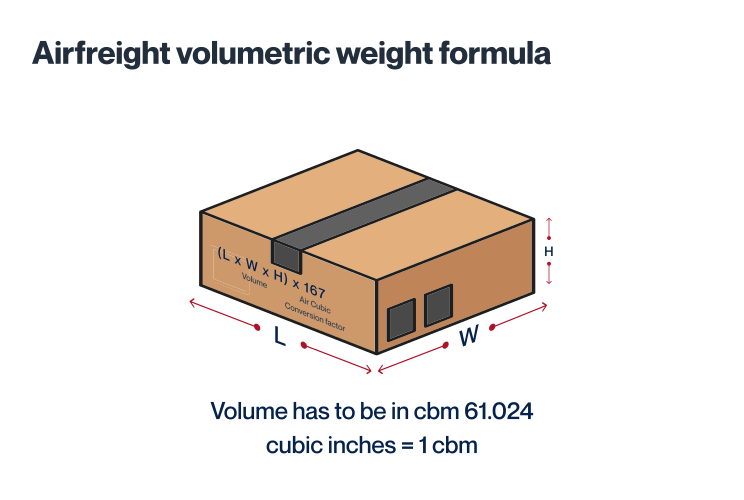
When you compare air freight rates, airlines don’t just look at how heavy your cargo is. They charge based on the space it takes on the aircraft. That’s why gross weight, volumetric weight, dimensional weight, and chargeable weight matter on China–DRC air routes.

  • Gross weight, the actual weight shown on the scale.
  • Volumetric weight, the space your cargo occupies, converted into weight.
  • Chargeable weight, the higher of gross or volumetric weight.

How to calculate
Length x Width x Height (cm) ÷ divisor = volumetric weight (kg).
Example, a carton 100 x 80 x 60 cm = 48,000 ÷ 6000 = 8 kg volumetric.

ServiceStandard divisor
Air cargo1 m³ = 167 kg (divisor 6000)
Express1 m³ = 200 kg (divisor 5000)

Common mistakes are guessing dimensions, ignoring packaging, or assuming gross weight is all that matters. On this route, that’s the fastest way to underestimate air freight cost.

Customs clearance in the Democratic Republic for goods imported from China

If you’re importing from China into the Democratic Republic of the Congo, customs clearance in DRC is the moment where three things get locked in fast, your real landed cost, your clearance lead time, and who is legally responsible as Importer of Record. This destination customs clearance phase drives the import filing process, the import declaration, and the final customs release. We handle the clearance workflow with licensed customs agent partners, so you’re not coordinating customs broker services, carriers, and border clearance logistics on your own.


From experience on this route, problems rarely come from the border itself. They come from documents and assumptions made upstream. Wrong Incoterm logic, weak HS code classification or tariff classification, or undervaluation because CIF value and FOB value were misunderstood are common triggers. Missing customs documentation like the commercial invoice, packing list, or certificate of origin often slows the customs inspection process and cargo examination. Below, we walk you through the import customs process as it actually happens, then show you how to approach customs duties calculation and import taxes and duties before your cargo even leaves China.

Step-by-step: how customs clearance usually works on this route

If you’re shipping from China to the DRC, this is the clearance workflow you’ll see in real operations. Timing shifts depending on the port or airport of entry, the Incoterm, and whether you’re shipping express, consolidated, or direct freight. But the pressure points in customs procedures for imports stay consistent.

  1. We receive the pre-clearance preparation file from origin, including the commercial invoice, packing list, transport document, declared Incoterm, and origin details. Trade documentation accuracy here sets the tone for the entire import filing process.
  2. The Importer of Record is validated locally. If IOR details are incomplete or incorrect, the import declaration cannot be legally submitted.
  3. The customs declaration is lodged using the HS code classification, declared customs value, tariff classification, and country of origin. Any mismatch between documents triggers customs risk assessment.
  4. Customs reviews the file. This is a real moment of truth. HS code classification and customs value calculation are the two areas most frequently questioned.
  5. If customs asks for clarification, we submit supporting documents. Delays usually come from missing technical specs, vague product descriptions, or slow feedback from the supplier in China.
  6. Import taxes and duties are assessed. Payment or advance by the customs broker is required before customs release can move forward.
  7. The shipment may be selected for cargo examination. A physical customs inspection process adds handling time and terminal costs.
  8. Once cleared, we coordinate warehouse appointments or final delivery. Missed slots or late last-mile booking can push delivery back several days.

You’ll notice fast that mistakes made before shipping, wrong Incoterm, late documents, or weak product descriptions, cost far more than the clearance itself.

How to calculate duties & taxes when importing from China to the Democratic Republic of the Congo?

To estimate import taxes and duties with any reliability, you need three core inputs, the correct HS code, the verified country of origin, and a defensible customs value. Final assessments often differ from estimates because customs may adjust tariff classification, question the customs value calculation, or apply taxes on a broader base than expected. This is why quotes that ignore freight, insurance, or destination taxes often fall apart at clearance.

Step 0 – Quick checks before you calculate

  • Confirm who acts as Importer of Record in the DRC, this party carries full import compliance responsibility.
  • Verify the Incoterm agreed with your supplier, it defines who controls destination customs clearance and who pays which charges.
  • Check whether your shipment may qualify for a low-value or simplified clearance path based on DRC customs or carrier rules.

Step 1 – Identify the Country of Origin

Here, the origin is China, but what matters is how that origin is proven. Origin affects tariff outcomes, documentation expectations, and customs risk assessment. If the invoice, manufacturer details, labeling, and packing list tell different stories, customs will challenge the file.

Preferential rates or trade defense measures can apply depending on the HS code and origin combination, which we cover in Step 4. A common mistake is confusing origin with the shipping country or the seller’s address.

Step 2 – Find the HS Code of your product

Your HS code classification directly drives duty rate, possible controls, and how likely customs is to stop the file. On the China to DRC lane, copied or overly generic codes cause delays.

Start with the supplier’s code, but treat it as a reference only. Validate it and build a small support file, product function, materials, photos, model or SKU, and a simple datasheet. This is what protects you during a customs inspection process.

You can use Tariffnumber as a neutral starting point, then cross-check with DRC customs references.

If the HS code is wrong, expect reclassification, back payments, possible penalties, and storage costs while it’s corrected.

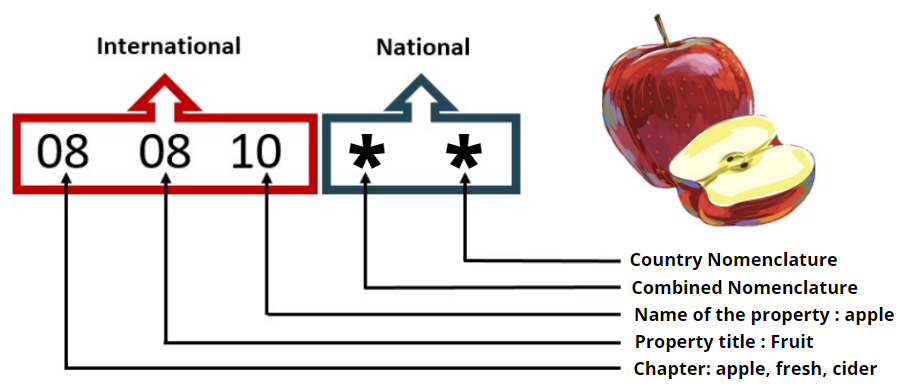
Here’s an infographic showing you how to read an HS code.

Step 3 – Calculate the Customs Value

Customs usually relies on the transaction value, what you actually paid for the goods. What changes the taxable base is what must be added on top of that price.

Depending on the Incoterm, freight and insurance may need to be included, shifting from FOB value to CIF value. Packing costs, commissions, or assists can also increase the declared amount.

Example logic, if your invoice value is 10,000 and freight plus insurance equals 2,000, customs may assess duties on 12,000.

Step 4 – Figure out the applicable Import Tariff in the Democratic Republic of the Congo

An import tariff is the duty rate applied to a product based on its HS code. In the DRC, duty rates are organized strictly by HS classification.

Each time, follow the same logic. Open the DRC customs tariff reference, enter your HS code, select China as the origin when prompted, and read the duty rate along with any notes or conditions.

  • Compare the standard duty rate with any preferential rate shown.
  • Confirm whether a certificate of origin is required to claim a preference.
  • Check for additional measures linked to that HS code.

Example, if your customs value is 12,000 and the duty rate shown is X%, the import duty equals 12,000 × X%.

Rates change, and the same product can be treated differently if HS support or origin proof is weak. Save a screenshot of the tariff result for budgeting and for your customs broker.

We can double-check the HS code and tariff logic with you before shipping if you share the product description, value, and Incoterm.

Step 5 – Consider other Import Duties and Taxes in the Democratic Republic of the Congo

Beyond basic duty, other taxes often inflate landed cost. VAT or sales tax is rarely calculated on the invoice alone.

In practice, the tax base usually includes the customs value plus import duty and, depending on the case, freight and insurance.

Example logic, customs value 12,000, duty 1,200, VAT at X%. VAT is calculated on 13,200.

Trade defense measures are another cost driver. For certain HS codes, customs may apply extra duties linked to product type and origin, adding cash out and sometimes delaying customs release.

  • Verify the full tax base applied to your HS code.
  • Prepare classification and customs value support documents.
  • Ask your licensed customs agent what additional measures appear for your product.

Step 6 – Calculate the Customs Duties

Once inputs are confirmed, the math itself is simple.

Import duty = customs value × duty rate.
VAT or sales tax = tax base × VAT rate.

Example, customs value 12,000, duty rate X%, VAT rate X%. Duty equals 12,000 × X%. VAT is then calculated on customs value plus duty.

After assessment, duties and taxes are paid or advanced depending on your broker setup. Customs release only follows payment confirmation. If clearance stalls, storage, handling, and delivery rebooking costs escalate quickly.

Understanding the HS code

Contact Details for Customs Authorities

customs china logo

China Customs

Official name: General Administration of Customs of the People’s Republic of China.
Official website: http://english.customs.gov.cn/

ASYCUDA - UserCountries – Democratic Republic of the Congo

Congo Customs

Official Name: General Directorate of Customs and Excise

Website : Congolese Customs


Required documents for customs clearance in the Democratic Republic of the Congo

You’ll notice this quickly when shipping into the Democratic Republic of the Congo. Customs rarely blocks cargo because of the border itself. Most holds come from documents that don’t line up. Names, values, quantities, and descriptions must match across every file. One inconsistency or missing proof can stop the release. From experience, fixing this before departure saves weeks, not days.

Commercial invoice

This is the sales document that states what you sold, to whom, and at what price.

Customs and your broker use it to assess duties and taxes and to sense-check the declared value against the goods.

Example: Chinese exporter name, Congolese consignee, clear product description, HS-based wording, unit price, total CIF value.

Common mistake: The value or description doesn’t match the packing list or inspection certificate.

Bill of Lading or Air Waybill

This is the transport contract issued by the carrier once the cargo is loaded.

Customs relies on it to confirm routing, ownership, and that the cargo actually belongs to the declared importer.

Example: Same consignee name as the invoice, correct discharge point like Matadi or Kinshasa airport.

Common mistake: Consignee or notify party differs from the import declaration.

Packing list

This document shows how the cargo is physically packed inside the shipment.

Inspectors use it during checks to verify quantities and quickly locate cartons or pallets.

Example: Number of cartons, gross and net weight, container number, packaging type.

Common mistake: Weights or quantities don’t match what arrives in the container.

Import declaration or license

This is the local import authorization or declaration registered before shipment.

Without it, customs cannot open or register the file, even if every other document looks perfect.

Example: Declaration number issued based on the pro forma invoice value.

Common mistake: Applying after the cargo has already departed China.

Pre-shipment inspection or conformity certificate

This confirms that quantity, quality, and value were verified before export.

Customs uses it to lock the declared CIF value and reduce disputes at arrival.

Example: Certificate referencing the invoice number, bill of lading, and container count.

Common mistake: Changing invoice details after the inspection is completed.

Certificate of origin

This document states where the goods were manufactured.

Customs may request it to confirm origin claims and apply the correct tariff treatment.

Example: Origin marked as China and consistent with the supplier details on the invoice.

Common mistake: Missing stamp or origin information that contradicts the invoice.

Prohibited and restricted items when importing into the Democratic Republic of the Congo

Here’s the thing. Restricted products are allowed, but only if you meet specific conditions like permits, inspections, or technical approvals. Prohibited products should not enter at all. If they do, expect seizure, return, or fines. This is the point where many first shipments get stuck.

Restricted products

  • Food products, sanitary and health approvals usually required
  • Pharmaceuticals, prior medical or regulatory authorization needed
  • Chemicals, safety, labeling, and environmental controls apply
  • Telecom equipment, technical and radio compliance checks
  • Used vehicles, age limits and conformity inspection
  • Agricultural inputs, phytosanitary inspection required

Prohibited products

  • Counterfeit goods and trademark infringements
  • Illegal drugs and narcotics
  • Weapons and ammunition without state authorization
  • Hazardous waste and banned materials

If you’re unsure whether your product is restricted or prohibited, stop before shipping. Ask your broker or request written confirmation from customs. Guessing here gets expensive fast.

Trade agreements and preferential duties for imports from China to the Democratic Republic of the Congo

As of 2025 to 2026, there is no confirmed bilateral free trade agreement that grants automatic preferential duties for imports from China into the Democratic Republic of the Congo. In practice, most shipments clear under standard MFN tariffs based strictly on the HS code.

You should always check whether your specific HS code benefits from any temporary or sector-based scheme before you ship. We recommend confirming this during pricing, not after arrival. That’s how you avoid duty surprises when customs assesses the declaration.

Additional logistics services

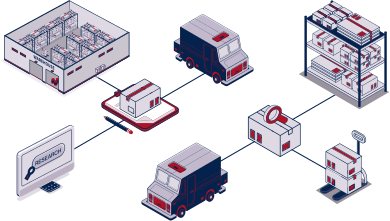
Explore the comprehensive range of logistics services offered by DocShipper, streamlining your supply chain end-to-end from manufacturer to market, ensuring smooth and efficient operations.

1 Warehousing and storage
1

Warehousing and storage

Finding reliable warehousing in China and the Democratic Republic of the Congo can feel like a daunting task. The stakes rise even higher when specific requirements—like temperature-controlled storage for perishable goods—come into play. We understand these complexities, which is why we offer tailored solutions to fit your storage needs. Learn more on our dedicated page: Warehousing.
img
2 Packaging and repackaging
2

Packaging and repackaging

Ensure your items arrive intact in the Democratic Republic of the Congo from China with careful packaging and repackaging. It’s crucial to trust an experienced agent given the wide range of products—from delicate glassware to industrial machinery. Discover how our service tackles these challenges on our dedicated page: Freight packaging.
img
3 Cargo insurance
3

Cargo insurance

Transporting goods comes with inescapable risks. Unlike fire insurance that only covers losses from accidental fires, cargo insurance also covers damage during transit due to accidents, natural disasters, theft, or mishandling. Sailing through rough seas? Or traversing bumpy roads? This service provides a reliable safety net. Imagine your cargo—a batch of expensive electronics—suffers water damage. With cargo insurance, you’re covered. Securing your shipment is crucial for your peace of mind. More info on our dedicated page: Cargo Insurance.
img
4 Supplier Management (Sourcing)
4

Supplier Management (Sourcing)

Shipping between China and the Democratic Republic of the Congo? DocShipper offers hands-on supplier management. We help you find reliable suppliers, manage your procurement, and bridge any language barriers—making sourcing from Asia feel as easy as ordering from next door. Imagine the time and cost savings! More info on our dedicated page: Sourcing services.
img
5 Personal effects shipping
5

Personal effects shipping

Moving personal belongings from China to the Democratic Republic of the Congo can be a true headache, especially when dealing with fragile or oversized items. Let’s ease your stress! Our professional team handles your possessions with supreme care and adaptability, ensuring safe transit—even for your grandma’s china or that bulky vintage sofa. Get the nitty-gritty on our dedicated page: Shipping Personal Belongings.
img
6 Quality Control
6

Quality Control

Quality control is a crucial piece of the shipping puzzle, especially when shipping from China to the Democratic Republic of the Congo. It’s your shield against flaws—from false labeling to defective components. Imagine sending out 5,000 custom B2B circuit boards, only to face recalls because of unnoticed malfunctions. With our quality control service, you’re covered: inspections are carried out during manufacturing to ensure each piece meets your standards. More info on our dedicated page: Quality Inspection.

img
7 Product compliance services
7

Product compliance services

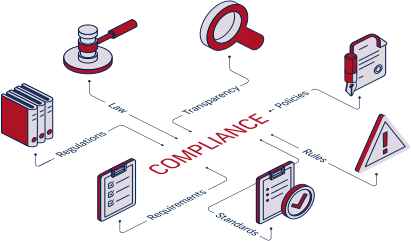
Shipping goods overseas can feel like a walk on a regulatory tightrope. With our Product Compliance Services, we take that pressure off by ensuring full regulatory compliance. From rigorous lab testing to securing essential certifications, every detail is handled with precision—so your goods won’t face any issues upon arrival. Discover the full scope of our services on our dedicated page: Product compliance services.
img

FAQ | Freight forwarders between China and the Democratic Republic of the Congo

This choice decides whether your shipment feels controlled or chaotic later. When suppliers ship separately, you pay origin charges multiple times and end up with fragmented paperwork that DRC customs will question line by line. What we usually do instead is consolidate at origin. We collect from each factory, bring everything into one warehouse, check quantities and packaging, then ship under one bill of lading. That means one valuation logic and fewer discussions on arrival in Matadi. If one supplier delays, we don’t automatically wait. We’ll flag when it’s smarter to move without them so one late order doesn’t freeze the entire container.