


Freight Shipping between China and Slovakia | Rates – Transit times – Duties and Taxes
Here’s the hard truth, shipping from China to Slovakia almost always breaks down at the handover points, port exit in China, EU entry, or the final inland leg into Central Europe. Miss one detail early and you pay for it later, in delays, extra charges, or blocked cargo.
If you’re looking at this route, you should know this guide isn’t here to explain logistics theory. We built it to give you a clear operational picture of shipping from China to Slovakia, including which transport modes actually work, where costs usually jump, how customs really behaves, and what you need to decide upfront to avoid surprises. And if at any point you want a second opinion, we’re here to sanity-check your plan with real-time market data and hands-on experience.
Which are the different modes of transportation between China and Slovakia?
Shipping from China to Slovakia isn’t as simple as boxing goods and sending them off. The geographical distance and international borders bring their own challenges. An airplane might seem the quickest, but what if we’re talking about bulky items? Ocean freight could be the answer, but what about time constraints? Rail, on the other hand, offers a middle ground between time and cost. Understanding the strengths and weaknesses of each method is like picking the right tool for a job. Your shipping method forms the blueprint for your supply chain strategy, so let’s break down these options to help you make an informed choice.
Docshipper Note:
Need assistance with your shipment? Dont hesitate to contact us even for a simple question. Choose the option that suits you
Live chat with an expert Chat us on WhatsApp Fill the formNote DocShipper :
How can DocShipper help?
Sea freight from China to Slovakia
If you’re looking at sea freight from China to Slovakia, the first thing to get straight is whether this mode actually fits your situation. Sea freight makes sense when your cargo is bulky, heavy, or cost-sensitive, and when you can tolerate a longer lead time. It stops making sense when timing is critical or when you underestimate how much inland transport inside Europe really matters.
The mistake we see all the time on this route is focusing only on the ocean leg. Slovakia is landlocked, so ocean shipping always ends at a European gateway port, then continues by truck or rail. If you don’t plan that inland leg early, costs and delays show up fast. Another common trap is choosing the wrong Incoterm and discovering too late that you’re responsible for charges you didn’t budget for. Our goal here is to help you decide, early on, if sea freight is the right tool and how to use it without getting surprised later.
DocShipper Tip:
- You are shipping large volumes or bulky items, as sea freight offers the most space at a cost-effective rate.
- Your cargo doesn't have an urgent deadline, as sea freight typically has longer transit times compared to air or rail.
- Your shipping routes are between major ports, allowing you to leverage the extensive global network of sea shipping lanes.
Which incoterms should you use?
On China–Slovakia sea freight, Incoterms are less about theory and more about control. In practice, EXW gives you maximum control but also maximum exposure. You’re responsible from the factory gate, including export clearance in China, which is where first-time importers often get stuck.
FOB is usually the safest balance on this route. Your supplier handles export formalities and delivery to the Chinese port, and from there we take over. CIF looks simple on paper, but the risk is hidden destination charges in Europe, especially when inland transport to Slovakia is added. What matters is not the name of the Incoterm, but who controls bookings, documents, and destination costs. That’s where problems either disappear or multiply.
When we talk about main ports on this route, we’re really talking about two decisions. First, which Chinese export ports are operationally reliable for your supplier. Second, which European gateway port makes sense for inland transport to Slovakia.
- China export ports: Shanghai, Ningbo, Shenzhen and Qingdao are the most commonly used. They offer frequent sailings and stable carrier options, which reduces missed connections.
- European gateway ports: Hamburg, Bremerhaven, Koper and Gdansk are typical entry points for Slovakia-bound cargo.
Port choice directly affects your inland leg. Northern ports like Hamburg mean longer trucking or rail distances but often more sailing options. Southern ports like Koper can shorten inland transit to Slovakia, but schedules are sometimes less flexible. This is why port selection should never be separated from inland transport planning.
Main ports to know in China and Europe
Slovakia itself has no seaports, so your cargo will always clear customs in another EU country. From there, it moves inland by road or rail to Bratislava or other Slovak cities.
This inland segment is where many budgets break. Distance, truck availability, rail schedules, and local handling rules all influence the final delivery. Choosing the right gateway port is often more important than shaving a few days off the ocean transit.
Should I choose FCL or LCL when shipping between China and Slovakia?
LCL: Less than Container Load
Definition: LCL (Less than Container Load) shipping is a method where multiple shipments from different shippers are consolidated and transported in a single container. This makes LCL a cost-effective and flexible way for companies shipping smaller-volume goods.
When to Use:It’s recommended to use LCL when your cargo is less than 15 cubic meters (CBM), such as smaller shipments or when shipment frequency is low. This volume is the typical cut-off as beyond this, a full container may be more economical.
Example:Suppose you are a toy manufacturer in China shipping just a few pallets of toys to a store in Slovakia. Your cargo occupies 10 CBM, insufficient to fill a full container. Opting for LCL shipment, you pay only for the space your cargo takes up, sharing the remaining space with other shippers, thus making it an economical option.
Cost Implications:The cost for LCL freight depends on the volume of your cargo. Pricing is typically based on per CBM or per tonne – whichever is greater. Therefore, you only pay for the volume or weight of your cargo, not the entire container, which cuts down your shipping costs significantly. However, remember that LCL includes additional handling fees due to the consolidation and deconsolidation of your cargo.
FCL: Full Container Load
FCL (Full Container Load) shipping, as the name implies, is where your goods fill an entire container independently. This includes 20ft or 40ft containers. The primary reasons for choosing FCL are the cost-effectiveness for high volume and the security provided as the FCL container remains sealed from the origin in China to the destination in Slovakia.
FCL is the better option when transporting cargo of more than 13/14/15 CBM. For instance, a furniture manufacturer with bulk orders will find this method economically advantageous as they can effectively utilize the space in a 20ft or a 40ft container.
The cost implication of FCL shipping primarily revolves around a fixed flat rate. This means whether your container is half-filled or fully filled, the cost remains the same. Therefore, an accurate FCL shipping quote is crucial to budgeting. Ultimately, the more merchandise you ship, the lower your cost per unit will be, generating greater savings in the long run.
Unlock hassle-free shipping
When you work with us at DocShipper, we don’t just book a vessel. We look at your cargo profile, CBM, weight, Incoterm, and final delivery point in Slovakia. Then we design the route, including consolidation if needed, and manage the process end to end. That’s how you avoid fragmented responsibilities and last-minute costs.
Transit times: how long does it take to ship from China to Slovakia?
| Route example | Mode | Estimated transit time |
|---|---|---|
| Shanghai to Hamburg + truck to Slovakia | FCL | 35–45 days |
| Ningbo to Koper + rail to Slovakia | FCL | 32–42 days |
| South China to Northern Europe + inland | LCL | 40–55 days |
In simple terms, sea freight transit time from China to Slovakia usually falls between 35 and 55 days. The spread comes from port congestion, transshipment versus direct services, and inland scheduling inside Europe.
Peak seasons, especially before Chinese New Year or during European summer congestion, can easily add a week or more. The smartest way to manage lead time is building buffer into your planning and choosing gateway ports with reliable inland connections.
Shipping rates: how much does a sea freight shipment cost from China to Slovakia?
| Shipment type | Typical planning range |
|---|---|
| LCL (1–5 CBM) | USD 50–90 per CBM |
| 20ft container (FCL) | USD 1,400–2,300 |
| 40ft container (FCL) | USD 2,400–3,600 |
These figures are planning ranges, not final quotes. What really drives cost on this route is the combination of ocean freight, European port charges, and inland transport to Slovakia. The ocean rate alone is rarely the final number.
Costs often escalate at destination. Terminal handling, documentation, and inland delivery can equal or exceed the base ocean freight if they’re not anticipated early.
Special sea freight solutions
Not all cargo fits neatly into a standard container. On the China–Slovakia route, we regularly handle OOG cargo, break bulk, Ro-Ro shipments, and reefers. Each option comes with its own port constraints and inland challenges inside Europe.
The key is matching the equipment to both the ocean leg and the final inland delivery. Oversized cargo that moves easily at sea can become a problem on European roads if it’s not planned correctly. This is where experience on the route really matters.
Air freight from China to Slovakia
Air freight from China to Slovakia makes sense when time matters more than perfect cost optimization. If you’re shipping time‑sensitive, high‑value, or production‑blocking goods, air is the right tool. If you’re moving bulky, low‑margin products with flexible deadlines, it usually isn’t. Air is fast, but it’s also unforgiving if anything is misread or underestimated.
Here’s the thing most guides don’t tell you. Air freight is not “always 3 days”, it’s rarely door‑to‑door, and price is driven more by chargeable weight than real weight. On this route, we often see costs explode because cartons are oversized, documents are incomplete, or suppliers miss airport cut‑off times. If you’re looking at international air transport China to Slovakia, you need speed, but you also need discipline. That’s where most importers get caught.
DocShipper Tip:
Air freight might be the best solution for you if:
- You are in a hurry or have a strict deadline requirement, as air freight offers the fastest transit times.
- Your cargo is less than 2 CBM (Cubic Meter), making it more suitable for smaller shipments.
- Your shipment needs to reach a destination that is not easily accessible by sea or rail, allowing you to tap into the extensive network of global airports.
Air cargo vs express: how should you ship on this route?
If you’re comparing air cargo shipping China Slovakia with express air freight solutions, you’re really choosing between control and cost versus simplicity and speed. Both move by air, but they behave very differently once your cargo leaves the factory. One gives you flexibility and planning leverage, the other trades that for convenience.
Should you choose air cargo from China to Slovakia?
You should look at standard air freight option when your shipment is above 1 CBM or roughly 100 to 150 kg (220 to 330 lbs), when you ship B2B, or when you need repeatability and cost control. On this lane, air cargo works well for electronics, automotive parts, medical goods, and regular production flows where sea freight is too slow.
To make airport‑to‑airport air freight work, you need basics ready upfront, exact dimensions, real weights, Incoterm clarity, preferred origin and destination airports, and a firm cargo ready date. What trips people up is assuming air cargo is automatically door‑to‑door, ignoring screening delays, or forgetting minimum charges and handling fees. We see this weekly. If you plan it properly, air cargo is predictable. If you don’t, it becomes expensive very fast.
Should you choose express air freight from China to Slovakia?
Express air freight is logical when shipments are small, urgent, and you don’t have an internal logistics team. If your cargo is under 1 CBM, documents are simple, and you need door‑to‑door delivery without coordination, express does its job.
The trade‑off is control. Express pricing is opaque, re‑weighs are common, volumetric weight often surprises first‑time importers, and destination charges are not always as “all‑in” as expected. Express is good if speed and simplicity matter more than cost precision. It’s risky if margins are tight or if you assume everything is included without checking.
Main airports to know in China and Slovakia
- Shanghai Pudong (PVG), key hub for international cargo, high frequency to Europe, strong consolidation options for Central Europe.
- Guangzhou Baiyun (CAN), ideal for South China manufacturing zones, stable uplift and express connectivity.
- Shenzhen Bao’an (SZX), preferred for electronics and high‑value cargo close to factories.
Choosing the right Chinese airport affects inland trucking cost, flight availability, and cut‑off pressure. A closer airport often saves more than a cheaper air rate.
Main airports to know in Slovakia
- Bratislava (BTS), main Slovak cargo gateway, often served via EU hubs, good for Central Europe distribution.
- Košice (KSC), useful for eastern Slovakia and cross‑border flows to Hungary and Poland.
Most air freight to Slovakia transits via Frankfurt, Vienna, or Prague. Airport choice directly impacts customs speed, trucking distance, and real lead time.
Transit times: how long does air freight take from China to Slovakia?
| Service | Typical lead time |
|---|---|
| Standard air cargo | 4 to 7 days |
| Express air freight | 3 to 5 days |
These are estimates, not guarantees. Most delays happen before the flight, not in the air. Missed cut‑offs, screening backlogs, and late documents are the real drivers on this route.
Transit time depends mainly on cargo readiness, security screening requirements, and congestion at European hub airports. If timing is critical, confirm airport, service level, and cargo type before booking.
Shipping rates: how much does air freight cost from China to Slovakia?
| Service | Indicative range per kg |
|---|---|
| Standard air freight | Approx. $3.5 to $5.5/kg |
| Express air freight | Approx. $6 to $10/kg |
Rates are driven first by chargeable weight, then by dimensions, urgency, seasonality, and airport selection. Oversized cartons and low density shipments push costs up fast.
If you want a reliable air cargo cost estimation, you need exact measurements, not guesses. That’s the difference between a controlled budget and a bad surprise.
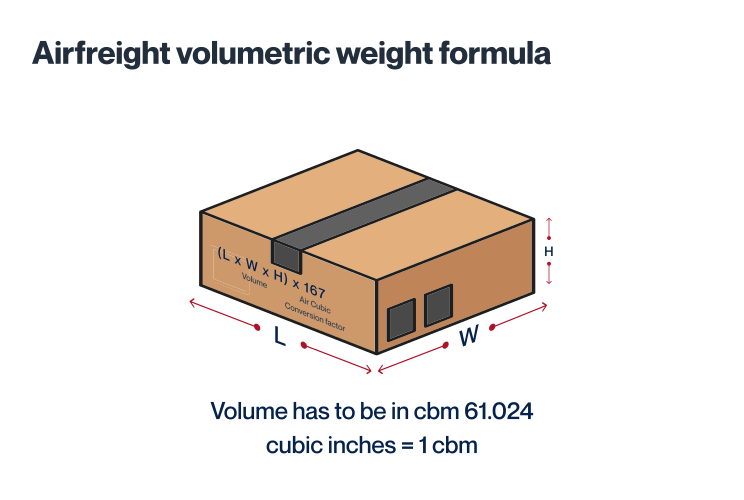
What is the difference between volumetric and gross weight?
In air freight, carriers charge based on the higher of gross weight or volumetric weight. This is the dimensional weight concept, and it’s the number one reason air quotes change after pickup.
- Gross weight, the physical weight of the cargo.
- Volumetric weight, the space your cargo occupies.
How to calculate
Length × Width × Height (cm) ÷ divisor.
Example, 40 × 50 × 60 cm = 120,000 ÷ 6000 = 20 kg.
| Service | Standard divisor |
|---|---|
| Air cargo | 1 m³ = 167 kg (÷6000) |
| Express | 1 m³ = 200 kg (÷5000) |
Common mistake, focusing on weight only and ignoring carton size. On this route, that single error is often what doubles the invoice.


Rail freight between China and Slovakia
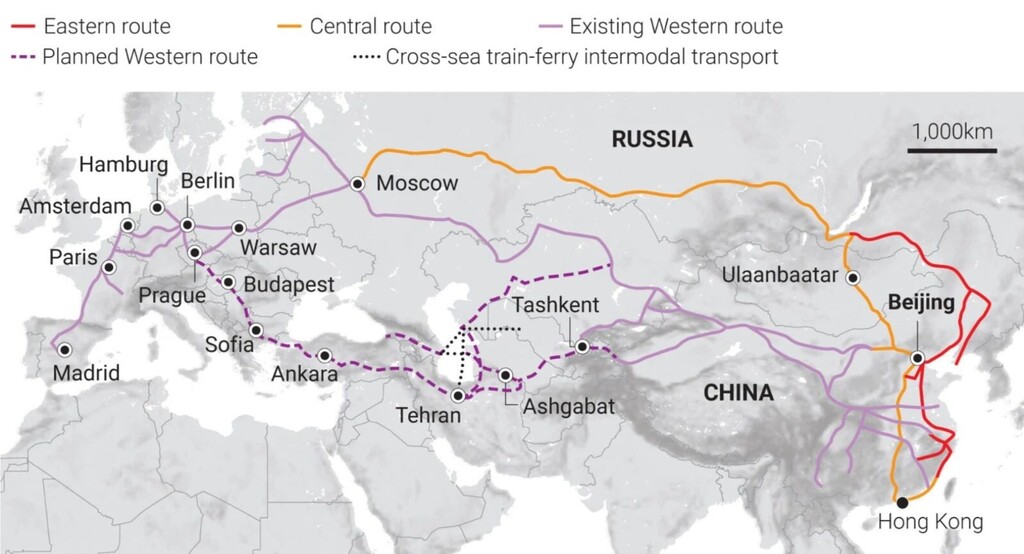
Could you imagine your goods chugging along the ancient Silk Road? Well, with rail freight from China to Slovakia, that’s pretty much the reality! This connection was birthed in 2016, linking not just China and Slovakia, but weaving a path through Russia, Belarus, and Poland. Comprising mainly electronics, textiles, and machinery, the goods see Europe and Asia, blending trade and economic cooperation.
While slower than air freight, rail is significantly cheaper and faster than sea freight, a truly golden middle ground. However, no journey is without bumps. The dragon you must slay here is efficient customs clearance across multiple borders which can prove challenging.
Is Sir Lancelot ready for this quest, or will he opt for the calm sea or the fast sky? Your business’s unique shipping requirements ultimately determine the transport method. Dive deeper and choose your path wisely!
DocShipper Tip:
Rail freight might be the best solution for you if:
- You are looking for a cost-effective transportation method for large volumes.
- Your shipping route is well-connected by rail, providing a reliable and environmentally friendly option.
- Your cargo's destination and origin are near rail terminals, minimizing the need for additional road transportation.
What are the main train stations between China and Slovakia?
1. Shanghai Railway Station, China:
Renowned as a top player in international rail freight between China and Europe, Shanghai Station handles a substantial cargo volume and boasts impressive trading connections. It’s strategically positioned in China’s largest city and commercial hub. For your business, Shanghai’s wide network means better linkage to diverse markets and enhanced opportunity for growing your reach.
2. Chengdu Railway Station, China:
Conveniently located in a city known as the ‘Country of Heaven’ or the ‘Land of Abundance,’ Chengdu Station’s cargo volume is vast, with a key focus on electronics and automobile parts. Its recent extension to Europe proves beneficial for businesses like yours, keen on exploring European trade.
3. Wuhan Railway Station, China:
Standing at the heart of central China, Wuhan Station offers robust connections to both domestic and international routes, boasting high cargo volume. Its prime position makes it a sensible choice if your products’ source or destination lies in the mainland.
4. Shenyang Railway Station, China:
Serving as the primary railway hub in the northeast region, Shenyang Station entails an essential role in northeast Asia’s logistical network. Its cargo volume and key trading partners extend throughout China’s domestic markets and surrounding countries. Shenyang might be the perfect fit if your trading interests lie in the northeast region.
5. Bratislava Railway Station, Slovakia:
As Slovakia’s largest and busiest railway station, Bratislava serves as your gateway to European markets, handling considerable cargo volume. Its strategic location on the Austrian border enhances its link with Central Europe – beneficial if your business strategy involves these regions.
Note: Real-time cargo volume and key trading partners data can be subject to fluctuations. Be sure to stay updated on the latest freight data and policies. Your ultimate choice for freight stations will largely hinge on your specific business needs, market strategy, and the nature of the goods you plan to ship.
Furthermore, always consider the type of product you ship as some products may be better suited for other types of transport. Heavier products, for example, often benefit from rail freight’s lower cost per weight ratio. Having numerous options can bring flexibility and efficiency to your shipping strategy.
How long does rail freight take between China and Slovakia?
Transit times from China to Slovakia by rail freight can fluctuate due to factors like customs procedures, logistics providers, and weather conditions. A typical journey averages between 16-20 days. We’ve compiled a list of rail networks serving this route, their durations, and schedule for clarity, bear in mind this is only an estimate in an industry where timing can be unpredictable.
- Zhengzhou to Hamburg (Germany): ~ 15-17 days, Departs Daily
- Zhengzhou to Munich (Germany): ~ 17-18 days, Departs Monday and Friday
- Zhengzhou to Liege (Belgium)/Milan (Italy): ~ 20 days, Departs Monday, Thursday and Friday
- Chongqing to Duisburg (Germany): ~ 16-17 days, Departs Monday/Friday
- Yiwu to Hamburg (Germany): ~ 16-18 days, Departs Monday/Thursday/Friday
- Yiwu to Duisburg (Germany): ~ 16-18 days, Departs Monday/Thursday/Friday
- Yiwu to Madrid (Spain): ~ 20 days, Departs Monday/Thursday/Friday
- Wuhan to Hamburg (Germany): ~ 17-19 days, Departs Saturday/Wednesday/Thursday
- Wuhan to Duisburg (Germany): ~ 17-19 days, Departs Saturday/Wednesday/Thursday
- Chengdu to Tilburg (Netherlands): ~ 18 days, Departs Wednesday/Sundayy
- Suzhou to Hamburg (Germany): ~ 18-20 days, Departs Sunday
- Suzhou to Duisburg (Germany): ~ 18-20 days, Departs Sunday
- Xi’an to Duisburg (Germany): ~ 18-20 days, Departs Wednesday/Thursday/Friday/Saturday
What are the advantages of rail transport between China and Slovakia
Rail transport emerges as a viable solution when shipping goods from China to Slovakia. Picture this: It’s faster compared to ocean freight’s long hauls, yet less pricey than air freight’s high rates, representing a fulfilling balance. For instance, transmitting consumer electronics, which require swift delivery yet operate on thin margins, can be considerably cost-optimized through rail freight. This method also excels at transporting heavier loads, such as automotive parts or bulk commodities, without incurring hefty costs. In essence, rail freight enables businesses to maintain robust shipping timelines without compromising budget management. From China’s bustling manufacturing hubs to Slovakia’s thriving markets, it paves the way for a fluid and cost-effective supply chain.
How much does shipping goods by train between China and Slovakia cost?
You’re probably expecting a quick straightforward number, aren’t you? However, with train freight between China and Slovakia, it’s a bit of a different ball game. Unlike air and sea shipping, prices fluctuate due to numerous variables, making it tough to provide a one-size-fits-all quote. But hold on, don’t let this dampen your business planning – we’ve got your back! Our savvy team takes a tailored approach, analyzing each shipment to secure you top-notch rates. Reach out and you’ll have a personalized quote, designed to suit your needs, in your hands within 24 hours. Talk about speedy! Contact us now for a free, no-obligation quote. Let’s get your goods moving!
Door to door between China and Slovakia
Door to door shipping, quite literally, takes the hassle out of international logistics! When moving goods from China to Slovakia, this service handles every stage – right from the source to your doorstep. It’s efficient, stress-free, and may be the perfect solution for your business. There’s so much to discuss, so let’s dive in!
Overview – Door to Door
Considering the complexities of international shipping can be like threading a delicate needle, with plenty of potential trip-ups. Luckily, Door-to-door shipping between China and Slovakia, a widely used service in our clientele, reduces this stress markedly! Imagine not having to juggle between various parties for your logistics needs; instead, it’s all in our expert hands. While this service might involve a higher cost, the premium is often justified, considering its outstanding convenience and the neutrality of potential logistical headaches. Discover how this solution caters directly to your needs, mitigating the often-daunting freight challenges.
Why should I use a Door to Door service between China and Slovakia?
Let’s be honest, who doesn’t love a great door-to-door delivery? Think ordering pizza on a lazy Sunday but for your business’ freight! Here are the top five reasons why a door-to-door service between China and Slovakia is exactly what you need:
1. Concierge for Your Cargo: As if your shipment was a five-star hotel guest, door-to-door service ensures it doesn’t lift a figurative finger. From pickup to delivery, everything is handled meticulously. No waiting, no switchovers, just smooth sailing straight from China to Slovakia.
2. No More Logistic Nightmares: Ever found yourself tangled up in customs regulation spaghetti? With door-to-door service, kiss those messy logistics goodbye! Your freight forwarder deals with every snarl and knot from procedures to paperwork. Sit back, relax, and watch your goods move effortlessly across borders.
3. The Express Ticket: Got an important client in Bratislava waiting for an urgent shipment? Door-to-door services prioritize promptness. Shorter, optimized routes mean your urgent shipments reach their destination pronto.
4. Special Care for Special Freight: Fragile, hazardous, or oversized, every type of cargo gets the VIP treatment. Door-to-door providers are well-versed in handling complex loads and ensuring your special items reach Slovakia from China, safe and sound.
5. Trucking? Taken Care Of: From the bustling ports of Yangshan to your end customer’s door in Slovakia, your freight is constantly on the move. Trucking services are included in the package, eliminating multiple points of contact and potential delays, bridging the gaps in your supply chain.
And there you have it! Door-to-door service stands as the ultimate jack-of-all-trades in freight forwarding, amping up convenience and trimming down on hassle. The saying goes, ‘When in Rome, do as the Romans do.’ But when shipping from China to Slovakia, it’s definitely ‘Door-to-Door all the way!’
DocShipper – Door to Door specialist between China and Slovakia
DocShipper Tip:
- You value convenience and want a seamless shipping process, as door-to-door takes care of every step from pickup to delivery.
- You prefer a single point of contact, as door-to-door services typically provide a dedicated agent to handle all aspects of the shipment.
- You want to minimize the handling of your goods, reducing the risk of damage or loss, as door-to-door minimizes transitions between different modes of transport.
Customs clearance in Slovakia for goods imported from China
Customs clearance in Slovakia for Chinese imports is where your total landed cost is confirmed, your release timing is decided, and your legal responsibility as Importer of Record is tested. This is the point where duties, VAT, and any additional charges are assessed, and where a small mistake can turn into days of delay. On this China to Slovakia route, we usually coordinate the clearance steps with local partners so you’re not dealing with customs procedures alone.
Here’s the thing, most problems don’t come from the border itself. They come from assumptions made earlier. We regularly see delays caused by the wrong Incoterm logic, a weak HS code classification, or a declared value that ignores freight or insurance. In this section, we’ll walk you through the import customs process China to Slovakia, step by step, and show you how to estimate duties and taxes before your cargo even lands.
How to calculate duties & taxes when importing from China to Slovakia?
If you want a realistic customs duties and taxes calculation overview, you need the right inputs from the start. You’ll need the country of origin, a defensible HS code classification, the declared value for customs, and the Incoterm that defines what’s included in that value. Estimates often differ from the final assessment because customs may question classification or valuation, or add costs you didn’t include.
Cheap quotes are misleading when they ignore the full tax base. Duties and VAT in Slovakia are rarely calculated on the invoice alone. The steps below show you the logic customs uses, so you can budget with eyes open instead of reacting at clearance.
Step 1 - Identify the Country of Origin
On this route, the country of origin determination is not a formality. Your goods are from China, but customs will still look for consistency between the invoice, manufacturer details, labeling, and packing list. Origin directly affects tariff eligibility, documentation expectations, and the risk of customs questions.
A common mistake is confusing origin with shipping country or seller location. Preferential rates or trade defense measures like anti-dumping only apply if the origin is correctly proven. We’ll explain how to verify tariff treatment and any additional measures when we get to Step 4.
Step 2 - Find the HS Code of your product
Your HS code classification drives almost everything. Duty rate, compliance checks, inspections, and sometimes delays. A wrong code on this China–Slovakia lane often leads to reclassification, back payments, and storage costs while customs reviews the file.
We usually start with the supplier’s code, but we never stop there. You should validate it using an official EU tariff tool and build a light support file, product description, materials, function, photos, or a datasheet. This makes the tariff classification process defendable if customs asks questions.
You can cross-check your code using the EU TARIC lookup, which is the reference for Slovakia. If the HS code is wrong, expect holds, reassessment, and sometimes penalties.
Here’s an infographic showing you how to read an HS code.
Step 3 - Calculate the Customs Value
Customs value calculation in Slovakia usually follows the transaction value method. That means customs starts from what you actually paid for the goods, then adjusts the base depending on what’s included under your Incoterm.
If your Incoterm doesn’t include international freight or insurance, customs will add them. For example, goods invoiced at $20,000 plus $5,000 freight and $500 insurance give a customs value of $25,500. This is where undervaluation assumptions break down, and where many first-time importers get surprised.
Step 4 - Figure out the applicable Import Tariff
An import tariff assessment is the duty rate applied to your product based on its HS code. Slovakia follows the EU Common Customs Tariff, so rates are organized by HS code and origin.
To find the real rate, open the EU TARIC tool, enter your HS code, and select China as the origin. Read not only the percentage but also any notes. Look for standard duty versus any special measures, and whether proof of origin is required.
For example, if the customs value is $10,000 and the duty rate shown is X%, the duty is simply $10,000 × X%. Rates change, and treatment can differ if your HS code support is weak, so we always recommend saving the tariff result for budgeting. We can double-check the HS code and tariff logic with you before you ship if you share your product details.
Step 5 - Consider other Import Duties and Taxes
Applicable import charges in Slovakia go beyond basic duty. VAT is the biggest one. In practice, VAT is calculated on a tax base that usually includes the customs value plus duty and sometimes other fees. It’s rarely just the invoice amount.
For example, if your customs value is $10,000, duty is $1,000, and VAT is 20%, VAT is calculated on $11,000, giving $2,200. This is the trap many importers miss when estimating cash out.
Other measures can apply. A common one on EU imports is anti-dumping duty, triggered by the HS code and origin. When it applies, it adds a separate line to the assessment and increases both cost and scrutiny. To stay in control, verify for your HS code whether extra measures exist, keep classification and value support ready, and ask your broker to confirm the full tax base before shipping.
Step 6 - Calculate the Customs Duties
The customs duty calculation method itself is straightforward once the inputs are right. Duty equals customs value multiplied by the duty rate. VAT equals the VAT base multiplied by the VAT rate.
Example logic. Customs value $10,000. Duty rate X%. Duty = $10,000 × X%. VAT base = customs value + duty. VAT = VAT base × 20%. What happens next depends on your setup. The importer usually pays or the broker advances and invoices you. Release only happens after payment, and any delay here means storage or delivery rebooking costs.
Does DocShipper charge customs fees?
As a customs broker, we separate our clearance fees from duties and taxes paid to Slovak customs. You only pay what customs assesses, and that’s supported by the official customs declaration and release documents.
Contact Details for Customs Authorities
China Customs
Official name: General Administration of Customs of the People’s Republic of China
Official Website: http://english.customs.gov.cn/

Slovakia Customs
Official name: Customs Directorate of the Slovak Republic
Official website: http://www.colnasprava.sk/
Required documents for customs clearance in Slovakia
Here’s the thing you’ll notice fast when importing into Slovakia, customs rarely block cargo because of the goods themselves. Most holds come from documents that don’t line up. Names, values, descriptions, weights. Everything must tell the same story. If one document says something slightly different, customs will stop the file and ask questions. This checklist focuses on what actually gets shipments released.
Bill of Lading or Air Waybill
This is the transport document issued by the carrier confirming receipt of your cargo.
Customs and brokers use it to confirm who shipped the goods, who receives them, and how they entered the EU.
Example: The consignee name and address must match your Commercial Invoice exactly, not “almost the same”.
Common mistake: Using a trading name on the invoice and a legal name on the Bill of Lading.
Packing List
This document breaks down how your cargo is physically packed.
Customs use it to check quantities, weights, and how goods are arranged when inspections happen.
Example: 42 cartons, net weight 1,260 kg, gross weight 1,340 kg, palletized.
Common mistake: Total weights not matching the transport document or invoice.
Commercial Invoice
This is the financial declaration of the transaction between you and your supplier.
Slovak customs calculate duties and VAT directly from this document.
Example: HS code, unit price, Incoterm, total value, seller and buyer details all visible.
Common mistake: Declared value that doesn’t match the payment or contract terms.
Certificate of Origin
This document states where the goods were manufactured.
Customs use it to apply the correct duty rate and trade policy measures.
Example: Country of origin listed as China and consistent across all documents.
Common mistake: Confusing country of export with country of manufacture.
Certificate of Conformity (CE standard)
This confirms that your products comply with EU safety, health, and environmental rules.
Customs may request it for electronics, machinery, toys, and regulated consumer goods.
Example: CE Declaration referencing the exact model number on your invoice.
Common mistake: Assuming a CE logo on packaging is enough without documentation.
EORI number
This is your EU customs identification number.
Without it, your broker cannot lodge the import declaration in Slovakia.
Example: Your Slovak or EU EORI number appears on the customs entry.
Common mistake: Applying for EORI after the goods have already shipped.
Get Started with DocShipper
Prohibited and restricted items when importing into Slovakia
Before you ship, you need to separate what’s restricted from what’s outright prohibited. Restricted goods can enter Slovakia, but only if you meet specific conditions like permits, testing, or certifications. Prohibited goods should not ship at all. If they do, expect seizure, return, or fines.
Restricted products
- Electronics and radio equipment, subject to CE and radio compliance
- Cosmetics and personal care products, safety assessments required
- Food and supplements, health controls and prior authorization
- Chemicals and batteries, classification and safety documentation needed
- Machinery, conformity and technical files may be requested
Prohibited products
- Counterfeit goods and trademark infringements
- Certain weapons, ammunition, and military items
- Endangered species and protected wildlife products
- Illegal drugs and controlled narcotics
If you’re unsure, don’t guess. Ask your broker or request written confirmation before the cargo leaves China.
Trade agreements and preferential duties for imports from China to Slovakia
There is no bilateral free trade agreement between China and Slovakia. Your imports fall under standard EU Common Customs Tariff rules. That means duty rates depend entirely on your HS code.
Some products may benefit from EU-wide autonomous tariff suspensions or quotas, but these are product-specific, not country-specific. You should always verify your exact HS code using the EU tariff database before shipping.
We recommend checking the official EU tariff tool to confirm duty rates, quotas, or suspensions applicable to your goods: EU TARIC database.
Also be aware that anti-dumping duties can apply to certain Chinese-origin products. This is one of those details that catches importers off guard if it’s not checked early.
Your Next Step with DocShipper
Additional logistics services
Discover how DocShipper streamlines your entire supply chain with our additional logistics services. Benefit from more than just shipping and customs, ensuring a smooth sail from start to finish.
Warehousing and storage
On the hunt for reliable warehousing in Slovakia or China? The battle's real, especially when dealing with temperature-sensitive goods. You need a surefire solution like ours to ensure perfect storage conditions, every single time. Dive deeper into how we can save your logistics day on our dedicated page: Warehousing.
Packaging and repackaging
Packaging correctly for China-Slovakia shipments is vital. A reputable provider offers tailored solutions for various products, from ceramics to electronics, ensuring they arrive in prime condition. Imagine sending delicate glassware without appropriate wrapping or a machine without proper padding—it's a disaster! Our expert team ensures no such mishaps. More info on our dedicated page: Freight Packaging.
Cargo insurance
Transporting goods internationally? While fire insurance covers loss due to a blaze, Cargo Insurance shields you from transport-related risks. Consider a ship caught in a rainstorm, damaging your electronics consignment. Scary thought? Avoid this with our tailor-made insurance plans. Remember: prevention is better than cure! More info on our dedicated page: Cargo Insurance.
Supplier Management (Sourcing)
Struggling to find the right supplier in Asia or East Europe? Let us help. At DocShipper, we streamline your procurement journey, from supplier sourcing to procurement processing. Our team expertly bridges language barriers and guides you every step of the way, ensuring a smooth manufacturing process.
Personal effects shipping
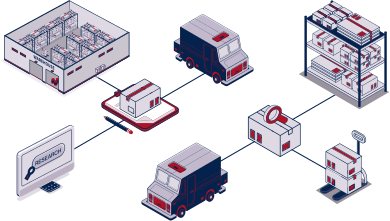
Relocating your cherished items between China and Slovakia? Our Personal Effects Shipping service handles your fragile or unwieldy stuff with top-notch care. Imagine your grandmother's antique clock or your favorite bulky office desk, expertly packed and transported safely. Ease your worries with our dedicated team, offering a flexible moving solution tailored to your needs. Learn more on our dedicated page about Shipping Personal Belongings.
Quality Control
Tackling China-Slovakia shipments? Quality Control is key. China's voluminous manufacturing landscape churns out products of varying standards. Fret not, our QC inspections act as your eyes on the ground, confirming your products stick to specifications before shipping. Take electronical goods, you wouldn't want to ship a batch of flawed devices, would you? Save costs, prevent product recalls with our meticulous Quality Control services.

Product compliance services
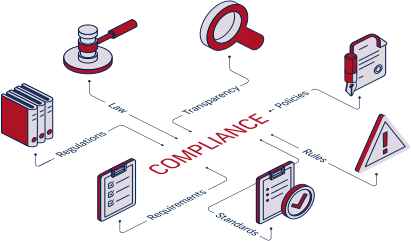
Ensuring your goods adhere to all international regulations is crucial. With our Product Compliance Services, we run comprehensive lab tests to obtain certification, taking the guesswork out of compliance. Look forward to smooth customs clearance, fewer delays, and peace of mind. Realize the benefits of hassle-free shipping; trust us, many businesses do! Dive deeper into the subject in our detailed guide: Product compliance services.
FAQ | For 1st-time importers between China and Slovakia
For your business interest, you may like the following useful articles :